The shackles bit deep into his wrists as dawn crept across the York skyline. Egil Skallagrimsson—six feet tall, barrel-chested, with a skull so thick it had already deflected more than one battle-axe—sat in the shadow of certain death. King Erik Bloodaxe wanted to watch this giant Viking die slowly, publicly, as payment for years of raids, burned settlements, and the murder of a royal son. But as the first rays of sunlight pierced the September gloom of 948 AD, something unprecedented was about to unfold in the court of Northumbria's most violent ruler.
What happened next would prove that sometimes, in a world ruled by sword and axe, the most powerful weapon of all was words.
The Giant Who Wielded Both Sword and Verse
To understand the magnitude of what was about to occur, you need to know exactly who Egil Skallagrimsson was. This wasn't some mild-mannered court poet hoping to charm his way out of trouble. Egil was a walking contradiction—a man who could compose intricate verses about love and loss one moment, then split an enemy's skull with his bare hands the next.
Born around 910 AD in Iceland to Skallagrim Kveldulfsson, Egil had killed his first man at age seven during a game of knattleikr (Viking ball-game) that turned deadly. By twelve, he was crafting poetry so sophisticated that grown men wept at its beauty. By twenty, he stood six feet tall in an age when most men barely reached five-foot-six, and his reputation as both warrior and wordsmith had spread across the Norse world.
The sagas describe him as having a peculiarly shaped head—massively broad with prominent ridges over his eyes that gave him an almost troll-like appearance. When his grave was later exhumed centuries after his death, witnesses reported finding a skull so thick and heavy that when struck with an axe, it merely turned white at the impact point but didn't crack. This was a man literally built differently from other humans.
But it was his mind, not his skull, that made Egil truly dangerous. In Viking society, poets held a status almost equal to kings. They were the keepers of history, the shapers of reputation, the men who could make a ruler's name live forever—or ensure it died in mockery. Egil was perhaps the greatest skald of his generation, capable of improvising complex verse forms while standing knee-deep in battlefield carnage.
A Blood Feud Written in Fire and Verse
The enmity between Egil and Erik Bloodaxe stretched back nearly two decades. Erik, son of Harald Fairhair who first united Norway, had earned his grisly nickname by murdering several of his own brothers to secure his throne. He ruled Norway with systematic brutality from 933 to 934 AD before being driven out by his surviving brother Haakon the Good.
Egil's family had opposed Erik's father during the unification wars, and when Erik tried to confiscate their lands through political maneuvering, the conflict became personal. Egil and his brother Thorolf had sailed from Iceland to reclaim their Norwegian inheritance, leading to a series of raids and counter-raids that devastated the Norwegian coast.
The breaking point came when Egil killed Rognvald, Erik's son and co-ruler, during a battle in 948 AD. But Egil didn't just kill the prince—he composed a victory poem mocking Rognvald's death and performed it at the burial mound, a act of such calculated insult that it transcended normal warfare and entered the realm of blood vendetta.
After losing Norway, Erik had been granted the kingdom of Northumbria by the English King Eadred. York became his new seat of power, and when Egil's ship was wrecked off the English coast later that year while fleeing a storm, fate delivered Erik's greatest enemy directly into his hands.
The Night of Twenty Verses
Erik's initial reaction was exactly what you'd expect from a king called "Bloodaxe." He wanted Egil tortured to death publicly as an example to other Norse raiders who might threaten English shores. The execution was scheduled for dawn, with the entire court expected to attend the spectacle.
But Egil had one unlikely ally in Erik's court: Arinbjorn the Hersir, a powerful Norwegian lord who had known Egil since childhood. Arinbjorn couldn't openly defy his king, but he could offer counsel. In a desperate gambit, he convinced Erik to grant Egil one night to compose a poem in the king's honor—a drápa, the most complex and prestigious form of Norse praise-poetry.
The challenge was almost impossible. A proper drápa required not just twenty verses of praise, but had to follow incredibly strict rules of meter, alliteration, and internal rhyme. The verse form, called dróttkvætt, demanded six syllables per line, specific stress patterns, and complex wordplay that could take skilled poets weeks to perfect. Egil had one night, working by candlelight in a storage room, knowing that a single poorly constructed verse might give Erik excuse to reject the poem entirely.
What made the task even more daunting was psychological. Egil had to find genuine praise for a man he despised, using his greatest talent to honor his son's killer. Every word had to ring with sincerity, because Erik would be listening not just for technical skill, but for true submission.
Dawn, Death, and the Power of Words
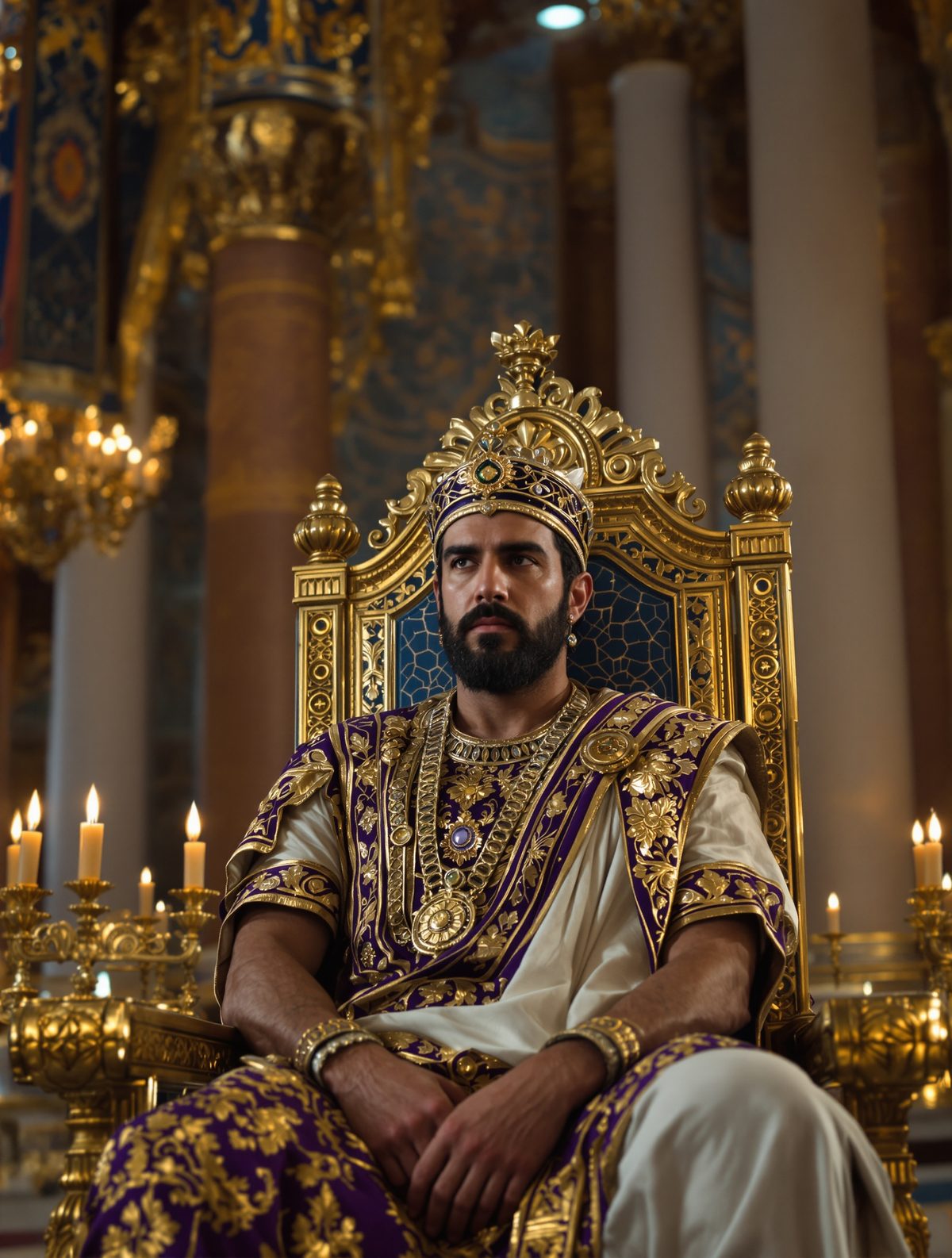
As the September sun rose over York, the court assembled for what everyone expected to be an execution. Erik took his place on the throne, surrounded by his warriors and advisors. Egil was brought forward, still in chains, his massive frame somehow diminished by the weight of approaching death.
But when he began to recite, something extraordinary happened. The poem—later called Höfuðlausn (Head-Ransom)—was a masterpiece. Twenty verses that transformed Erik from a exiled king into a legendary hero, each stanza building on the last to create a portrait of martial glory and royal magnificence that left the court spellbound.
The opening verse set the tone: "Westward I sailed the wave, / Within me my word-hoard. / My ship bore my breast's trees / To the court of the king." Even in translation, the complexity is evident. "Word-hoard" was a kenning for his poetic ability, "breast's trees" referred to his arms, and the verse structure followed the demanding dróttkvætt pattern perfectly.
But what truly saved Egil was verse fifteen, where he compared Erik to the gods themselves: "The king's might is like Odin's, / His courage keen as bright flame. / The god of the hanged grants / Glory to this great ruler." In Norse culture, comparing a living king to Odin was the highest possible praise, suggesting divine favor and eternal fame.
When Egil finished, the hall fell silent. Erik sat motionless on his throne, and for long moments, the only sound was the crackling of torches. Finally, the king spoke: "The poem was well delivered, Egil. I accept your praise. Your head stays on your shoulders, but you are banished from my lands forever. If I see you again, no poem will save you."
The Legacy of the Head-Ransom
Egil's escape from York became legendary throughout the Norse world. The Höfuðlausn was memorized and recited for centuries, not just as a example of poetic skill, but as proof of the transformative power of art. Here was a man who had killed a king's son and lived to boast about it, saved by nothing more than carefully chosen words arranged in ancient patterns.
The story raises fascinating questions about power, art, and human nature that resonate today. In our age of social media and viral content, we understand how the right words at the right moment can change everything. Egil's twenty verses were perhaps history's first example of content going viral—except instead of likes and shares, they earned him his life.
More importantly, the incident reveals something profound about Viking culture that popular media often misses. These weren't just brutish raiders obsessed with violence. They were people who valued artistic achievement so highly that even sworn enemies could be moved by beauty and skill. In a world where most disputes were settled with weapons, poetry represented a different kind of power—the ability to reshape reality through words alone.
Egil lived for forty more years after that September morning in York, composing some of the greatest poetry in Old Norse literature and adding to his already formidable reputation as a warrior. But perhaps his greatest victory wasn't won on any battlefield. It was achieved in a storage room, by candlelight, with nothing but memory, skill, and the desperate inspiration of a man who had one night to save his own life. In our modern world, where the right tweet can topple governments and a well-crafted message can change hearts and minds across the globe, Egil Skallagrimsson's head-ransom reminds us that words have always been humanity's most potent weapon.