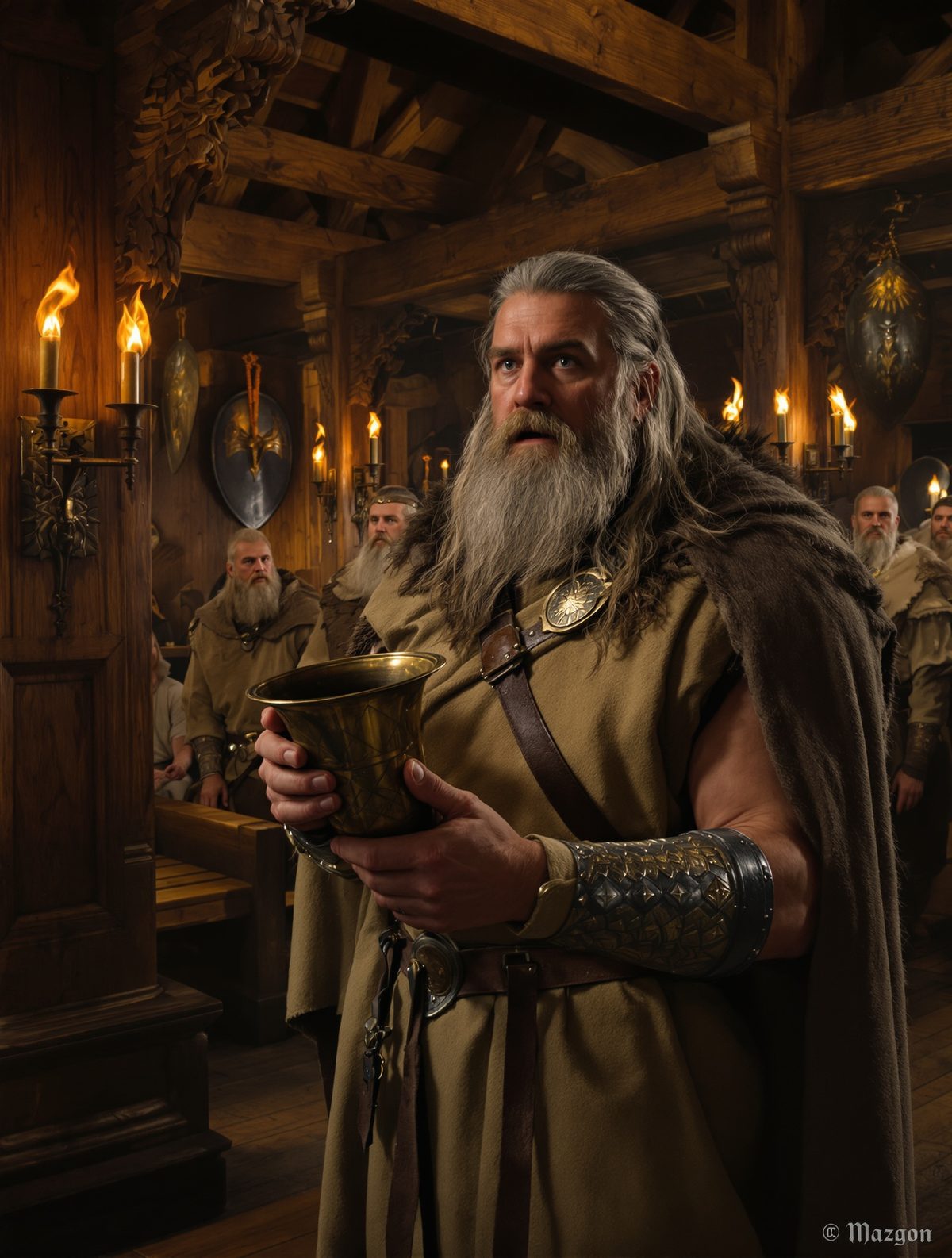
Picture this: A grizzled centurion stands knee-deep in Danube mud, watching his emperor's golden banners disappear into the distance. Around him, exhausted Roman legionnaires grip their weapons tighter as barbarian war cries echo across the river. The year is 602 AD, and Emperor Maurice has just done the unthinkable—he's abandoned his own army to face the enemy alone.
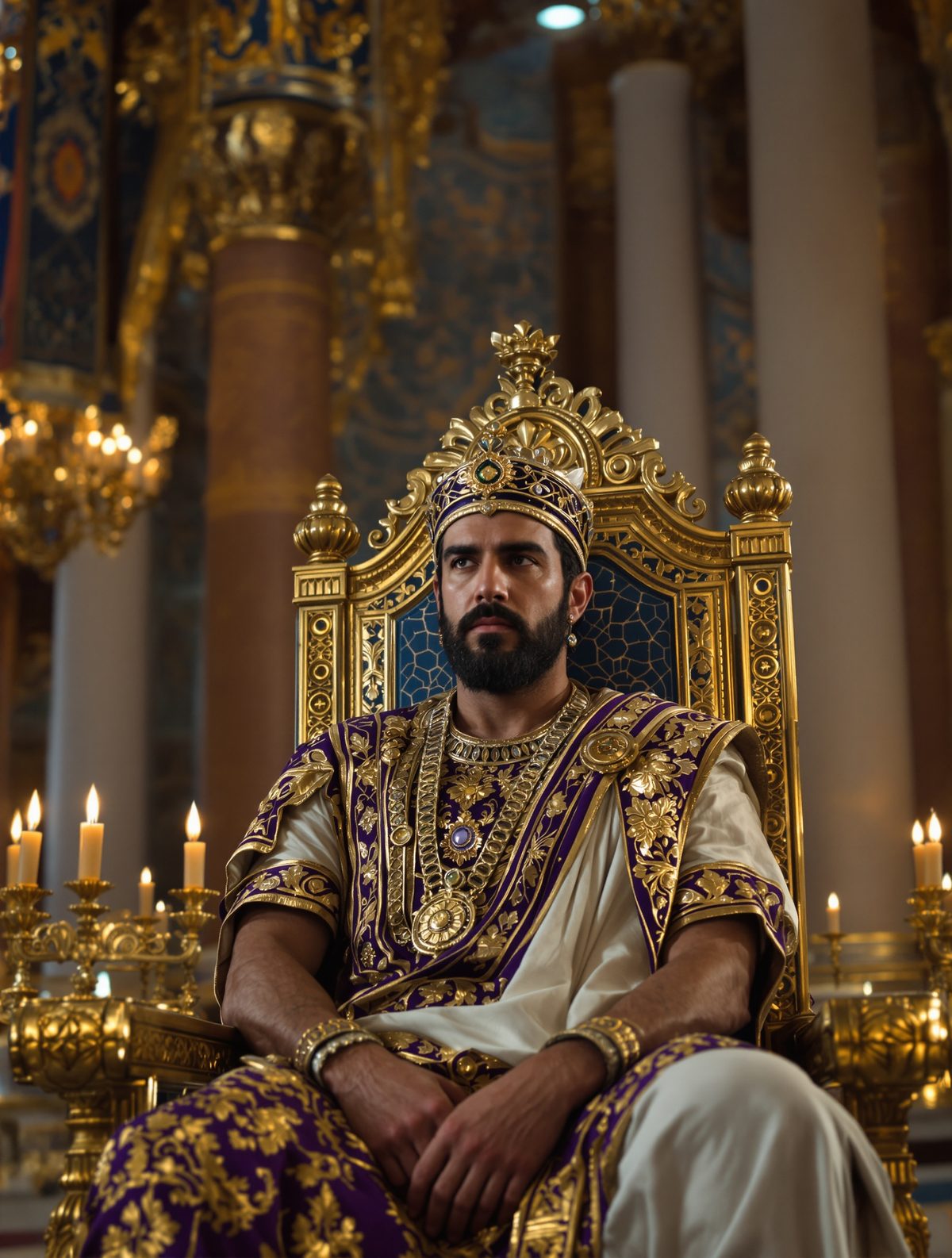
That centurion's name was Phocas, and in eight days, he would be wearing the purple robes of a Roman emperor. His story reads like the most audacious political thriller ever written, except it's all true. This is the tale of how a common soldier murdered his way to the throne of the mightiest empire on earth—and nearly destroyed it in the process.
The Emperor Who Ran Away
Maurice wasn't supposed to be a coward. For twenty years, he had ruled the Eastern Roman Empire with reasonable competence, pushing back Persian invasions and strengthening the frontier. But by 602 AD, something had gone terribly wrong along the Danube River, where Roman forces were locked in brutal warfare against the Avars and Slavs.
The emperor made a catastrophic decision that autumn. Facing a harsh winter campaign and dwindling supplies, Maurice ordered his exhausted troops to remain in enemy territory rather than return to comfortable winter quarters. When his soldiers balked, he doubled down—demanding they live off the land in hostile barbarian territory while he retreated to the warmth and safety of Constantinople, 300 miles away.
To the battle-hardened veterans of the Danube legions, this felt like a death sentence wrapped in imperial arrogance. They had bled for Maurice's empire for decades, and now he was essentially telling them to freeze and starve while he dined on delicacies in his palace. The murmur of rebellion began immediately.
Among those angry voices was Phocas, a centurion whose scarred hands told the story of countless battles fought for Rome. Unlike the perfumed courtiers surrounding Maurice, Phocas knew exactly what it meant to face a Slavic axe or dodge an Avar arrow. And he had just watched his emperor choose personal comfort over the lives of his own men.
Eight Days to Glory
What happened next unfolded with lightning speed that would make modern coup plotters envious. On November 23, 602 AD, the Danube army erupted in open mutiny. But this wasn't a chaotic mob—it was a carefully orchestrated revolution led by experienced military officers who knew exactly how to topple an empire.
The rebellious soldiers proclaimed Phocas as their emperor right there in the muddy camp. Here's the remarkable part: nobody really knows why they chose him specifically. Phocas wasn't the highest-ranking officer, nor was he particularly wealthy or well-connected. Contemporary sources describe him as a common centurion with a reputation for brutality and a face so ugly that it reportedly frightened children. Yet somehow, this scarred veteran possessed the charisma and cunning to unite an entire army behind his cause.
The rebel army began its march on Constantinople immediately. Maurice, receiving reports of the approaching force, made another disastrous decision—instead of rallying the capital's defenses or negotiating with his former soldiers, he simply fled. The emperor of Rome literally ran away from a centurion and his followers, abandoning the greatest city in the world without a fight.
By December 1st—just eight days after the initial mutiny—Phocas was standing in the Hippodrome of Constantinople, being crowned emperor by the Patriarch himself. The speed of this transformation remains one of the most shocking power grabs in Roman history. A common soldier had literally walked from battlefield to throne room in little over a week.
Blood on the Purple
Phocas's first act as emperor revealed the dark heart of his character. He immediately ordered the execution of Maurice and his entire family, including five young sons. The deposed emperor was forced to watch as his children were butchered before his eyes, their heads arranged in a gruesome display before his own execution.
But the bloodletting was just beginning. Phocas had reached the pinnacle of power through violence, and he would maintain it the same way. His eight-year reign became a masterclass in paranoid tyranny that made previous "bad" emperors look positively benevolent by comparison.
The new emperor saw enemies everywhere—and often, he was right. Aristocrats who had served Maurice found themselves facing execution on the flimsiest pretexts. Entire families disappeared into the dungeons beneath the Great Palace. Phocas established a reign of terror that reached into every corner of Byzantine society, from the highest nobles to common citizens who dared whisper criticism.
Here's a chilling detail that contemporary chroniclers recorded: Phocas personally enjoyed torturing his victims. The emperor would descend into the palace dungeons to inflict agonizing deaths on anyone he suspected of disloyalty. His methods were so creative and brutal that even hardened executioners reportedly begged to be reassigned.
The Empire Burns
While Phocas was busy terrorizing his own subjects, the borders of his empire began collapsing. The Persians, sensing weakness, launched a massive invasion that would ultimately capture Jerusalem, Antioch, and even reach the gates of Constantinople itself. The Avars and Slavs poured across the Danube, devastating the very territories where Phocas had once served as a centurion.
The bitter irony was inescapable: Phocas had justified his rebellion by claiming Maurice had abandoned the army, but his own reign was witnessing the greatest military disasters in Byzantine history. Entire provinces were lost while the emperor remained obsessed with imaginary conspiracies in his own palace.
By 610 AD, nearly half the empire had fallen to foreign enemies. Persian armies were advancing through Asia Minor while Avar raiders pillaged the outskirts of Constantinople itself. The city that had stood unconquered for over 300 years was facing existential threat under the rule of the centurion who had promised to defend it.
Meanwhile, in the North African province of Carthage, a patrician named Heraclius was watching these disasters with growing alarm. Like Phocas eight years earlier, he began planning a rebellion. But unlike the crude centurion, Heraclius was a skilled politician and strategist who understood that successful revolutions required more than just military force.
The Green and Blue Judgment
Phocas's downfall came from an unexpected source: the racing fans of Constantinople. The city's population was divided into two main factions—the Blues and Greens—who supported different chariot racing teams in the Hippodrome. These weren't just sports fans; they were powerful political organizations that could make or break emperors.
In 610 AD, as Heraclius's rebel fleet approached the capital, both the Blues and Greens united in their hatred of Phocas. This was unprecedented—the two factions had been bitter enemies for centuries, but the centurion-emperor had managed to alienate literally everyone in his capital city.
When Heraclius's ships appeared in the Golden Horn, the people of Constantinople erupted in celebration. Phocas, the man who had terrorized an empire for eight years, suddenly found himself completely alone. His guards abandoned him, his ministers fled, and the palace servants simply walked away.
The end came with poetic justice. Phocas was captured, tortured, and executed in exactly the same brutal manner he had inflicted on hundreds of others. His body was dragged through the streets and burned while the population celebrated. The centurion who had risen through murder died by murder, and few mourned his passing.
The Lessons of Blood and Ambition
Phocas's story serves as a dark reminder of how quickly civilizations can spiral into chaos when leadership fails. His eight-year reign nearly destroyed an empire that had endured for over a millennium, proving that individual character still matters enormously in human affairs.
But perhaps the most chilling lesson is how easily democratic institutions can be overthrown by charismatic authoritarians who promise simple solutions to complex problems. Phocas rose to power by appealing to genuine grievances—soldiers really were being mistreated by an out-of-touch emperor. His supporters believed they were choosing a strong leader who would defend their interests.
Instead, they got a paranoid tyrant who nearly destroyed everything they claimed to protect. The parallels to modern politics are uncomfortable but undeniable. When we choose leaders based on anger rather than wisdom, when we prize loyalty over competence, when we accept violence as a legitimate tool of political change—we risk walking the same bloody path that led from the Danube mudflats to the dungeons of Constantinople.
History, as they say, doesn't repeat—but it certainly rhymes. And sometimes, those rhymes are written in blood.