The Crown of Thorns
Olaf Haraldsson was no stranger to the ways of war. He had sailed the treacherous seas from England to the distant lands of Constantinople, a feared Viking who struck terror into the hearts of those who dared cross his path. Yet, when he seized the throne of Norway around 1015 AD, Olaf chose a path that few could foresee. Instead of wielding his newfound power with an iron fist, he displayed an uncanny sense of clemency and vision.
His ascent to the throne came at a turbulent time for Norway. Fragmented by regional chieftains and pagan traditions, the land was ripe for conquest and control. But Olaf sought something greater than mere dominion; he pursued unification and the introduction of Christianity to a nation steeped in age-old traditions. With a boldness unfamiliar to many warlords, Olaf Haraldsson envisioned a Norway bound together not only by allegiance to a king but by a shared belief in a divine cause.
No War Without Mercy
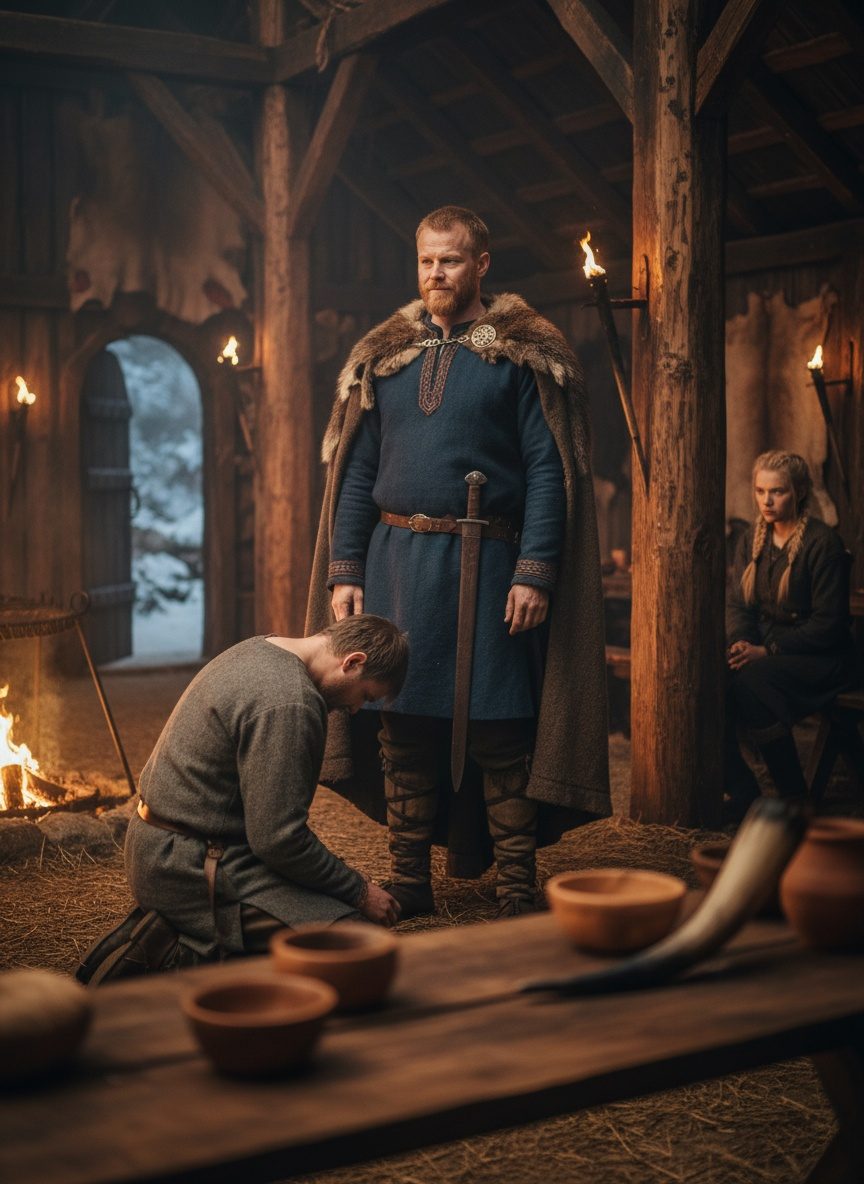
His transformation from a raiding Viking to a devout Christian king was filled with challenges. Chiefs who had pledged support felt betrayed, and resistance brewed throughout the kingdom. Yet Olaf's audacity led him to act with unprecedented mercy. When capturing enemies or rebellious lords, he often chose to spare their lives, offering them freedom in exchange for loyalty. He fed his enemies, seeing potential allies among them rather than despicable foes.
These acts of clemency were unheard of in the Viking Age, where ruthlessness was often the currency of power. But Olaf’s actions were driven by his conviction that a unified Norway under the Christian faith was worth the personal and political risks he took. He even went so far as to personally participate in the construction of churches, laying the foundation stones with his own hands to show his dedication and inspire his people.
The Betrayal
Olaf's magnanimity, however, had its limits. As he pushed forward with his vision, he encountered staunch resistance from pagan factions and rival chieftains who saw his reforms as a threat to their age-old customs and power. His clemency and revolutionary thoughts on governance and faith painted an ever-growing target on his back.
It wasn't long before his enemies converged to form a stronger resistance. In 1030 AD, at the battle of Stiklestad, Olaf faced the ultimate betrayal. Many Norwegians, stirred by influential chieftains and wavering loyalties, turned against him, culminating in a complex mesh of political and personal vendettas. In one of history's cruel ironies, the Viking king who had shown so much clemency was defeated and killed not by an overwhelming foreign force, but by those who once pledged allegiance.
A Saintly Redemption
The aftermath of Olaf’s death led to an unexpected catalyst for his cause's resurgence. The king, who had been deemed a threat in life, rapidly gained reverence in death. Tales of miraculous healings at his gravesite began circulating, earning him the status of a martyr. His tomb became a place of pilgrimage, and tales of Olaf miraculously interceding in the protection of Norway sparked across the land.
The reverence around his figure transcended the initial animosity some had felt. Shortly after his death, Olaf was canonized as a saint. His legacy surpassed his initial efforts, transforming into something even more profound than the sum of his ambitions. The man once reviled by pagan worshippers became an enduring symbol of Christianity's triumph in Norway and Scandinavia.
The Hero We Didn't Expect
Olaf Haraldsson’s tale is not only a chronicle of a Viking's transformation into a saintly figure but a testament to the power of conviction and the risks of leadership predicated on compassion. His life and death underscore a profound truth about leadership during tumultuous times: that true power may lie not in subjugation through force but in the strength of character to act mercifully against one's enemies.
This story resonates beyond its historical setting, urging us to reflect on the complexities of moral courage and the perhaps timeless struggle between tradition and progress. Norway wept at his tomb not merely out of grief but in acknowledging the dichotomy of a feared warrior who had the courage to wield mercy — a rare quality that changed the very fabric of his society.