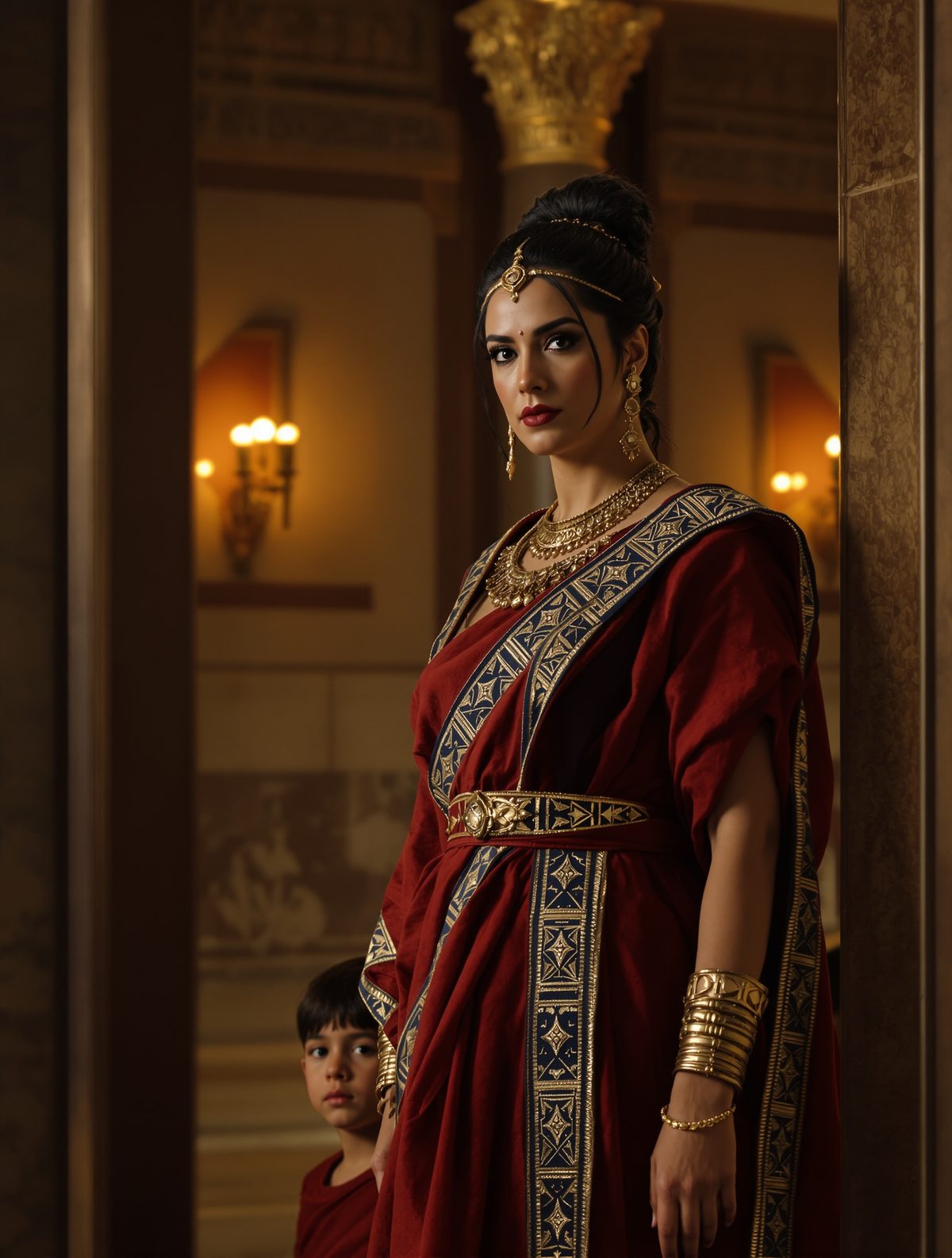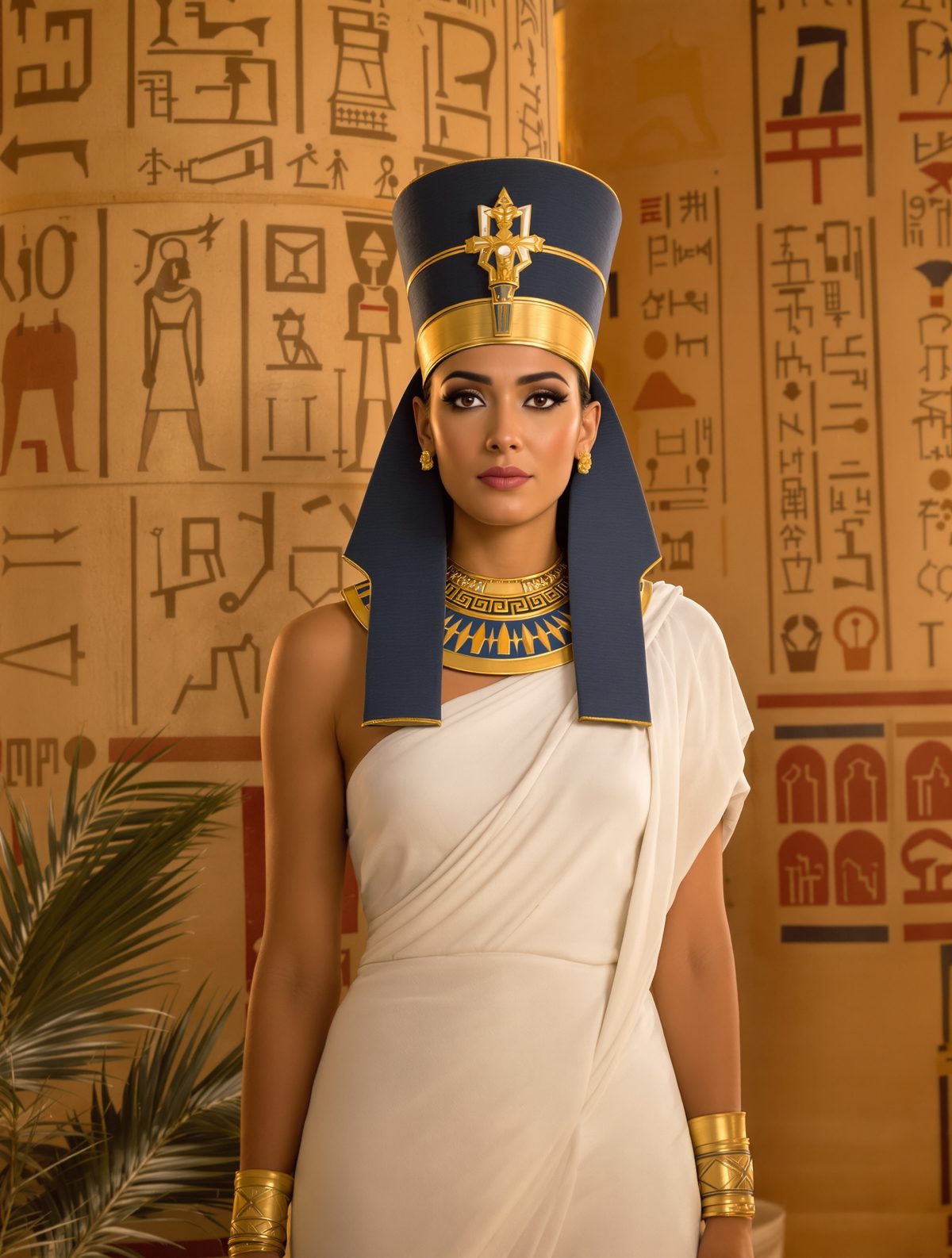
In the golden glow of ancient Egyptian sunlight, a queen's visage was revered across the land, once seen etched into the stones of great temples and immortalized by the artistry of her time. Nefertiti, whose name means "the beautiful one has come," was a queen like no other. For over a decade, she co-ruled Egypt alongside Pharaoh Akhenaten, wielding a power that few women of her era could even dream of. Yet, quite suddenly, in the twelfth year of Akhenaten’s reign, the documentation of her existence vanished completely from historical record. No tomb has been discovered bearing her name, and no inscriptions explain her fate. Where did this powerful queen disappear to? Or, as some scholars suggest, did she disappear at all?
The Rise of Nefertiti: From Obscurity to Power
Before her union with Pharaoh Akhenaten, little is known of Nefertiti’s origins. Some suggest she may have been of foreign royalty, possibly hailing from Mitanni, while others propose she was the daughter of a powerful Egyptian noble. Her rise began around 1353 BC when she married Akhenaten, and together, they embarked on one of the most revolutionary periods in ancient Egyptian history.
Akhenaten and Nefertiti spearheaded a religious transformation, moving away from the traditional polytheistic worship of Egypt in favor of Aten, the sun disk, as the sole deity. This religious reform was so significant that they founded a new capital, Akhetaten (present-day Amarna), to honor the sun god, illustrating their devotion and seeking to solidify their divine rule. Together, they portrayed themselves as the intermediary between Aten and the people, becoming deified figures themselves. Nefertiti was depicted almost as frequently and prominently as her husband, a testament to the power she wielded as queen.
The Golden Age of Amarna: A New Kind of Queen
Life in the newly established city of Amarna was a world apart from any other in Egypt. The art and architecture of the period displayed a unique flair, characterized by its realism and intimacy, moving away from the traditional rigid and idealized depictions of the pharaohs. It was during this time that Nefertiti's famous limestone bust, discovered by German archaeologists in 1912, was created by the sculptor Thutmose. This emblematic piece reveals not only her beauty but also her unprecedented status — a powerful female figure in tandem with the Pharaoh.
Images from the Amarna period often show Nefertiti alongside Akhenaten, suggesting she played a crucial role alongside him politically and religiously. Unlike any queen before her, Nefertiti was shown taking part in royal rituals and riding chariots. Such scenes were not mere illustrations of beauty but of authority and equal partnership.
The Mysterious Disappearance: Year 12
As suddenly as she had risen to power, Nefertiti vanished from the historical stage in year 12 of Akhenaten's reign. Inscriptions and portraits of her ceased to appear, and her name was systematically omitted from future records. What could have led to such an abrupt disappearance?
Some scholars speculate that she may have died suddenly — a possibility given the unpredictable nature of life in ancient times. However, had this been the case, a death of such a powerful queen would likely have been recorded or some form of a monument erected in her memory. Yet, there is none.
Another intriguing theory suggests that Nefertiti did not disappear at all — she transformed. Some believe she assumed the name “Neferneferuaten” and possibly even ruled as a pharaoh in her own right under the name “Smenkhkare.” In both theories, she becomes an enigmatic figure whose narrative might have been intentionally altered or erased.
Did She Become Pharaoh?
One of the enduring mysteries surrounding Nefertiti's disappearance involves the identity of Smenkhkare, a co-regent with Akhenaten in the latter part of his reign. Some Egyptologists propose that Nefertiti could have taken on this new name and position, ruling as a male pharaoh. This was not entirely unprecedented, as other women, like Hatshepsut before her, had assumed similar roles.
Evidence supporting this theory comes from inscriptions and art where figures referred to as Neferneferuaten are depicted, sometimes with feminine endings to titles. However, the mystery remains, as the evidence is scant and interpretation is highly debated. No definitive relic has been discovered to conclusively solve the enigma of whether Nefertiti transitioned into Smenkhkare and assumed pharaonic power.
The Legacy of a Forgotten Queen
The sudden disappearance of Nefertiti from the historical record speaks volumes about the tumultuous nature of power and its fragile grasp. Her story, though only partially reconstructed from the sands of time, offers a window into the possibilities of leadership and the impact of ideological shifts within a powerful empire. It challenges traditional narratives about women's roles in history and reveals the potential erasure of women’s influence in patriarchal societies.
For contemporary audiences, Nefertiti's story is a reminder of how history is often a mosaic of half-truths and speculations, and the importance of continually re-examining the past. It provokes questions about who writes history and whose stories are deemed important enough to be recorded. Nefertiti may have vanished from the stone inscriptions of Egypt, but her mysterious disappearance continues to captivate the imagination and inspire a search for answers.