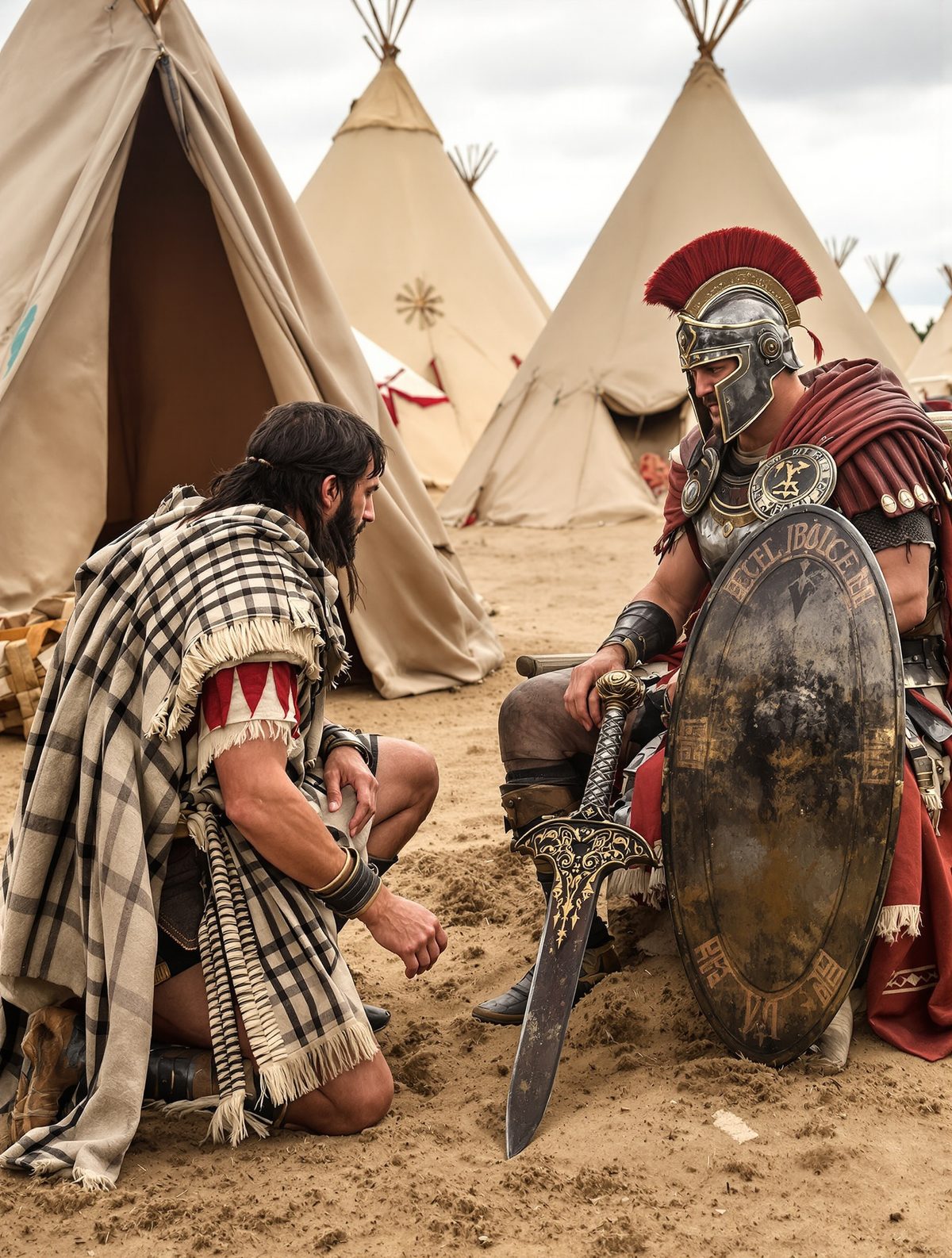
As the sun began to set over the vast expanse of the Median Empire, casting long shadows over the ancient city of Ecbatana, a fear gripped King Astyages, one of dreams and omens. In his heart was a secret, a prophecy so ominous that it clung to him with an icy grip: his own flesh and blood, his daughter Mandane, was destined to give birth to a child who would overthrow him.
The King’s Precarious Maneuver
Astyages ruled as the last king of the Median Empire, a realm renowned for its opulence and clout within the Late Iron Age world. But no riches could assuage the foreboding words whispered by his soothsayers. Guided by fear, the king embarked on a drastic course of action, one that he believed could avert disaster. He sought to weaken the threat before it ever surfaced.
In a calculated move, Astyages married Mandane to Cambyses I, a young yet relatively insignificant nobleman from the outlying region of Anshan in Persia. To the royal court, which teemed with influential prospects, this choice seemed odd, yet Astyages' decision aimed to keep Mandane's offspring obscure and powerless, far from the seat of power.
With the marriage arranged, Astyages believed he’d secured his dynasty's future. Little did he know, in his attempt to alter destiny, he had unwittingly set its wheels in motion.
Mandane's Defiance
Despite being the pawn in Astyages' grand scheme, Mandane was undeterred. She carried herself with grace and wisdom, traits that resonated with her husband Cambyses, igniting a partnership that thrived even in its imposed humility. In the year 600 BC, Mandane gave birth to a son, Cyrus—an event that went unnoticed beyond the quiet hills of Anshan, yet one that would change history irreversibly.
Herodotus, the Greek historian, would later write of the dreams and divine portents that filled the air following Cyrus' birth. Astyages, too, was not oblivious; his dreams persisted, growing more vivid and alarming. Finally, he dispatched Harpagus, his trusted general, with the grim task of disposing of the infant. Yet fate took an unexpected turn.
Harpagus, deeply touched and perhaps wary of divine retribution, could not bring himself to obey. He contrived a plot to secretly spare the child, entrusting him instead to a shepherd reputed to raise him as his own. The seed of revolution had—quite literally—taken root under Astyages' own nose.
A Childhood In Disguise
Raised as the son of a herdsman, Cyrus’ upbringing in the rustic hills of Persia was far removed from the protocols of the Median court. The boy grew robust and unfettered, renowned for his keen intelligence and leadership qualities—characteristics that caught the eye of peers and strangers alike.
According to lore, Cyrus’ noble bearing was impossible to obscure even beneath a shepherd's garb. Anecdotes from his youth detail acts of fairness and a discernible majesty that hinted at his royal lineage. By the time Cyrus reached his adolescence, his identity could be hidden no longer.
Word of Cyrus' presence reached the ears of an ever-watchful Astyages. Letting suspicion supplant his fear, he summoned both Harpagus and his long-hidden grandson to court. There, the truth unraveled in stunning clarity. Yet, perhaps absorbed in his own vanity or finally resigned to fate's course, Astyages spared the boy, sending him back to Persia to rule alongside Cambyses.
The Rise of Cyrus
Cyrus matured into a leader of unmatched prowess and vision. By the year 559 BC, his father Cambyses passed, leaving him to inherit the Persian throne. Possessing a charisma that bridged diverse cultures and tribes, he steadily transformed the fractured Persian state into a thriving entity.
In 550 BC, Cyrus' meteoric ascent reached its zenith. He launched a successful rebellion against the Medes, capturing Ecbatana and deposing Astyages, as foretold. Far from simply dismantling an empire, Cyrus absorbed Median territories, establishing the Achaemenid Empire—the largest the ancient world had ever seen.
Cyrus' conquests spanned formidable lands, from the Anatolian coasts to the Indus Valley. With a rule defined by unprecedented administrative policies and a practice of cultural inclusivity, he secured his place as *Cyrus the Great*, embodying the crown that once lay in the dreams of his grandfather.
Why Mandane's Story Still Matters
Mandane's tale, though shadowed by Cyrus' legendary status, teaches valuable lessons in resilience and unintended consequence. Astyages’ initial fear and subsequent actions unwittingly orchestrated the rise of a leader who championed unity and tolerance. This is a narrative resonant with today's global arena, where actions driven by fear and repression can kindle the very outcomes they seek to forestall.
Moreover, the story underscores the enduring power of prophecy and human will's interplay. Despite the binds imposed upon her, Mandane’s role as a mother and her intangible influence over the man her son became, wove threads into the epic fabric of world history. Her silent defiance laid the bedrock for an empire that would shape civilization for centuries to come.
In reflecting on the saga of Mandane and Cyrus, we're reminded of history's veritable tug-of-war between destiny and self-determined paths, a dichotomy as robust today as it was amidst the sands and stones of ancient Persia.