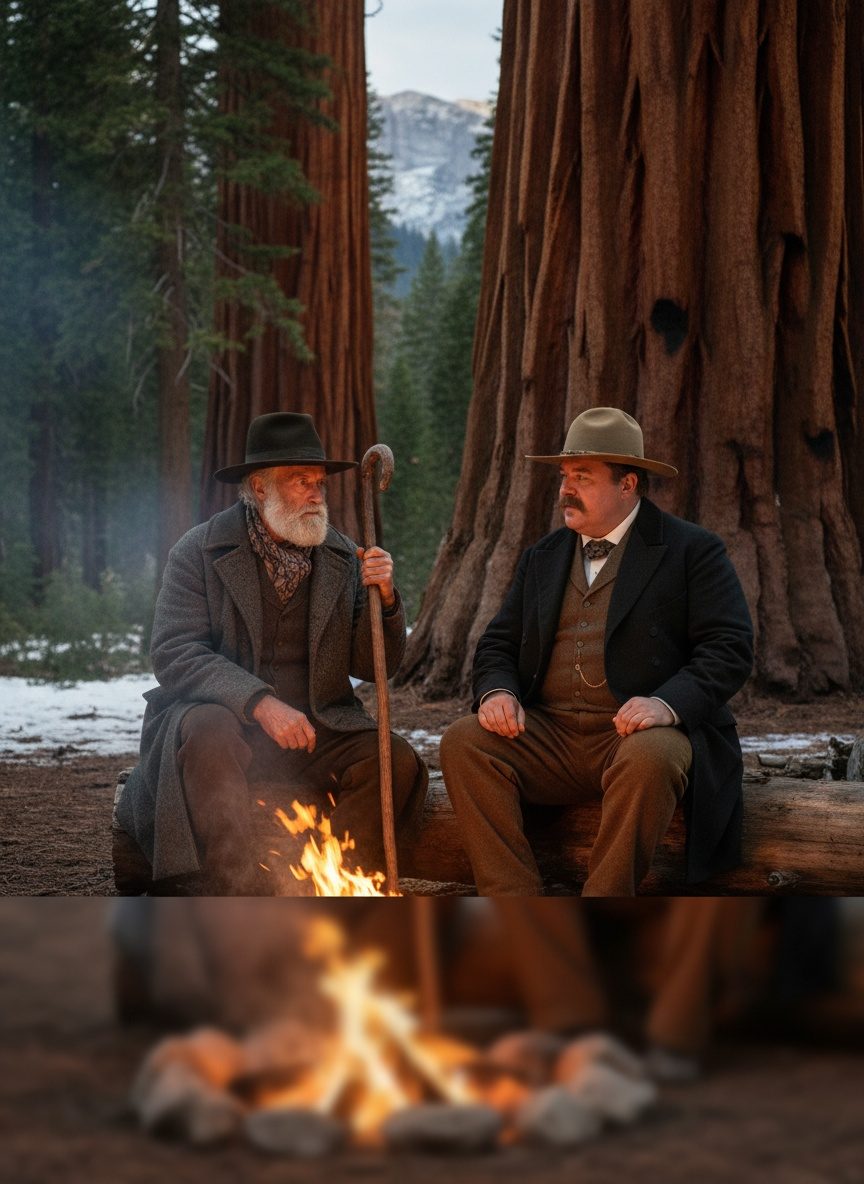
The Sierra Nevada mountains awaken to the crisp freshness of early spring. Snow still clings to the peaks, and the ground yields a muted crunch underfoot as it transitions from frost to thaw. A gentle breeze carries the earthy scents of pine and sap, while the towering sequoias stand silent, sentinels of an ancient world. In 1903, in these serene surrounds, history was quietly shaped beneath the canopy of nature’s cathedral. Here in Yosemite's wilderness, John Muir, a passionate naturalist, met with President Theodore Roosevelt, far from the political stirrings of Washington. This was more than a mere escape; it was an opportunity for transformation, a chance to etch a new legacy in conservation.
The Meeting of Two Minds
Before their wilderness escapade, John Muir was already known for his zealous love of the American wilderness and his tireless efforts to safeguard it. Ever the advocate, he saw in Roosevelt a kindred spirit yet to be awakened fully to the wonders of nature that Muir adored. Roosevelt, a robust man of action, was drawn to adventure. When tasked with the monumental responsibilities of the presidency, he cherished moments where he could leave the modern world behind and reconnect with the primal past. Thus, a pact was made, and Roosevelt accepted Muir’s invitation to camp under the open sky of Yosemite.
The two men embarked on a journey unlike any other, leaving behind the trappings of office and staff, and embraced the simplicity of the wilderness. Muir knew that if he could share the magic of these lands with Roosevelt, the president’s bold spirit might just translate into the legislative protection the landscapes desperately needed. Three nights they would spend together, amidst rugged terrain, sharing stories and visions as they lay beneath the towering giants of the forest.
An Immersion in Nature's Majesty
The days unfolded with the raw beauty of Yosemite as a backdrop. As the sun crept over the horizon, it cast a golden hue over the granite cliffs of El Capitan and the Half Dome, painting a vista many had praised but few had truly seen. The nights brought biting cold to their tents, its chill permeating even the thickest blankets. But Muir and Roosevelt were undeterred, huddled over campfires, immersed in discussions. Muir, ever the storyteller, spoke passionately of glaciers carving the valleys and the delicate balance of life within the ecosystem.
Roosevelt, invigorated by the dialogue and the awe-inspiring views, began to see the vision Muir crafted. The sequoias, ancient and wise, whispered legacies of endurance and survival, their roots intertwined as if to support one another against the winds of time. It was beneath these very trees that Muir made his most heartfelt plea. He articulated the urgency of preserving these lands not only for their beauty but for their ecological importance, their sanctuary of life that centuries-old and unlike any other.
The Catalyst for Conservation
That expedition became a catalyst for immediate and lasting change. Roosevelt left the wilderness with more than just a sense of camaraderie with nature, but with Muir’s impassioned pleas etched into his conscience. Returning to Washington, the president acted swiftly and decisively. Under his leadership, the preservation of America’s natural beauty took on a new scale. It was no longer just a duty to protect what lay in pristine seclusion but a mission to shield an inheritance for future generations.
The result was nothing short of revolutionary. Roosevelt's administration would go on to protect an astounding 230 million acres of public land, a pledge to the wild spaces that inspired him so profoundly. His actions transcended mere policy; they wove conservation into the very fabric of American identity. New national parks, monuments, and wildlife refuges were established, ensuring that the lessons gleaned under those towering sequoias were not confined to personal memory, but forever imprinted on the landscape.
The Enduring Impact
The echoes of those three nights resonate even today. In the stillness of Yosemite, one can imagine the sparks of the campfire and the earnest tones of conversation about the challenges and promises of conservation. The partnership between Muir and Roosevelt was a transformative moment, showing how individual passion and executive power could unite for meaningful change. It reshaped the American continent, offering a new narrative where nature became a revered part of national progress rather than an obstacle to it.
These protected lands have become havens, not just for flora and fauna, but for the human spirit itself, each preserved vista and trail a testament to the foresight of that 1903 meeting. As we wander through these preserved parks today, we do so in gratitude to the visionaries who championed an era of conservation. It reminds us of the profound impacts that can stem from conversations beneath the stars, about recognizing the urgency to act and the responsibility we hold to steward the natural wonders that define our world. Just as deeply as Muir's trees are rooted to the earth, so too must our commitment to their legacy remain steadfast.