He rose against tides many dared not face. Yet, when Hai Rui died in 1587, his possessions fit inside a single box.
Confucian Scholar in Turbulent Times
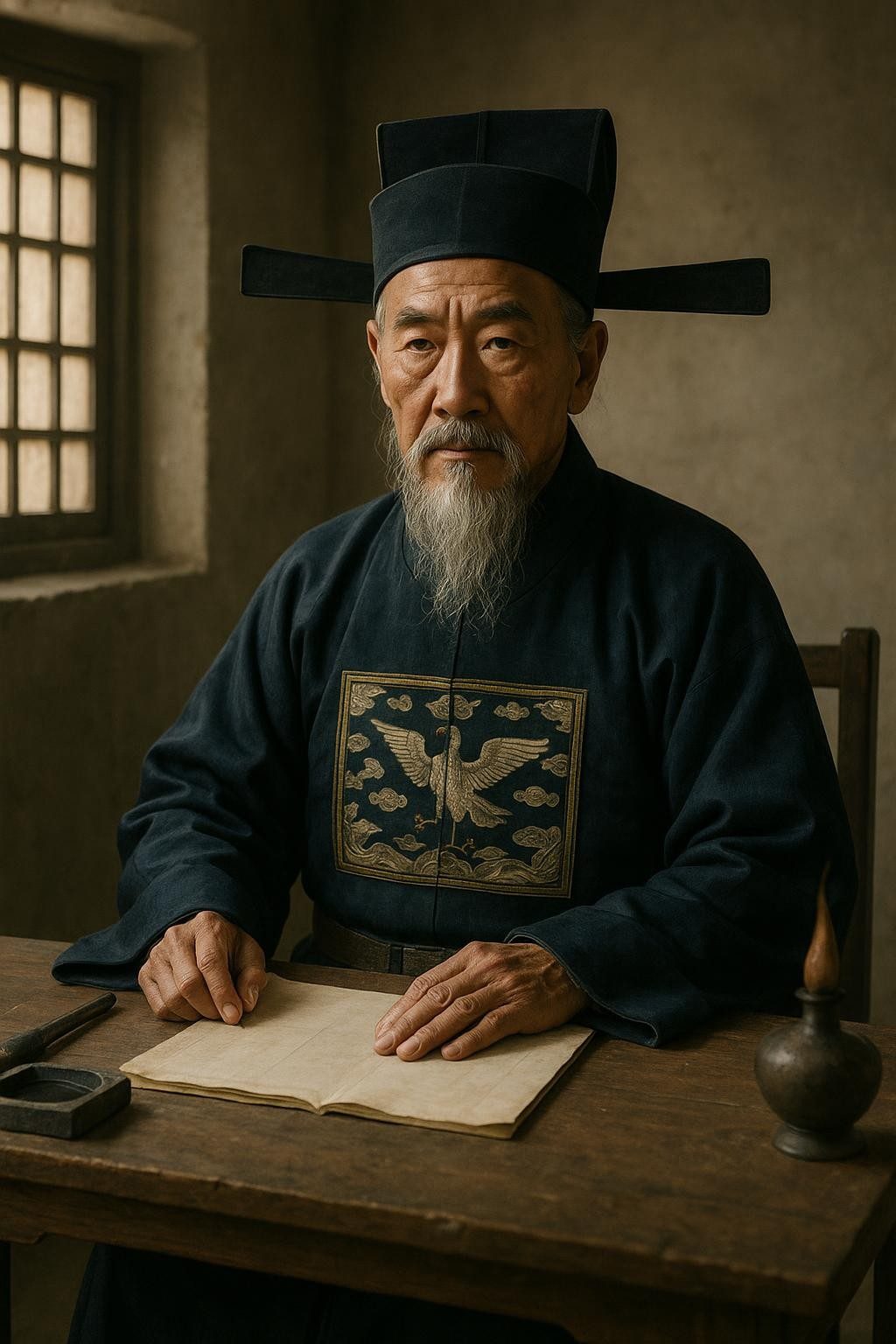
In an era when wealth and grandeur defined power, Hai Rui's commitment to frugality and integrity stood starkly against the opulent court life of the Ming Dynasty. Born in 1514, Hai Rui endured a period when imperial officials often succumbed to bribery and luxury, a moral decay that alarmed the conscientious scholar. His adherence to Confucian values highlighted the virtue of honesty over personal gain, a rarity that made him both revered and reviled in equal measure.
Hai Rui's life was defined by his unwavering dedication to ethical governance. While contemporaries enriched themselves through corruption, he sold his furniture to sustain his family. Every penny of his meager earnings was a testament to his steadfast belief in righteousness. His moral compass did not waver, even in the dangerous, politically charged atmosphere of the Ming court, where alliances were fragile and loyalties often shifted like sand in a desert storm.
The Audacity to Return Salary
Hai Rui's integrity was perhaps best exemplified in an unprecedented act: the return of his salary. One day, he received his official compensation but immediately sent it back, reasoning that he had not performed services worthy of such payment. This audacious move was unheard of in a court well-versed in the art of deception. To those mired in avarice, it was an act bordering on madness. To moralists, it was a beacon of hope.
Ordinary citizens and low-ranking officials whispered tales of the incorruptible Hai Rui. They spoke of a man so committed to virtue that he would challenge not just scheming officials but even emperors, wielding his unyielding honesty like a sword in an arena where deceit was the lingua franca. His principles never faltered, regardless of the personal cost, providing a striking contrast to the shadows of corruption cast by others.
A Lonely Journey Against Corruption
Throughout his forty-year career, Hai Rui’s relentless fight against corruption angered many a powerful figure. His fiercest rival was Zhang Juzheng, a grand chancellor whose vast influence stretched across the empire. The two clashed repeatedly as Hai Rui attempted to dismantle the entrenched corruption that Zhang both inherited and perpetrated. In this dangerous duel, Hai Rui wielded truth as his sword and integrity as his shield, never yielding to the persistent venom of political hostility.
Despite the numerous threats against him — be they physical or political — Hai Rui maintained his course. His dedication became a touchstone, rallying cries for those languishing under the weight of corrupt bureaucracies. Yet, the cost of such bravery was a life of ascetic simplicity, a stoic acceptance of the void material gain left behind. In the eyes of his admirers, Hai Rui was a true scholar-official, unmarred by the temptations that ensnared so many others.
Final Days: A Humble Passing
By 1587, with Zhang Juzheng deceased, Hai Rui remained as one of the last vestiges of moral resilience in a court not yet rid of its indulgences. When he breathed his last, he left behind possessions so sparse they fit inside a single box. It was as though his physical self imitated the essence of his character: clean, light, and true.
His death should have signaled the end of his battle, but it only served to illuminate the integrity he embodied throughout his life. Colleagues pooled their coins to give him a burial, a touching testament to how deeply his morals had resonated with those around him. In a surprising gesture of respect, the emperor himself ordered a state funeral, a rare honor for someone who had lived so simply.
The Weeping Emperor
Among those touched by Hai Rui's passing was the emperor, rumored to have been moved to tears. The emotion behind those tears remains a subject of intrigue. Were they shed for the loss of a rare honest servant of the empire, or for the poignant reminder of the court's prevailing moral decay?
Ultimately, Hai Rui’s life and death offered a profound lesson for an empire pursuing grandeur at the expense of virtue. In a world teeming with transient wealth, his story continues to remind us that true legacy lies not in riches but in righteousness. His simplicity transcended materialism, echoing through generations as a call to uphold integrity above all else. And in our times, as in his, it's a guiding light often overshadowed but never dimmed.