The eve of March 1, 1896, seemed destined for Italian triumph. But Ethiopia had other ideas.
In the late 19th century, the great colonial prize that was Africa had become a hornet’s nest of European ambitions, where flags, borders, and ownership were scribbled in capitals far removed from the lands they claimed to know. Italy, eager to carve a stake in this scramble, set its eyes on the Ethiopian Empire, the last substantial African kingdom yet to fall under colonial rule. What they dismissed as just another military expedition to force Ethiopian surrender erupted into the momentous Battle of Adwa — a confrontation that would not merely disrupt their imperial designs but rewrite the colonial playbook forever.
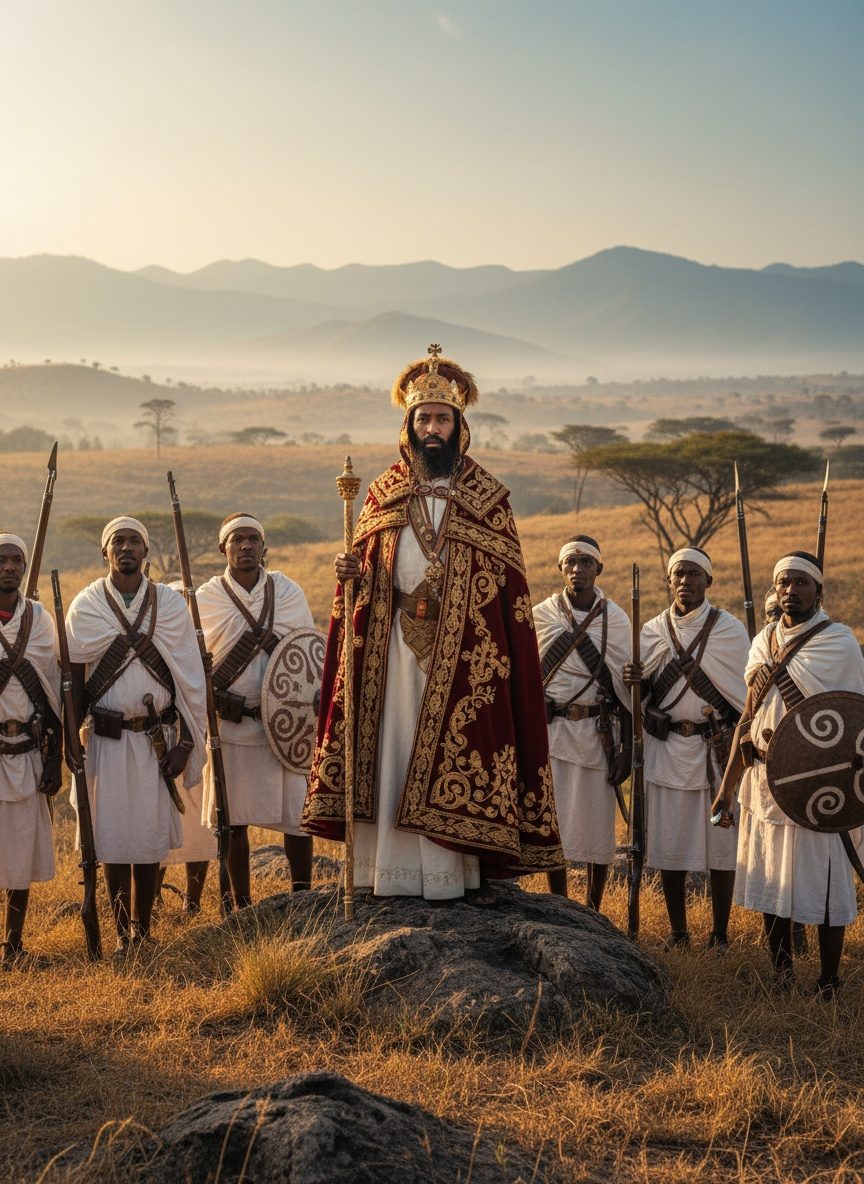
Emperor Menelik II, the shrewd ruler of Ethiopia, recognized the gathering storm clouds long before they broke. Menelik, who became emperor in 1889, had no illusions about the intentions of the world beyond his borders. Looking at to the West’s insatiable hunger for conquest, he resolved that Ethiopia would not be an easy meal. Over several painstaking years, he orchestrated a clandestine campaign of military modernization. Menelik exploited the rivalries of European powers, purchasing modern rifles, artillery, and munitions to bolster his defenses, securing supplies from France, Britain, and Russia, who were all more than willing to supply him in order to counterbalance Italy's growing influence.
By the time the morning of battle arrived, Menelik had marshaled a coalition of Ethiopian forces hewn from the heart of the empire's cultural and military might. From the central plains to the rugged highlands, warriors gathered, answering the call not just of a ruler but of a nation under threat. Though outnumbered by Menelik's approximately 100,000 soldiers, the Italians relied on their superior technology and extensive experience in colonial military engagements to secure victory. But numbers alone would not decide this clash.
The Battle of Adwa unfolded in the misty valleys and sun-dappled plains framed by the jagged escarpments of the Ethiopian highlands. Here, any visiting would-be oppressor's learning curve was steep — both literally and militarily. These were not barren lands lacking pride; they were fortified by natural landscapes and an unyielding culture rich with history and legend. Menelik knew the terrain like a general knows his chessboard; he was in his element, while the Italians, confident but complacent, were in foreign lands, underestimating the terrain just as much as they did Menelik's will to resist.
The clash was ferocious. Menelik's troops, buoyed by both strategic high ground and intense nationalistic fervor, utilized their knowledge of the territory to outmaneuver the technologically advantaged but tactically rigid Italian forces. Amid the clamor of battle, the courage of warriors wielding everything from modern rifles to traditional spears and shields painted a scene both chaotic and awe-inspiring. The Italians, stranded in their assumptions of superiority, soon found themselves in a storm — their formations breaking against the resilience and daring of Menelik’s ranks.
By nightfall, Ethiopia's warriors stood triumphant amid the scarred landscape of battle, the Italian forces shattered, their hopes of conquest obliterated. News of the disastrous defeat traveled swiftly across Europe, sending tremors through the very foundations of colonial ambitions. Here, finally, was a decisive retort to the rhetoric of Manifest Destiny and divine providence that colonial powers cloaked their ambitions in. Here was proof that resistance was not only possible but could be lethally effective against even the mightiest of armies.
The reverberations of Adwa were profound. Africa, so often partitioned and parceled by foreign hands, now had an emblematic victory to rally around. Menelik's success was, in the trappings of global politics, a beacon of hope and a blistering wound on the colonial psyche. For other African nations and populations under colonial rule, Adwa became more than a battlefield; it stood symbolically as a burning testament to the power of unity and sovereignty.
Ethiopia’s victory, however, was not simply a narrative of triumph; it was a turning point in the struggle for independence across the continent. While the immediate impact appeared localized, the echoes of Adwa inspired a generation of leaders and movements seeking freedom from colonial chains. Menelik II's blend of diplomatic acumen and military strategy demonstrated that the era of unquestioned European dominance could be challenged and that nations could chart their futures in defiance of imperial designs.
Yet, the story of Menelik II and the Battle of Adwa also asks us to consider the deep currents of history that shape our present world. How Menelik armed and united his people speaks volumes to the necessity of vigilant leadership in the face of existential threats. Today as ever, the echoes of history's battles continue to remind us that the quests for sovereignty and equality are not relics of a bygone era but ongoing struggles that define our humanity.