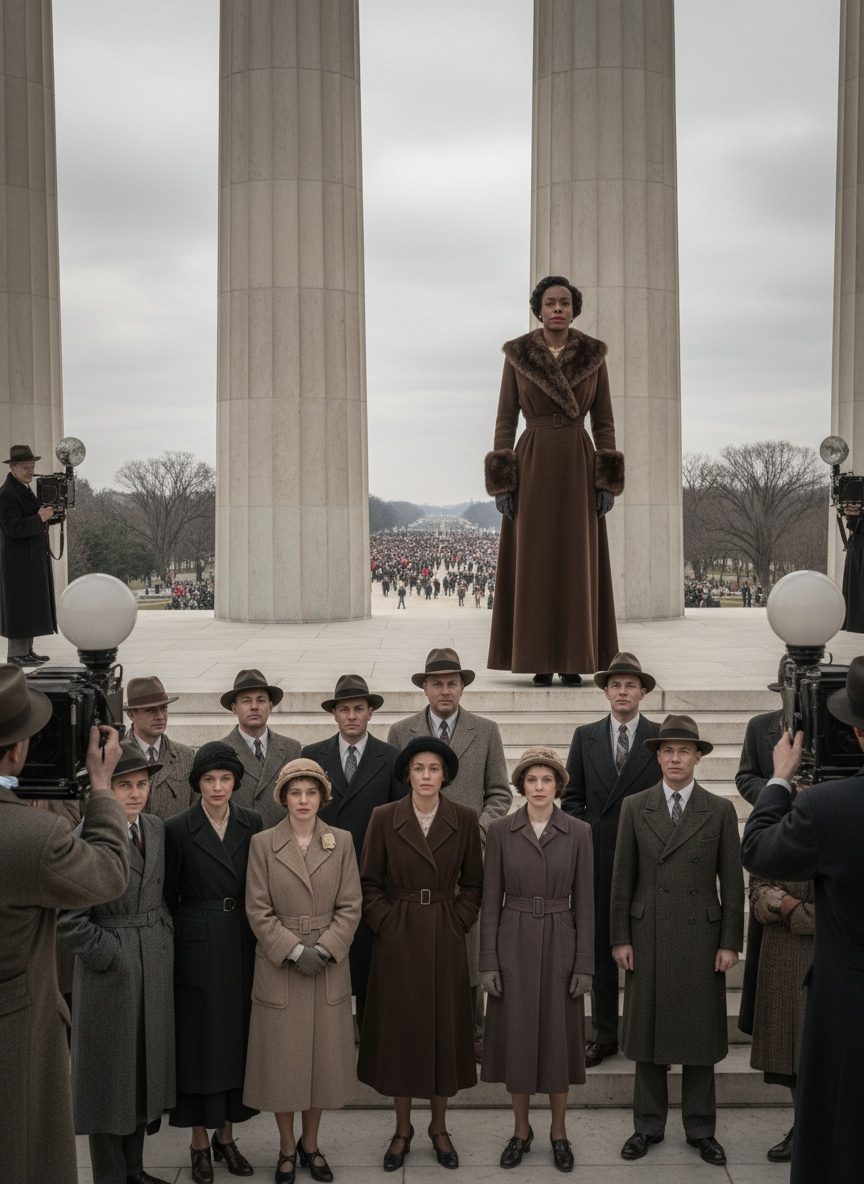
April 9, 1939. A soft breeze rustled the cherry blossoms along the Potomac River.
A Voice Unheard Within the Walls
The stage was set in the heart of Washington D.C., where one of the most remarkable voices of the 20th century, Marian Anderson, found herself barred from performing at Constitution Hall. The venue was under the jurisdiction of the Daughters of the American Revolution (DAR), an organization that explicitly restricted its stage from Black performers. Despite Anderson's international acclaim and virtuosity, the color of her skin sealed the hall's doors against her.
Anderson was already a world-renowned contralto whose concerts captivated audiences worldwide. Her rich, emotive voice broke linguistic barriers, moving listeners without need for translation. Yet in her own country, she faced a reality that talent could not transcend—racial discrimination. The DAR's decision stood as a stark reminder of the entrenched segregation shaping America at the time.
The First Lady's Rejection
The refusal of the DAR to allow Anderson to perform did not go unnoticed. Eleanor Roosevelt, the First Lady of the United States and a member of the DAR, found the decision unconscionable. In a move that resonated through the corridors of justice and equality, Roosevelt resigned from the organization. Her resignation was publicly announced and printed in newspapers across the nation, bringing significant attention to the racial injustice Anderson faced.
Roosevelt's bold disapproval marked a pivotal moment in the struggle for civil rights. By using her platform to signal her condemnation of the cultural barricade erected by the DAR, she invited the country to reconsider the social acceptability of racial discrimination. It was a gesture that not only demonstrated her belief in equality but also supported Anderson's right to perform freely anywhere.
A Monumental Stage
The Lincoln Memorial, usually a quiet symbol of hope and unity, transformed into an expansive concert venue. As word of the DAR’s rejection spread, a group including Secretary of the Interior Harold L. Ickes made the bold decision to host Anderson at the steps of the memorial, an iconic location directly facing the injustices of the moment. Ickes, who announced, "Genius draws no color line," was instrumental in orchestrating this redirection from exclusion to inclusion.
On Easter Sunday, April 9, 1939, with the towering figure of Lincoln behind her, Anderson stepped onto the stage. Her audience was unprecedented, an estimated 75,000 people gathered to listen, with countless others tuned in via radio broadcast. The event transcended a mere concert; it became a profound statement against racial prejudice, with the memorial lending its gravitas to the cause of equality.
As Anderson sang "My Country, 'Tis of Thee," the echoes of her voice entwined with the historical significance of the setting, resonating with a promise of liberty and justice. The choice of the Lincoln Memorial as a venue underscored the day's powerful message, reminding the nation of Lincoln's legacy and the ongoing struggle for genuine freedom and equality.
The Echoes of Anderson's Courage
The impact of Marian Anderson's Easter Sunday performance went beyond the immediate uproar. Her resilience transformed a personal affront into a national dialogue about race and opportunity in America. Anderson's refusal to be silenced, coupled with Roosevelt's outspoken support, illustrated the power of collaboration across races and political thresholds to challenge the status quo. This event not only highlighted racial inequality but also catalyzed developments in civil rights, paving the way for future advocates.
For many, the image of Marian Anderson standing dignified and resolute remains a poignant reminder of the battles fought for equity and inclusion. The synergy of her voice at the Lincoln Memorial symbolized not just an artistic triumph but a cultural revolution, one that inspired generations to pursue justice through peaceful yet impactful means. Her story reverberates through history, serving as both a beacon and a benchmark for what true equality might look to achieve.
In remembering Marian Anderson's 1939 concert, we are invited to reflect on the persistence of systemic barriers and the courage required to dismantle them. It's a chapter in history that beckons us to continue striving for the nation promise found in song, when courage and conviction confront prejudice and herald change, with one voice against the tide.