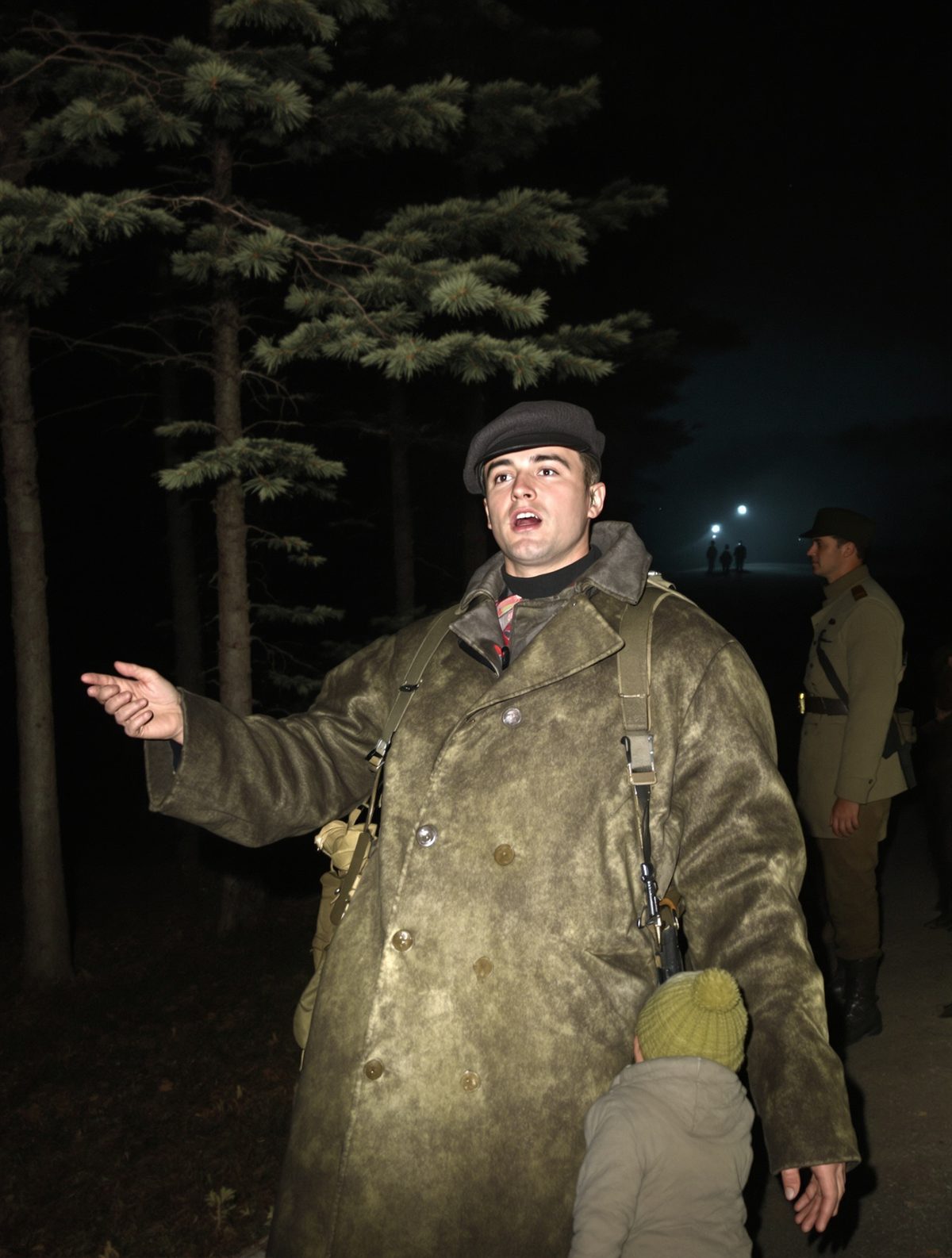
In the hush of a forest clearing in Nazi-occupied France, a tense moment unfolded at the edge of life and death. A convoy of Jewish children, their faces marked by fear and exhaustion, paused at a most perilous waypoint: a Nazi checkpoint. The very air seemed to hold its breath. Yet, amongst the profound silence, a child's voice rose — a small, frightened boy began to cry. As the Nazi soldiers stirred in suspicion, a young man stepped forward from the shadows. With an ethereal grace, he began to mime, drawing on an art form older than war and pure in its simplicity. The boy fell silent, the danger passed, and once again, the journey towards freedom continued. Little did the world know then that this young man would grow to be known as the greatest mime of all time: Marcel Marceau.
The Unlikely Rescuer
The unassuming savior of these children, Marcel Marceau, was born Marcel Mangel on March 22, 1923, in Strasbourg, France. A Jewish boy with dreams that reached far beyond the confines dictated by his heritage, Marcel was captivated by the world of performance arts. His fascination took root after he saw a Charlie Chaplin film during his childhood. Little did it seem to matter in the years ahead, with the world plunged into the chaos of World War II, that his dreams of theatrics would become a formidable life-saving tool.
When Germany invaded France in 1940, Marceau's family was forced to flee to Limoges. His father, a butcher, sadly did not survive the war — a victim of Auschwitz. Marcel, however, refused to become a victim of history; instead, he stepped into a role within the French Resistance. He adopted the surname 'Marceau' in homage to a French Revolutionary general and began his clandestine work helping Jewish children escape to the Swiss border.
The Power of Silence
Marceau's mime wasn't just an art form; it was his weapon. Before each perilous crossing, Marcel would prepare the children, a calming presence amidst impending terror. The mime acts he performed were not only distractions but lessons in silence. Through the art of pantomime, he engaged the children, capturing their attention and teaching them how to communicate — without a single utterance.
The miracles he conjured with mere gestures left lasting impressions on the young minds he saved. These performances were described as being full of hope in the face of despair, where Marceau created entire worlds and conveyed profound emotions solely using his body. To the children, he was not just a guide but a teacher, offering them the surreal gift of make-believe amidst an all-too-grim reality.
Walking the Tightrope of Danger
As the Resistance fought in the shadows of a war-torn nation, Marceau's missions grew increasingly audacious. From 1942 to 1944, it is estimated that he shepherded hundreds of Jewish children out of the clutches of Nazi forces. These journeys to Switzerland became legendary within the circles of the Resistance, perilous endeavors laden with the eternal dread of capture or betrayal.
One such mission brought young Marceau to the outskirts of Lyon. With a forged document declaring him to be a Boy Scout leader, he led three groups of children to safety across thousands of miles. In a time when human decency felt scarce, Marceau's courage was astonishing; each silent crossing was a tightrope walk on the edge of annihilation, with survival hinged on the echo of silence he crafted.
The Privilege of Silence
Post-war, Marceau's mime battles transformed into globally celebrated performances. He created the iconic character Bip the Clown, whose silent antics captivated audiences worldwide. The mime thus entered the annals of performing arts history, held in the same regard as Balanchine in ballet or Callas in opera. Yet, for Marceau, those wartime walks were the most important performances of his life.
Throughout his career, Marceau never ceased to remind the world of the power inherent in silence — a privilege and weapon which saved lives. His miming was not escapism; it was a demonstration of human resilience and ingenuity, where silence was transformed from void to voice.
Legacy of Hope and Resistance
The significance of Marceau’s wartime actions extends beyond the pages of history books, touching on the timeless truths of human courage, the arts, and the relentless spirit to outlive hatred. For generations that followed, he became a testament to the vital role of art during times of crisis, where hope and survival could spring from the most unexpected places.
Today, Marcel Marceau’s legacy serves to remind us of the quiet strength dwelling within each of us. In a world where noise too often reigns supreme, it is essential to remember that sometimes the most profound power lies in silence. His remarkable story urges us to ponder: when faced with the darkest times, what might we achieve if we dare to step forward and lift our own voices in ways that transcend words?