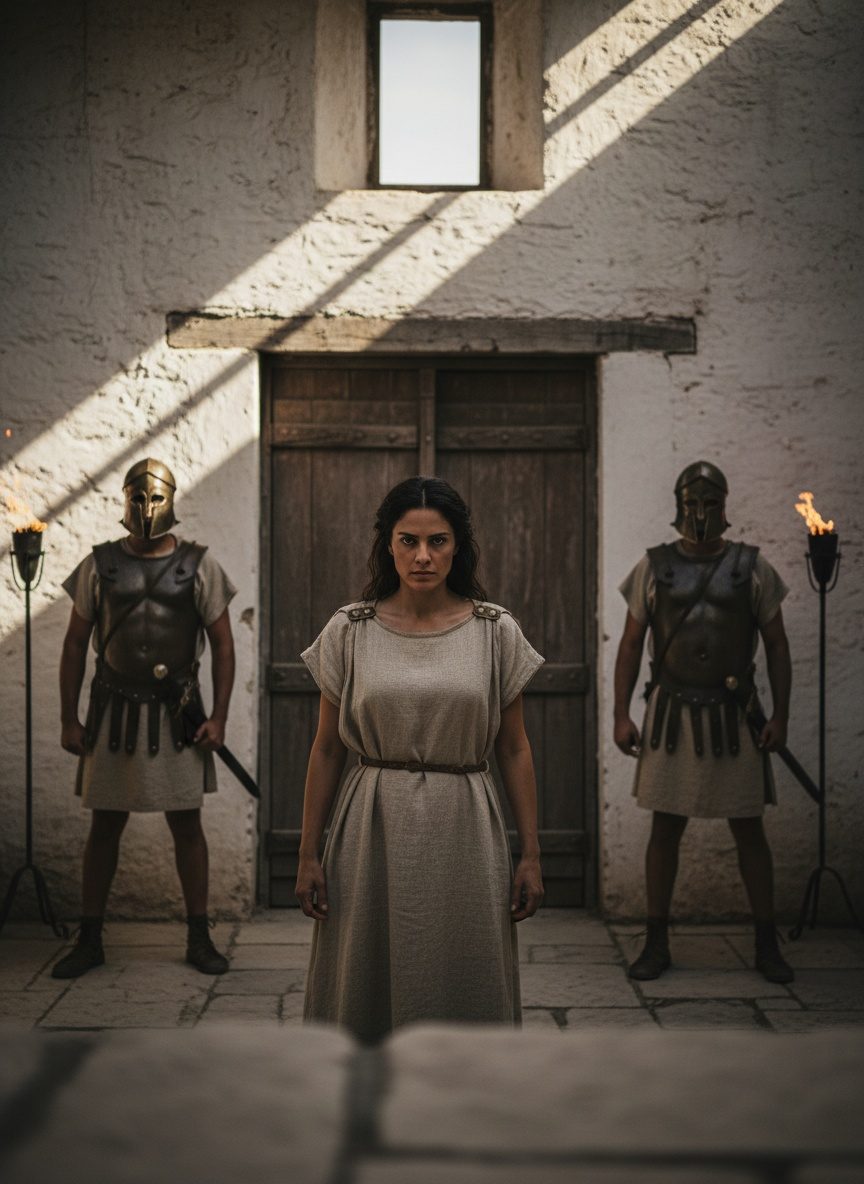
She was not a warrior nor a noblewoman. Just a simple woman entangled in the schemes of men, yet her defiance would seed a legacy that Athens would remember through the ages.
The Night of the Assassins
Circa 514 BC was a tumultuous time for the city-state of Athens. Under the tyrannical rule of the brothers Hippias and Hipparchus, the proclamation of freedom was far from achievable. Desiring change, two men conspired against the despotic regime: Harmodius and Aristogeiton. Though their motives are debated, what remains clear is their resolve to eliminate tyranny from their beloved city.
An opportunity unveiled itself during the Panathenaic Festival, a grand celebration dedicated to the patron goddess Athena. Amidst the festive masks and fervent chants, the duo saw an opportune moment. They struck swiftly, and though Hippias survived, Hipparchus did not. Chaos erupted in Athens, and the two conspirators would soon face the bitter reprisal of their surviving enemy. Yet, there was someone else amidst this unfolding saga, someone who was neither attacker nor tyrant but had a role intertwined with both.
Leaena's Silent Defiance
Leaena, known in whispers and shadows, was no ordinary woman. She wasn't cloaked in the garb of rebellion nor did she decree proclamations from on high. Instead, she was a woman whose life intersected with fate's designs through her association with Harmodius and Aristogeiton. The details of her direct involvement remain shrouded in mystery, consumed by the flames of the conjectures of history. However, what is revealed is the extent of her courage when confronted by the cruel hand of fate.
Captured by the tyrant's agents, Leaena was thrust into a world of pain and torment. In a bid to unravel the resistance network, her captors demanded secrets they believed buried within her mind. They underestimated her resolve, perhaps viewing her merely as a woman, easily pliable. But Leaena had one undeniable truth to protect, and in the torturous silence of her confinement, she made a harrowing decision.
She bit off her own tongue. The unyielding silence that followed was a testament to the depths of her bravery—a silence so profound it echoed through the hearts of those who would later hear her story.
A Monument to Memory
To the Athenians, the tragic tale of Leaena was not that of simple sacrifice. It was an embodied resistance, a dramatic yet silent scream against oppression that lingered with them long after the dust had settled. As years passed, tyrannies fell, and the ideals of democracy began to take tentative roots upon the Athenian grounds. Yet, the memory of Leaena's sacrifice withstood the passage of time.
In commemoration of her unyielding spirit, Athens, ever a city of art and philosophy, did what it knew best. It immortalized her courage through the creation of a monument. The details of the monument are as lost to time as her exact role in Harmodius and Aristogeiton's fate. Still, its purpose shines clear—the embodiment of a silent defiance against the hegemonies that would strangle the cradle of democracy.
Leaena's monument stood not only in honor of her deeds but as a broader emblem of civilian courage against tyrannical rule—a reminder that even those who silently resist are pivotal in shaping the course of history.
The Unseen Impact
Though little known except to those who delve into the corners of ancient narratives, Leaena's story provides a multifaceted perspective on the power dynamics of Classical Greece. It underlines that resistance against oppression has come from all corners of society, not just the valorized military generals and political masterminds. This was the tale of a woman whose life and death offered invaluable lessons on resolve and the very human struggle for freedom in a world of power and patriarchy.
Today, as we walk paths paved by centuries of struggle for democratic ideals, the story of Leaena reminds us of the silent warriors among us. It evokes questions about the sacrifices made by those who are often relegated to the margins of historical narratives. Her memory endures in the echoes of Athens and beyond as a vivid testimony to an indomitable spirit forged in the crucible of tyranny—a reminder that often, the most potent weapon against the mightiest tyrant is not the sword, but the silence of defiance held steadfast.