The embers of a dwindling fire flickered weakly in the dim chamber as a cold wind howled through the cracks in the stone walls of Jorvik, known today as York. The sky was cloaked in twilight's deepening shades, and the air was brisk, a typical night in 936 AD. Yet, in this intensely cold and unyielding landscape, an immense heat of tension suffused the room. King Eiríkr Bloodaxe, known for his fierce reputation and merciless edicts, sat brooding on his throne. The Viking age was unforgiving, and justice often came as swiftly as a sword thrust. But tonight, something different was stirring within these ancient stones. An unusual trial of words was about to unfold, with a man's life hanging in the balance.
The Skald's Conundrum
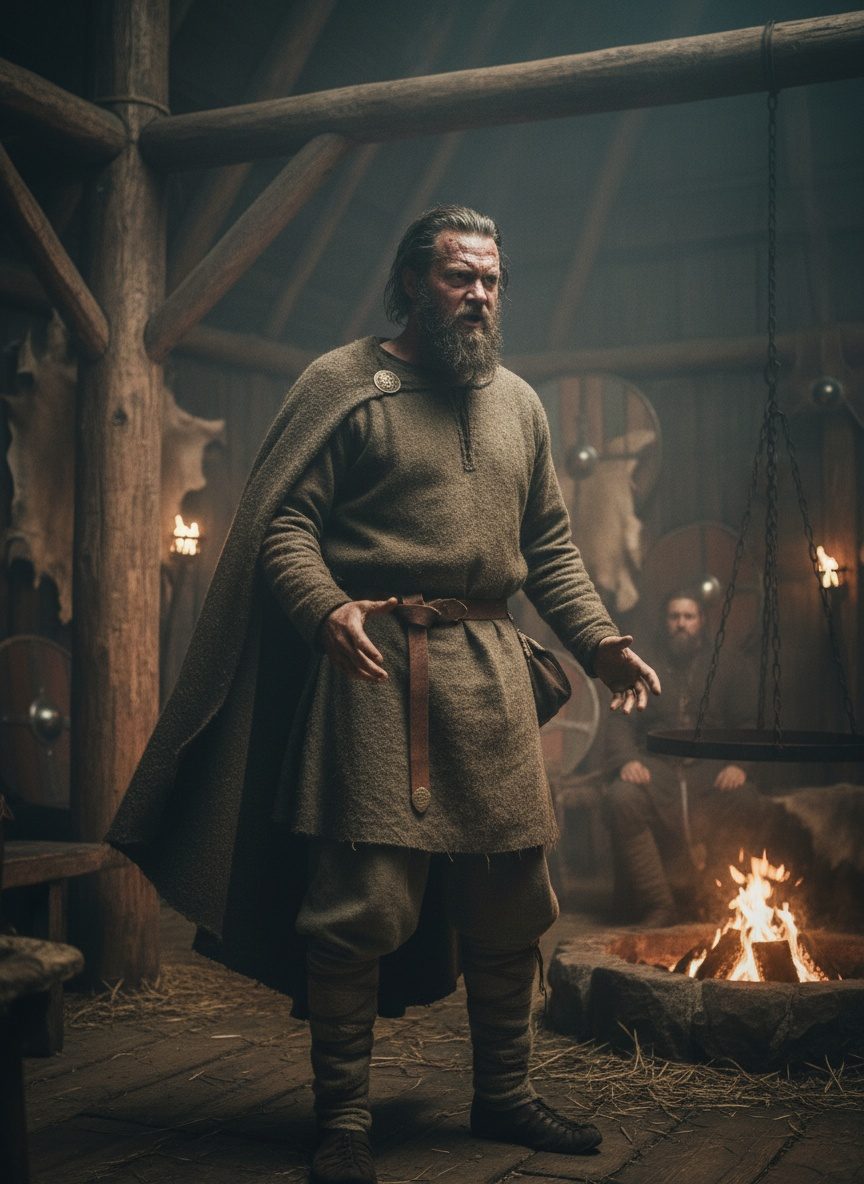
Egill Skallagrímsson, a Norse skald of great renown, faced his darkest hour. Brought in chains before King Eiríkr Bloodaxe, Egill stood defiant, embodying the warrior spirit that pulsed through the veins of many Scandinavian raiders. Egill was no mere poet; he was a formidable warrior and a revolutionary thinker whose verses could evoke both the beauty and brutality of his world. His words had gotten him into trouble before, but never like this. He had offended the king, cursed him, and slain his men—a trifecta of crimes that practically ensured a death sentence.
As Eiríkr's gaze bored into him, the gravity of the situation was unmistakable. Egill's reputation as a fierce warrior had not shielded him from Eiríkr's wrath. The king, after all, was no stranger to battle himself; he had earned his epithet "Bloodaxe" for his bloody exploits and brutal efficiency. Execution seemed inevitable, and yet, Egill had been allowed one last night. His only weapons now were his wits and words. In Norse culture, poetry held immense power, and skalds—poets—were revered. Their verses celebrated lineage, valor, and loyalty, turning warriors into legends. And so, Egill harnessed the power of the ancient art, composing a drápa, a series of twenty stanzas, filled with praise and eloquence—would it be enough to sway a king?
A Poetic Redemption
As dawn's first light crept into the corners of the hall, Egill began to recite. The verses flowed from his lips like a river of gilded words. The stark contrast between the harsh reality of his situation and the softness of his eloquence captivated all who listened. It was more than a poem; it was an intricate tapestry woven with strands of honor, solemn respect, and artful flattery. The drápa echoed through the chamber, leaving an imprint that mere force could never achieve.
The poem told of bravery and the noble lineage of King Eiríkr, painting him as a mighty and wise ruler whose voice commanded the trust of his people and the fear of his enemies. Such praise was not merely flattery for Egill understood the cultural weight of his words. To undermine an enemy's strength through clever rhetoric was a skill as necessary as wielding an axe. It demonstrated a crucial Viking belief that strength lay not only in one's physical prowess but also in the mastery of language.
The atmosphere in the room shifted with each stanza, the tension melting away like ice under the sun. Even Eiríkr, with a heart as cold and relentless as the Scandinavian winters, found his resolve weakening. By the end, a palpable silence enveloped the space, the only sound that of Eiríkr's contemplative breathing. He found himself not as a tyrant but as a revered figure within Egill's verses, a king whose clemency would be a testament to his greatness.
The Echo of Mercy
When the final stanza left Egill's lips, the court waited with bated breath, the weight of anticipation almost tangible. King Eiríkr measured the room, the eyes of his court upon him. The death of Egill could have been his triumph, a show of his unyielding authority. Yet, it was also the true nature of a king to discern when mercy was of greater value than bloodshed. In the softened light of morning, he saw the wisdom in sparing Egill's life, ensuring the poet’s allegiance rather than his enmity. To be remembered is a kind of immortality, and to forgive is to hold power over both life and legacy.
Egill walked free that day, but the event left a profound mark on Viking culture. It was a testament to the influence of words and the depth of respect for poetry among Norse communities. For while their sag as speak of warriors and conquest, they also celebrate the power of intellect, wit, and creativity. Egill’s story reminds us that, in every age, art and passion can challenge the might of the sword. Poetry became his impenetrable shield, a reminder that even in a world governed by the axe, the art of the skald held an unparalleled sway. His life, saved by his verses, resonates down the ages—a reminder of the endurance of art over violence, wisdom over force.