The air hung heavy over Rome that fateful day in AD 258, cloaking the city in an overcast gloom. The street outside the government building was a jumble of tense whispers and furtive glances, punctuated by the clang of distant hammers and the low murmur of the Tiber as it wound, eternal and indifferent, past this sprawling city of power and intrigue. The Emperor was determined to root out Christianity, that rebellious faith that dared to challenge Rome's authority. And in the heart of this unfolding storm stood a single man, destined to ignite a legend that would burn through the ages.
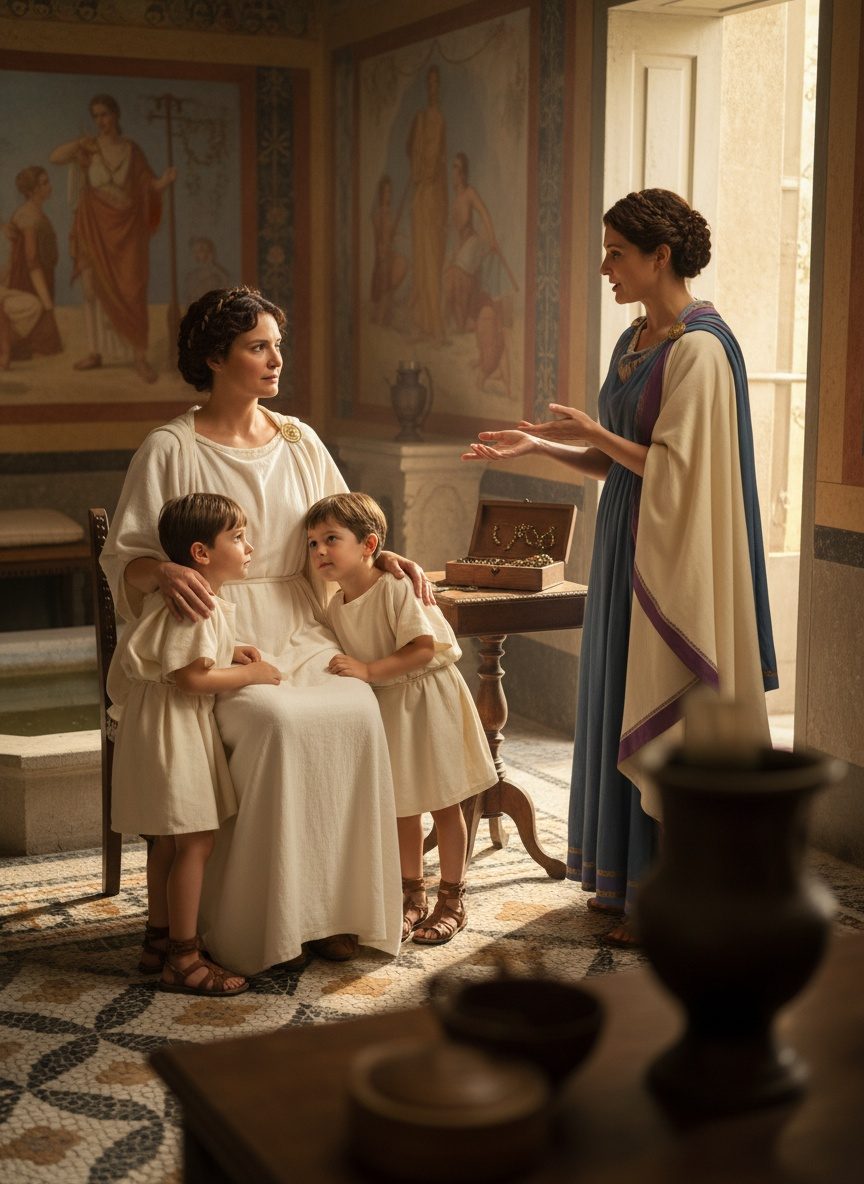
Lawrence, a deacon of the Christian Church, was called upon to present the Church's wealth to Rome. The empire, ever-expanding and always demanding, saw in Christianity not just a threat to its pantheon of gods but a repository of untapped riches. Wealth, after all, was an arbiter of power, and the Church was suspected of hoarding both. The command was clear: surrender all, or face dire consequences. Lawrence, unbowed in spirit and resolute in faith, faced a choice that would define not just his hour but also the very essence of his belief.
He moved through the city with eyes wide open, gathering the sick and the poor, lame men, widowed women, and orphaned children. Their sunken eyes and gaunt faces told stories of struggle and resilience. To Lawrence, these were not burdens but treasures, the gold and silver of a world too preoccupied with temporal wealth to notice the divine in human form. Within days, the modest holdings of the Church were distributed entirely to the needy of Rome, an act of defiance wrapped in an unmatched display of compassion.
When the date arrived to present the wealth, the looming archways and imposing columns of the government hall seemed to shrink Lawrence, but not his purpose. The vaulted ceilings echoed with the soft rustle of officials shifting impatiently, their expectations of gold eagerly overriding their curiosity. Yet when Lawrence appeared with his assortment of the weary and the wretched, surprise contorted into outrage. “These,” he declared with an unyielding voice, “are the treasures of the Church.” Silence clamped down on the room, broken only by the soft cough of a child.
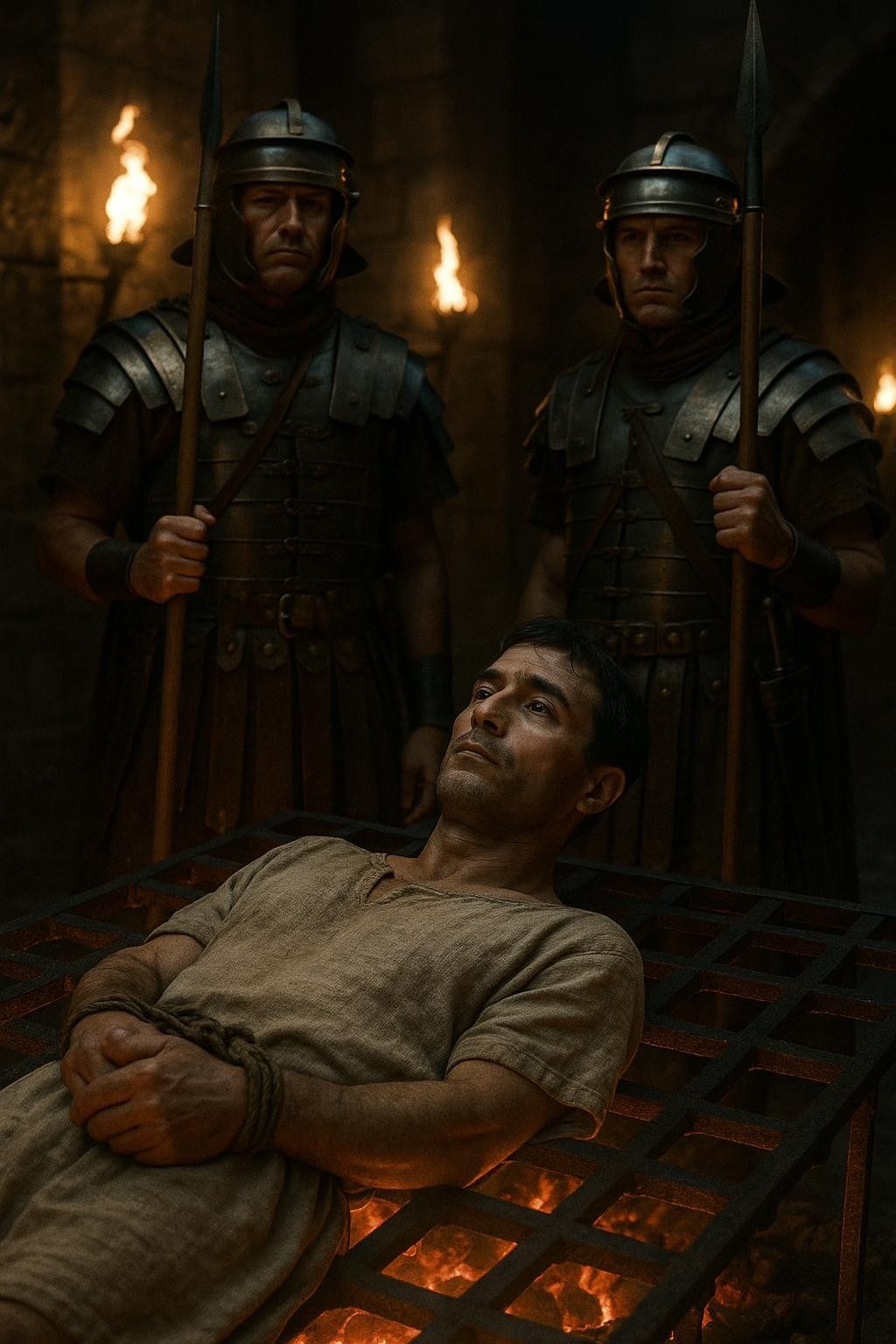
The decision was immediate and brutal. Execution by fire upon an iron grate—a method meant to elicit maximum suffering for those brazen enough to challenge Roman rule. The punishment, within the logic of Rome, was not just a personal admonition but a public spectacle designed to crush any semblance of defiance. However, as flames licked the edges of his vision, Lawrence's spirit remained unquenched. The iron was scorching, the heat unbearable, and yet from this crucible came a moment that would sear itself into history.
As the flames curled around him, Lawrence did the unthinkable: he laughed. Defiance personified, he turned to his executioners with a grin forged in the depths of his faith and quipped with astonishing calm, “Turn me over; this side is done.” In those words lay the strength of belief that transcended physical agony, a riposte that echoed through the streets of Rome and beyond, rendering his cruel death an enduring symbol of courage against tyranny.
The tale of Lawrence's martyrdom spread swiftly. Whispers of his bravery fanned through the Empire, carried by the winds over rocky coasts and undulating plains. The resonance of his act went viral, to invest a modern term, transporting Christian ideology from whispered corners into the collective consciousness of a burgeoning faith. This powerful juxtaposition of might and frailty, juxtaposed on that fateful grate, was a flame unquenched by persecution—a beacon for those who followed.
Church steeples would later rise across the Roman landscape, bearing silent witness to the transformation wrought by figures like Lawrence. His story permeated through holy texts and hymns, an eternal flame kindled by faith, courage, and visionary defiance. Rome's attempt to reclaim physical riches paradoxically underscored the spiritual wealth that could neither be hoarded nor destroyed. It cultivated a foundation where the meek truly inherited the Earth, as teachings would later profess.
Why does the legend of Lawrence endure? Perhaps it stands as a testament to the audacity of the human spirit to light its path, even when teetering on the edge of oblivion. Lawrence's refusal to yield served to elevate a core tenet of Christian dogma—that the value of a soul far outweighs temporal power or earthly wealth. In a solitary act of defiance, rooted in compassion and a profound sense of justice, Lawrence's laughter in the face of death carved an indelible legacy, mocking tyranny with its own absurdity. His story, echoing through the annals of history, is a reminder that true wealth lies not in possessions, but in the unwavering faith of those who refuse to bow, even when cast upon the iron.