He was a farmer turned soldier. He hadn't fired a single shot until after marching 600 miles.
Trailblazers of the Frontier
In July 1775, the air in Winchester, Virginia was thick with the heat of summer and the tension of impending war. The American Revolution had erupted just months earlier, and the colonies stood at the brink of a conflict that would reshape the continent. Amidst this backdrop, a group of 96 exceptional frontier marksmen gathered under the command of Captain Daniel Morgan, a name that would soon become synonymous with legendary military exploits.
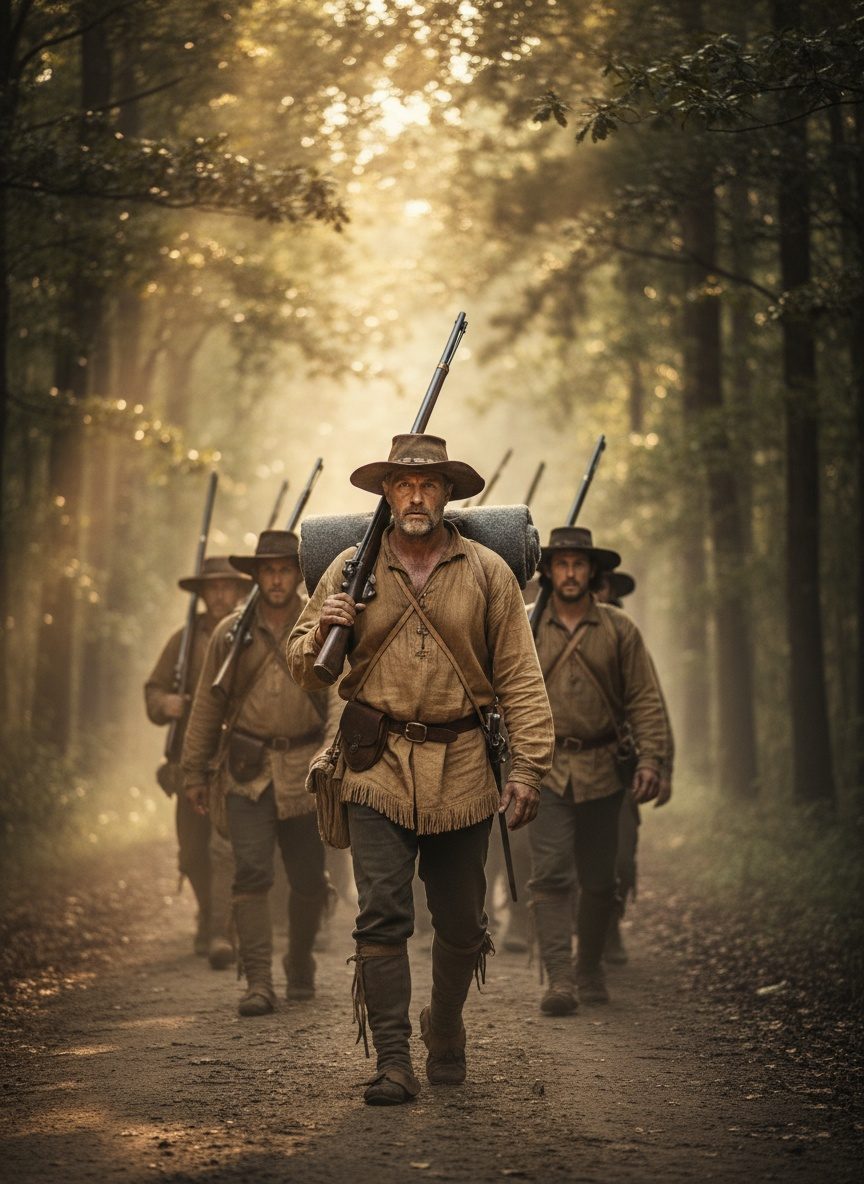
Morgan's men, known as riflemen, were not your average soldiers; they were seasoned hunters, trappers, and frontier dwellers with a knack for precision shooting and a familiarity with the wild that set them apart from the more formal ranks of conventional armies. They carried with them long rifles, a significant advancement over the standard muskets with their short barrels and imprecise aim. These rifles provided a range and accuracy that were unheard of in the time, and it was this advantage that Morgan relied upon.
As Captain Morgan rallied his men, the immediate struggle was not against British forces, but against the land itself. Their orders: march northward through the rugged wilderness – a staggering 600-mile journey through harsh and unforgiving terrain. The destination was the Siege of Boston, where American troops sought reinforcement in their stand-off against British control. The challenge lay not only in the distance but also in the endurance required to traverse dense forests and rolling hills in the midst of what would become known as one of the hottest summers.
Marching into Legend
The heat bore down relentlessly upon Morgan’s men, clothing clinging to sun-soaked skin, feet pounding the ground with unwavering resolve. Yet, not a single man faltered. It was a testament not just to physical endurance but to the fierce spirit that defined these riflemen. Armed with little more than the clothes on their backs, rudimentary camping supplies, and their faithful rifles, they pressed on.
Each day of the march carved a tale of determination and grit into the very earth they walked upon. Nights were spent beneath the open sky, where songs and stories, exchanged in hushed tones, bolstered morale and camaraderie. These men, who hailed from different backgrounds and brought diverse life experiences, were united by a common purpose: to answer the call of their fledgling nation. The knowledge resonated among them that their journey was, in its own way, a battle against the vast expanse of untamed America and a test of their mettle before they ever met an enemy face to face.
Food was scarce; yet resourcefulness was not. Reliant on their hunting prowess, they supplemented their meager rations with venison and other game brought down along the way. Water, more precious than ever, was drawn from rivers and streams, and purified by the flames of their campfires, creating daily rituals of survival that were second nature to these frontier men.
The Mark of a Legacy
By the time Morgan's men reached their destination, weary yet united, yet not a single man had been lost to the perils of the road. Their arrival was not just a reinforcement of American troops but a message in itself: These were men who could withstand the harshest conditions, persevere over grueling distances, and still emerge ready to take up their rifles in defense of liberty.
The journey of Morgan's Rifles was, in many ways, a precursor to the indomitable spirit that would define the American Revolutionary War. They lent not just their skill but their stories to the fabric of a burgeoning nation, proving that the human spirit, when united by a cause, can overshadow adversity. The importance of this march cannot be understated. It was a spark that hinted at the power of determination and unity, elements that would later carry Continental forces through to ultimate victory.
Their march stands as a testament not only to their endurance but also to their intrinsic understanding that war is not only fought on battlefields. It was an act of necessity and a declaration of resolve that would echo throughout the ensuing years of conflict. Morgan's Riflemen had proven their worth and established a legacy, branding their march into history as a significant feat that amplifies their late contributions on the battlefront. Such stories, oft-overlooked, shine a light on the resilience required not only to resist tyranny but to lay the groundwork for a nation conceived in liberty.
As we remember Morgan's Rifles, we are reminded of the ordinary men who forged extraordinary paths. This journey may have begun with a long, grueling march, but it continued into the heart of a revolution, contributing to the indelible American narrative of perseverance, freedom, and independence.