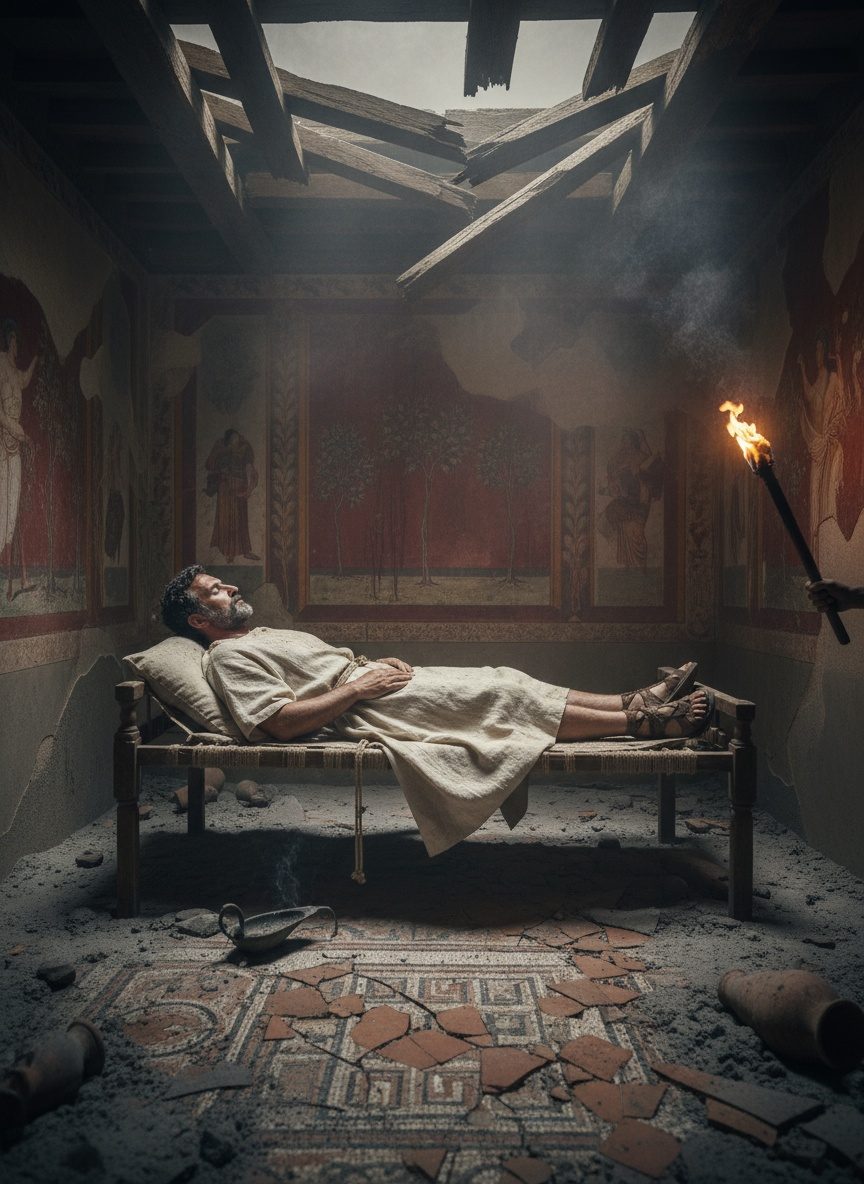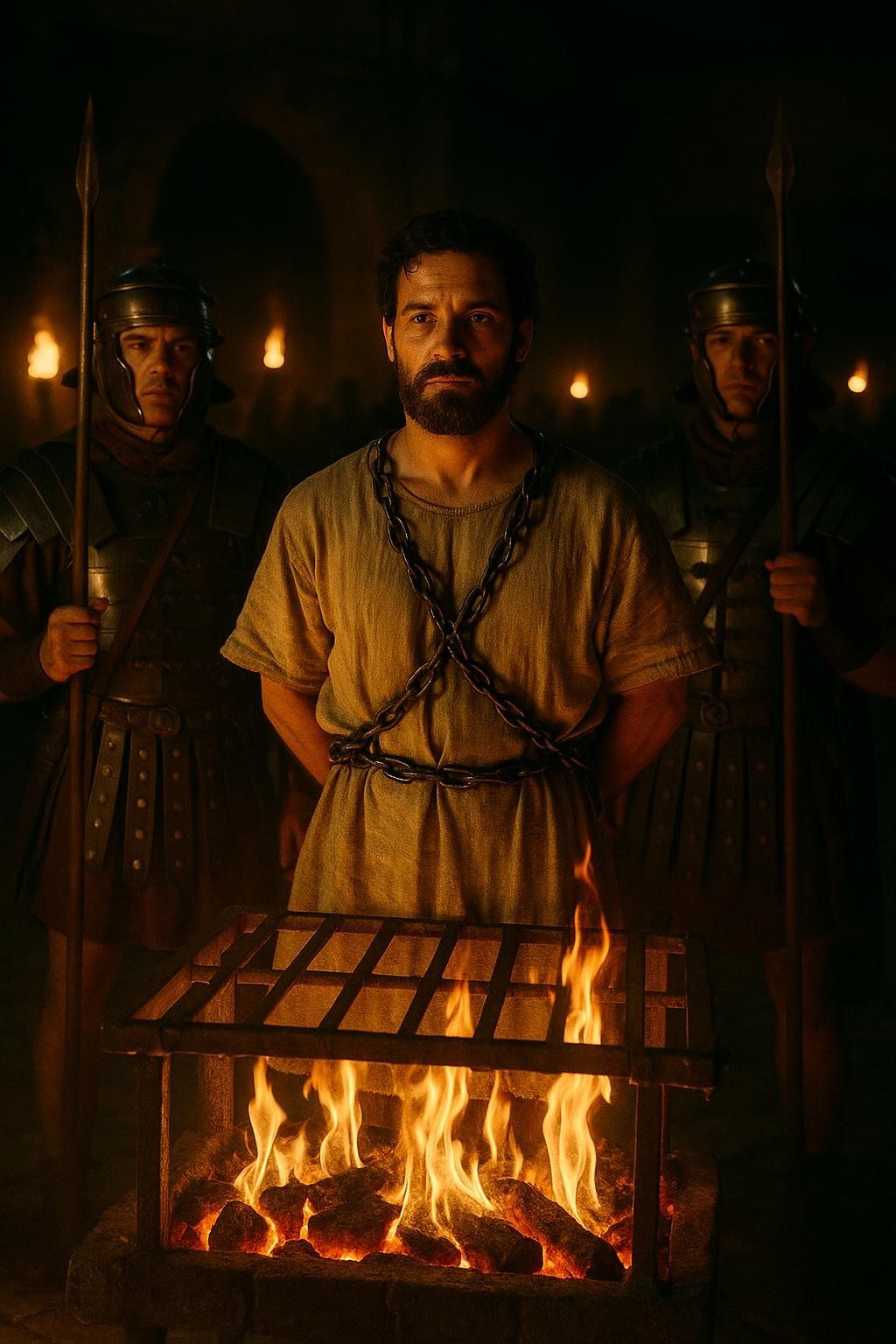
Lawrence winced from the heat licking at his feet. The iron grate beneath him sizzled, and the air shimmered with the unbearable intensity of the fire. Yet, amidst the crackling flames and the jeering Roman guards, he wore an expression unyielding, resolute. His defiance seemed to be forged with the very steel branding his flesh. In this harrowing moment, a simple deacon took his place as a beacon of courage against the Roman Empire.
The Uneasy Demand
In the turbulent power struggles of the 3rd Century AD, the Roman Empire found itself facing a new internal threat: the growth of Christianity. As the Church gained followers and influence, it caught the imperial eye, especially that of the Roman prefect, who was acutely aware of the Church’s burgeoning wealth. Under orders, he made a demand that shook the Christian community to its core: surrender the Church's treasures. This was an era when the empire’s might seemed insurmountable, yet the response from Lawrence, a deacon entrusted with the Church's goods, was as unexpected as it was audacious.
Faced with the demand for gold and silver, Lawrence’s response was not to cower or comply. Instead, he requested a few days to gather together what the Church held dear. His request was granted, likely with the expectation of an enormous pile of riches. But the resourcefulness of Lawrence went beyond mere wealth; he saw the oppression not as a shadow to hide from but as an opportunity to illuminate the true treasure of the Church.
The True Treasures of the Church
When the day arrived to present the value of the Church to the empire, the prefect and his officials were ready to be awed by jewels and coins. What they received, however, was a procession of the city’s poor, the lame, the blind, and the suffering. Lawrence’s bold declaration that these individuals were the Church’s real treasure was met with incredulity and scorn. To Lawrence, this wasn't a mere clever retort, but the embodiment of Christian teaching; the wealth of his faith lay in its people, not in earthly possessions.
Such an act was not just insolent by the standards of Roman authority; it was revolutionary. In this act of defiance, Lawrence stood alone against a titan of oppression, casting the issue of wealth and power in a starkly spiritual light. It was a declaration that stripped the empire's materialistic view bare and critiqued its priorities harshly.
Bound by Flames but Not Fear
Lawrence's resistance did not go unanswered. Deemed a criminal, he was sentenced to an execution designed to serve as a brutal warning to others who might consider defying Rome. A gridiron was prepared, and Lawrence was bound to it, to die slowly under the intense heat of the fire. Yet, it was in this moment of supposed weakness that Lawrence delivered his final blow against his oppressors.
Accounts tell of Lawrence maintaining his composure even as the flames engulfed him. In a voice defiant but calm, he reportedly quipped to his executioners, “Turn me over; I’m done on this side.” Whether these were his exact words or a later embellishment, the essence of his resistance is undeniable: Lawrence faced his fate with a courage and humor that transformed a moment of fear into one of inspiration. His words, echoing through history, undercut the power of his captors, showing that true strength endured beyond the physical.
The Echoes of Defiance
The story of Lawrence did not fade with Rome. Instead, it moved through history, spread by those who found courage in his stand. As the empire crumbled and changed, the legend of Lawrence endured, resonating with those oppressed and offering a sense of resistance to tyranny. In Christian tradition, he became one of the most venerated martyrs, his feast day celebrated around the world.
His boldness on the gridiron was more than a singular act of bravery. It became a metaphor for the potency of faith and conviction over imperial force. Amidst fires, both literal and metaphorical, where others might yield, Lawrence’s legacy inspired countless others to face oppression with wit and valor. From the pages of history, Lawrence’s story continues to ignite courage and conscience in unexpected places.
Enduring Beyond the Empire
Why does Lawrence’s story matter? Because it is more than a tale of faith and martyrdom. It is about the power of human spirit in the face of overwhelming authority. Lawrence used the very instrument of his execution to forge a new narrative, one that outshone the might of Rome itself. In a world often divided by power and wealth, his life asks us to reevaluate what we consider truly valuable. It warns us against the seduction of material wealth and reminds us of the enduring strength found in human dignity and courage. Lawrence's legacy isn't just an echo of a bygone era; it’s a call to action, a beacon guiding those who dare to challenge the status quo, even when the odds seem insurmountable.