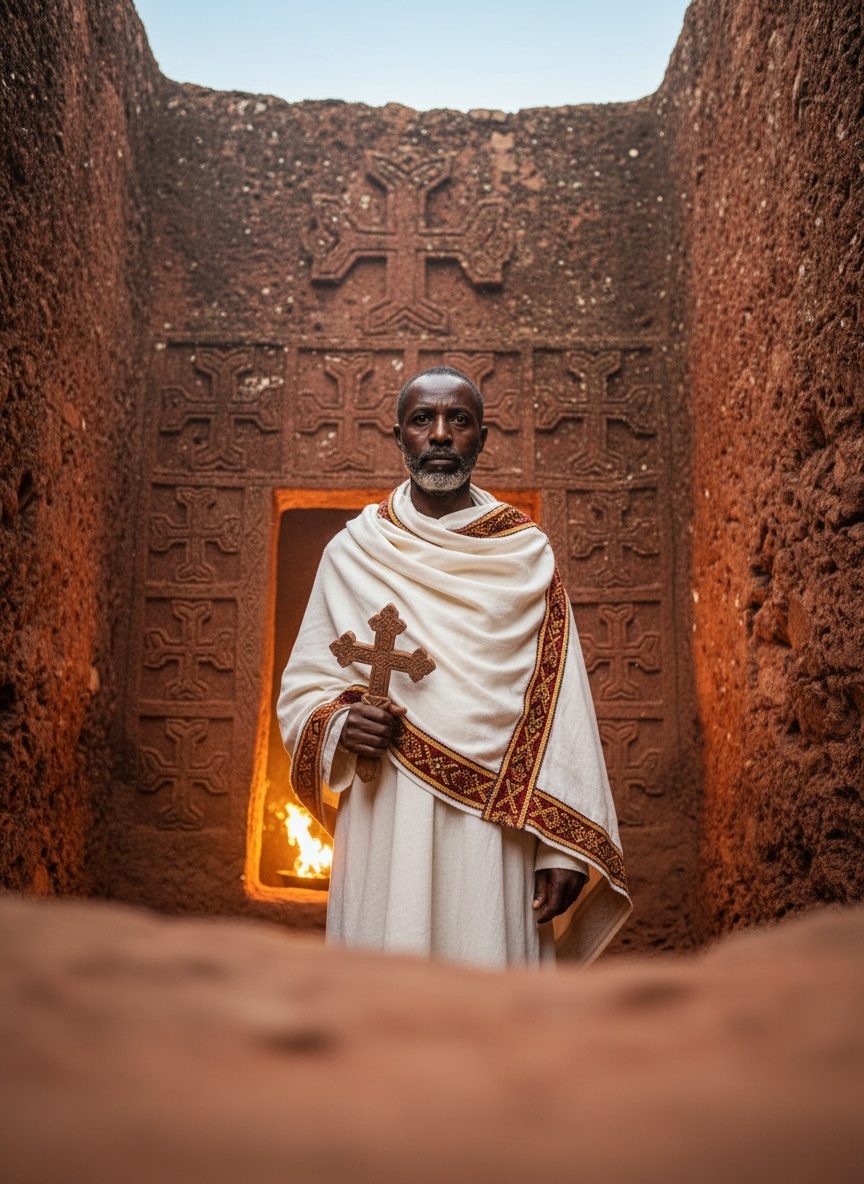
Circa 1200 AD. The chisels echoed in the morning air of the Ethiopian highlands.
The Vision Beneath Stone
In the rugged landscape of medieval Ethiopia, a grand vision was unfolding—a vision led by a king who was both revered and ridiculed. His name, Lalibela, would become synonymous with architectural marvels that defied the limits of imagination and spoke of a devotion that transcended earthly bounds. Lalibela's project was nothing short of divine ambition: to carve eleven churches directly from the living rock. This was no ordinary act of construction but a testament to faith etched into the very earth itself. As rumors of his endeavor spread, skeptics mocked him. They claimed he was forsaken by God, whispering that his efforts were the delusions of a madman.
Yet, Lalibela persisted. With each strike of the chisel and each hard-earned centimeter of progress, his vision materialized in majestic and reverent forms. This was a labor that involved not only manpower but also reportedly angelic assistance during the night—a legend that fueled the awe and speculation surrounding the churches. From the early morning mists, a landscape peppered with churches emerged, as if the hills themselves had birthed these sacred monuments. What was inwardly wrought by the endless toil of craftsmen outwardly seemed like a miraculous gift bestowed by the heavens.
The Weight of Rivalry
As Lalibela's churches began to take shape, the kingdom's corridors buzzed with political tension. Noble rivals observed the king's endeavors with a mix of skepticism and jealousy. Amongst them brewed an incredulity that clouded their judgment, branding the ambitious construction as folly. Accusations flew fast and thick; they believed Lalibela's vision was fueled by madness rather than divine inspiration. Yet even in skepticism, curiosity lured them to these magnificent creations—carved temples housing whispers of the divine, hidden from the gaze of the unworthy.
Eventually, they arrived to witness Lalibela's churches themselves. Their intentions were laced with skepticism and doubt, yet as they descended into the solemn coolness of these rock-hewn spaces, their perceptions began to shift. The sheer scale of the endeavor—a combination of art, devotion, and the intangibility of divine favor—was undeniable. Invincible walls, rugged yet resplendent interiors, and an air of solemn reverence cradled the hearts of those who entered. Here was a kingdom's heart, carved immaculately from the earth, pulsing with spiritual fervor.
Kneeling in Awe
No grand speeches echoed through the haunting corridors of the churches that day. No orchestras heralded the arrival of the skeptical nobility. Instead, a profound, echoing silence filled the air as they knelt for the first time within those majestic stone sanctuaries. It was here that the rivals encountered a revelation that transcended their doubts. Perhaps for the first time, speech evaded their minds, and what remained was a shared understanding—a silent acknowledgment of human aspiration and divine mystery.
The magnificence they beheld transcended human effort and ambition. This was more than hewn rock; it was a declaration written through the labor of men who believed in their purpose, and a monument to faith that survived the scrutiny of time itself. As their eyes traced the meticulous detail carved into each surface, stone transformed into a vehicle for spiritual transcendence—a canvass of carved rock that led the soul upward.
The Echoes of Eternity
Centuries later, Lalibela's churches still beckon to those who seek them, standing testament to a civilization capable of the extraordinary—a reminder of humanity's undying aspiration to touch the divine. In these secluded stone sanctuaries, spiritual and architectural glory intertwine, born from the mind of a visionary king whose divine dream compelled human hands to shape eternity itself.
To encounter these churches is to witness a past that defies the linearity of time, where spiritual longing is captured in the permanence of stone. Lalibela's rivals conceded more than just a physical triumph; they were privy to a vision that surpassed both reign and reason. Today, those who wander into the depths of these sacred sites find more than an echo of ancient craftsmanship. They uncover an enduring secret—one that whispers of faith and perseverance, reminding us of our timeless kinship with those who carved ambition and prayer into rock, bringing imperishable dreams into the realm of human hands.