She was a woman in ancient Egypt. She was the authority in medicine.
The Unseen Matron of Egyptian Medicine
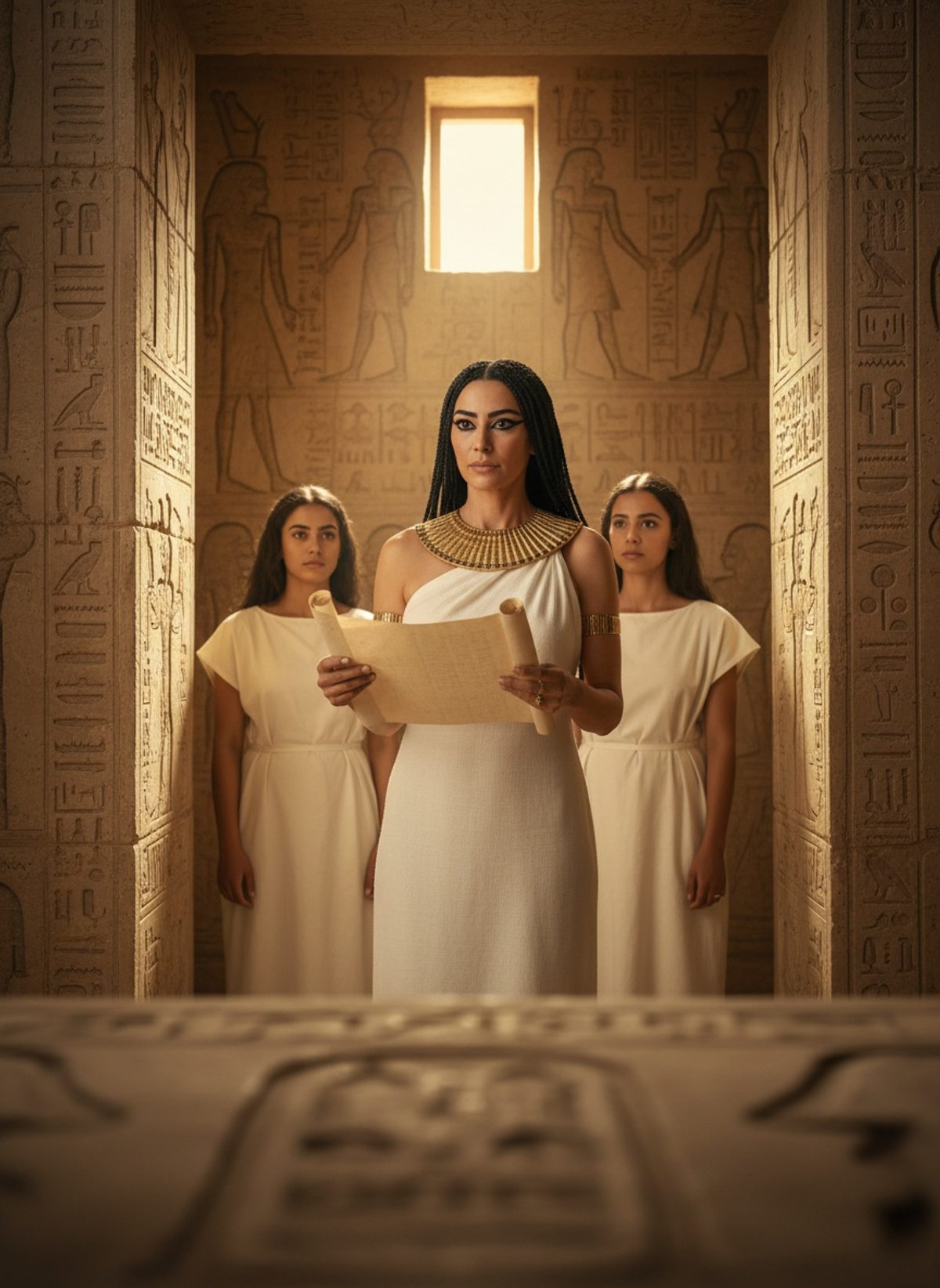
In the labyrinth of ancient Egyptian history, where pharaohs shone resplendent and gods were sculpted from the imagination of a civilization, one woman carved her name in the bedrock of time — Peseshet. Holding the esteemed title of "Lady Overseer of Female Physicians," Peseshet's story challenges our modern understanding of the ancient world. In a society seemingly dominated by male scribes and military victors, here was a woman who not only entered the medical profession but commanded it. The title she bore was not honorary; it was hierarchical. People respected her as the supervisor of those who healed others, an authoritative figure in a discipline integral to human survival.
Amidst the great edifices of Egypt, from the bustling corridors of Memphis to the serene temples along the Nile, Peseshet's influence reverberated. Instead of holding a position as a subordinate, she was considered a leader, tasked with the responsibility of training and guiding the kingdom's female physicians. Her role was essential not just in healthcare but in maintaining the women's presence within it, ensuring that the knowledge and practices of healing were passed down through generations. With her guidance, women acquired skills that not only demanded precision and compassion but also symbolic power over life and death.
Peseshet lived approximately four thousand years before the dawn of the first medical school in Europe. The architecture of medicine as we understand it today owes much to systems and individuals whose names might have been forgotten, if not etched in stone as hers was. Peseshet's existence offers a rare glimpse into a period where the boundaries between genders in professions might have been more perceptible than imagined. She worked at a time when the roles of women were often celebrated alongside their male counterparts, where the vitality of life itself — through healing — was governed by the wisdom of women like her.
Healer, Educator, Leader
In the shadow of the pyramids, nestled in the cradle of an ancient civilization, Peseshet didn't serve as a mere advisor. She was formidable, a beacon for the pursuit of medical knowledge. Yet the historical records are scarce. Most of what we know comes from carvings and relics that have survived the sands of time. Peseshet's prime contribution lay not only in the administration but also in cultivation. A great mentor, she imparted her knowledge to a cadre of female physicians, ensuring that the society's healthcare did not falter. It is clear that her role encompassed both practical applications and the holistic nurturing of future healers.
The ancient Egyptians had sophisticated medical practices for their time. They understood the significance of cleanliness and effective diagnosis to a degree that was not matched until centuries later. They meticulously recorded their medical knowledge on papyrus scrolls, which were likely utilitarian in the training efforts overseen by Peseshet. Her sphere of influence positioned her at the crossroads of ambition and pragmatism, guiding her protégées through the intricate arts of healing. To have been entrusted with such responsibilities indicates not just skill but the trust and recognition of her peers and leaders.
However, beyond the clinical prowess, her presence embodies a profound message about gender in the realm of ancient professions. Education, housing her own school, allowed Peseshet to dismantle the invisibility of women in ancient narratives. By training other women, she ensured that her contributions would persist long after her own life had ended. The institution she ran was as much an incubator for medical expertise as it was a testament to her indomitable spirit.
The Resurrection of Peseshet’s Legacy
Four millennia later, Peseshet’s name rose from obscurity, owing to the discovery of her title and her role etched in stone. This resurgence in her recognition prompts a profound reconsideration of how history remembers, or forgets, the contributions of women. We are left to ponder how many other Peseshests have been lost to time, their achievements buried under layers of patriarchy and historical amnesia. Her story is a challenge to the linear narrative of medical history traditionally dominated by public accolades for male savants. It reminds us that the roots of scientific endeavor are both deep and diverse, nourished by persistent contributors in every era.
The tale of Peseshet matters because it disrupts the conventional mythos of women's roles in ancient societies. Her life was a beacon of possibility in a world often consigned to rigid historiographies. Her narrative, resurfaced through archaeological diligence, commands the attention of those who seek a fuller understanding of human history. In a modern world engaged in ongoing conversations about gender and equality, her legacy becomes a source of inspiration — her story a vital whisper from the past, urging us to remember and to continue the exploration of hidden histories.