1255 BC. The sunlight gleamed harsh against the monumental stone face of a temple, casting long shadows across the sand.
Positioned on the west bank of the Nile, the site of Abu Simbel had seen years transform rock into temples, laboriously hewn and chronicling the triumphs of pharaohs. This was the New Kingdom of Egypt, a time when the pharaohs elevated themselves almost to the realms of immortal gods. One of these great rulers, Ramesses II, had cemented his legacy in stone, not just for himself, but for his beloved Nefertari, a queen whose distinction was made eternal by the stonemason’s craft.
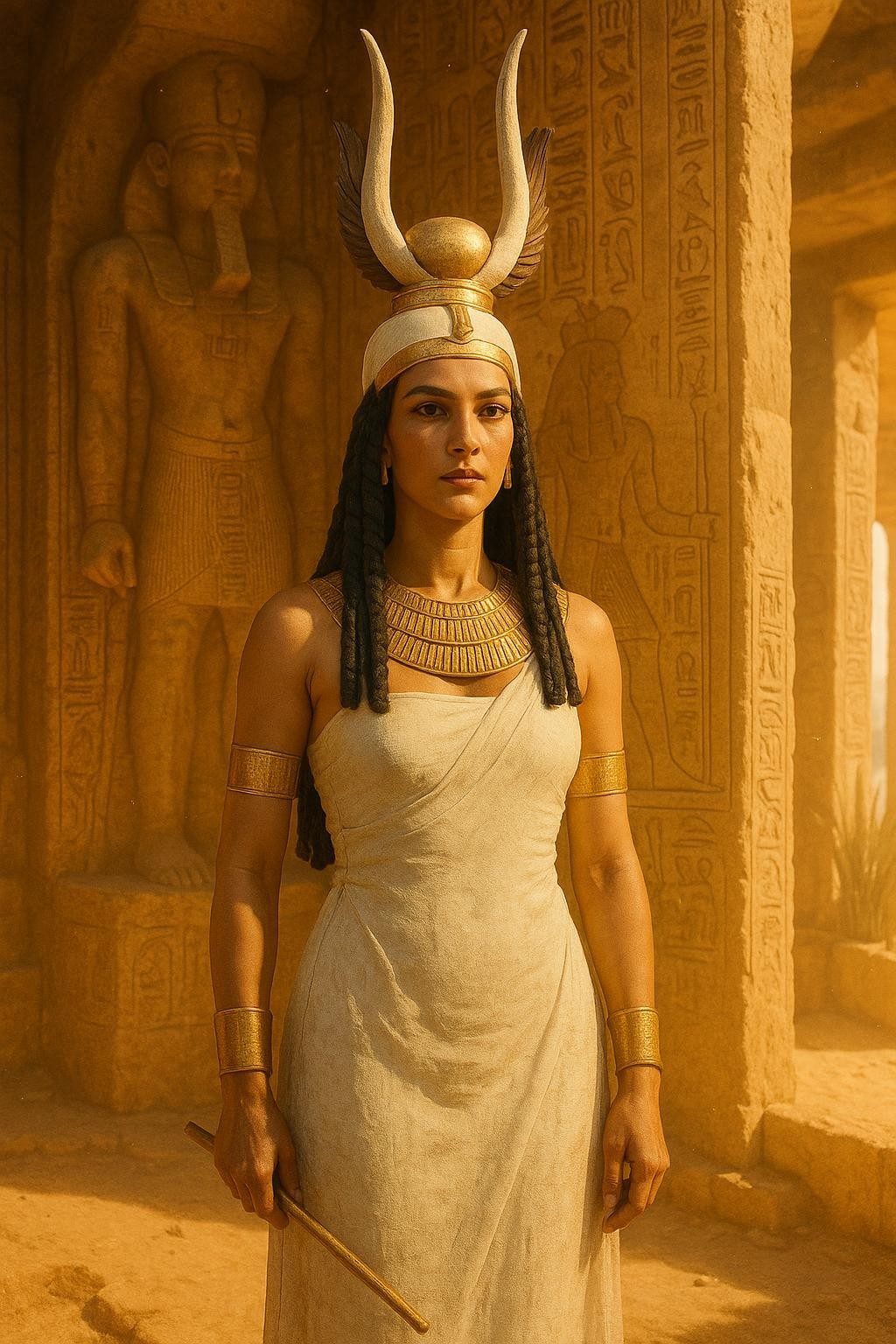
The entrance to the second, smaller temple at Abu Simbel was a marvel. Constructed from living rock, it was dedicated not only to the gods but uniquely to the queen, a woman whose stature had transcended mortal bounds to be immortalized as Hathor, the goddess of love and joy. No queen in Egyptian history had been honored such before, and as Nefertari crossed the threshold decorated with her likeness, she stepped into a realm that set her apart from all her predecessors.
Intricate carvings adorned the interior of the temple, every hieroglyph and image a testament to Ramesses' devotion. On the walls, Nefertari's beauty was immortalized; her elegant profile, meticulously inscribed by sculptors, stood alongside divine figures, blurring the lines between queen and deity. Each eight-meter-tall statue by the facade emphasized the grandeur of Ramesses and Nefertari, ensuring that as long as the stones endured, so too would their tale.
In this golden age of Egyptian civilization, the influence of a queen was often overshadowed by that of her male counterparts. However, Nefertari shattered precedent, not only sharing in her husband’s power but being celebrated with a temple that outright declared her a goddess. This act was revolutionary, a nuanced political statement as much as an emotional tribute.
While the exterior of the temple spoke in visual metaphors of sovereignty and divine authority, the interior whispered deeper truths. The innermost sanctuary, reserved for the most sacred of rites, was dedicated to Hathor, doubling as a sanctified space for Nefertari herself. Stepping into this hallowed chamber, adorned with statues of the goddess and goddess-queen, might have invoked both pride and humility in the heart of Nefertari.
The grandeur of this temple is amplified by what it reveals of Ramesses' intentions. Despite the era's patriarchal norms, he openly acknowledged his queen's pivotal role in both the spiritual and earthly realms. While many pharaohs' queens wielded power behind the scenes—skills that went unrecorded, their stories whispered in the shadows—Nefertari’s legend was carved into history for all to see, a testament in stone both to her personal achievement and her husband’s respect.
This extraordinary status also invites historians and archaeologists to ponder the dynamics of their relationship. Had Nefertari been an advisor as well as a consort? Had her wisdom influenced some of the decisions that crafted the 66-year reign of one of Egypt's most famed rulers? The depictions may hold subtle clues, and the sheer grandeur of the temple itself speaks volumes of the depth of significance that Nefertari held.
The imagery of Nefertari as Hathor transcends mere political alliance or divine posturing; it suggests a union and equality that was rarely, if ever, exemplified in other monuments of the period. In the artistry of the time, queens were often depicted as diminutive in comparison to the pharaohs, but here, Nefertari stands as an equal next to Ramesses, a formidable figure whose presence offers a sense of completion to the grand design of the temple.
Today, the temples at Abu Simbel attract thousands of visitors each year, each marveling at the architectural feats achieved by those ancient engineers. Yet, beneath the architectural wonder lies a narrative as compelling as the jagged remnant of ancient seas now locked in sandstone. Nefertari’s temple is not simply a physical structure—it is a story chiselled across the ages, an epoch-defining moment when a queen walked the path of gods.
In the modern day, as we decipher history from relics and ruins, it becomes clear that this story of Nefertari is one of bold recognition and celebration of a queen's power. It challenges us to rethink patriarchal narratives that often define ancient history. In every carved line and polished surface, there is a message of enduring impact—a reminder that in an empire ruled by pharaohs, a queen found divinity in the living rock. The stones of Abu Simbel continue to echo her name through the corridors of time, whispering of a temple that heralded one woman's ascension to immortality.