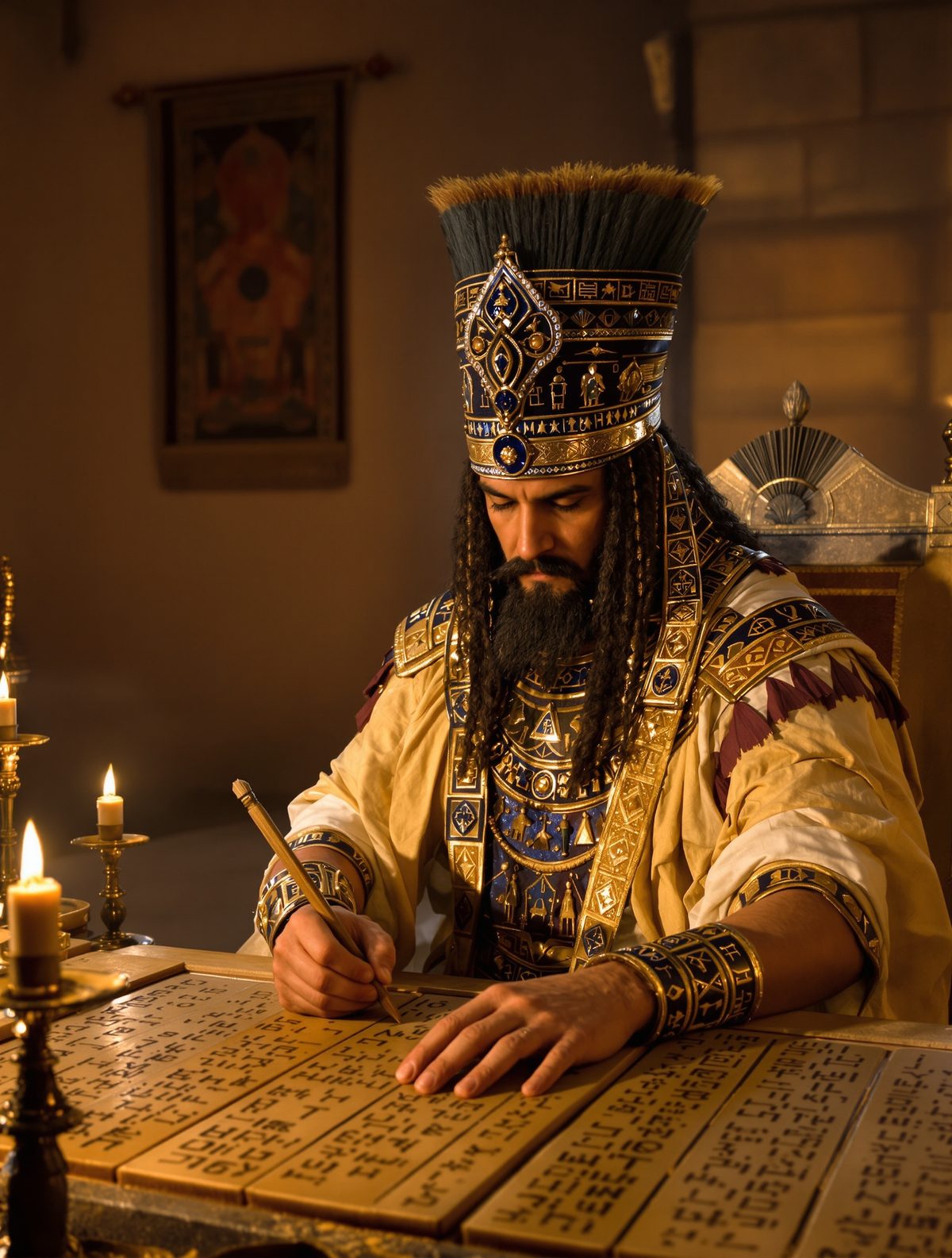
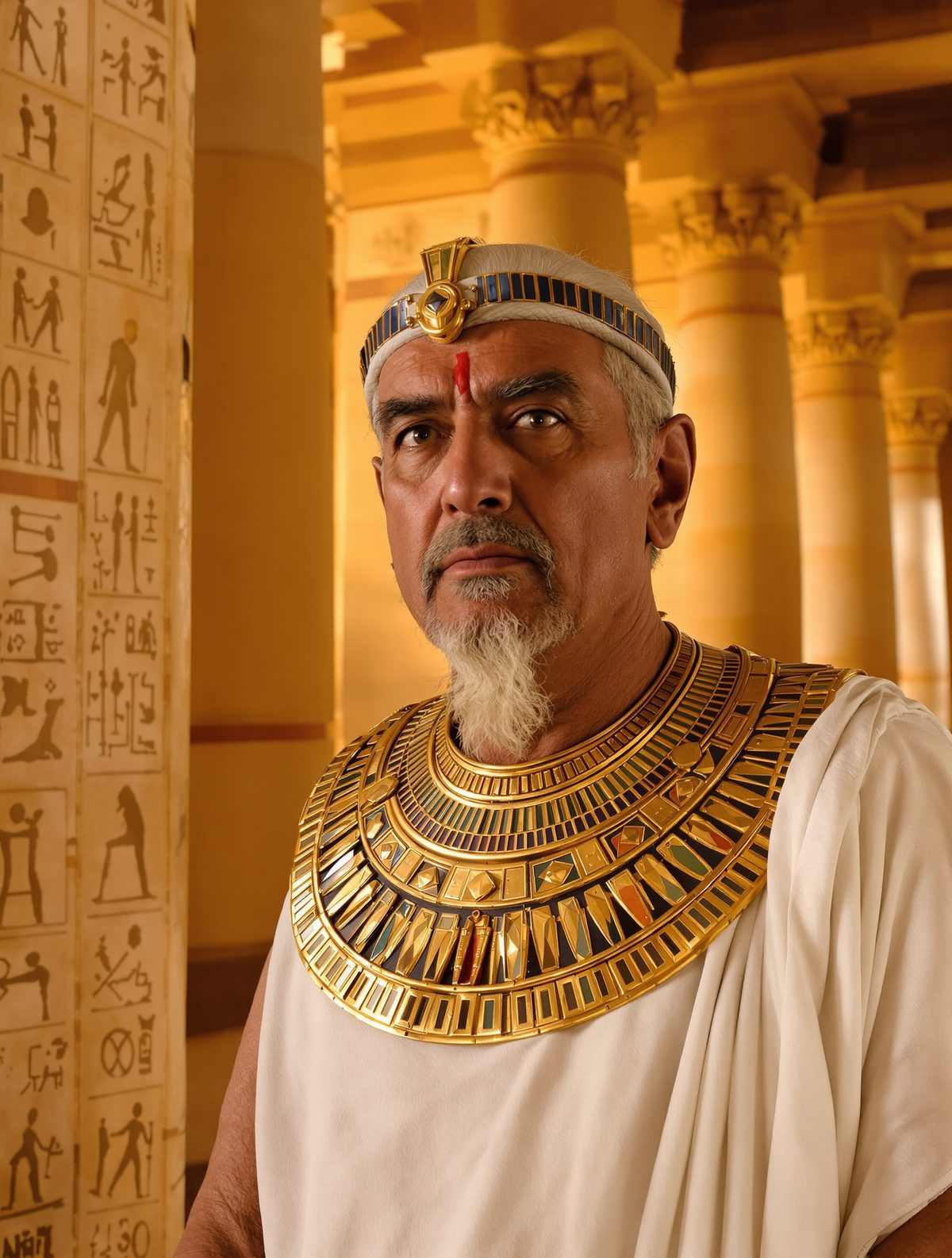
The bronze doors of the royal palace gleamed in the afternoon sun as Intaphrenes approached, his Persian robes flowing behind him. He had walked through these very doors countless times before—after all, he was one of the seven men who had put King Darius I on the throne. But today, something was different. Two palace guards stepped forward, crossing their spears to bar his path.
"Halt," one commanded. "The king is with his women and cannot be disturbed."
What happened next would shock the Persian Empire and demonstrate that even the most loyal service has its limits. In a flash of rage, Intaphrenes drew his sword and sliced off both guards' ears and noses, leaving them mutilated and bleeding on the palace steps. It was an act that would cost him not just his privileged position, but his life.
The Kingmaker's Gamble
To understand Intaphrenes' fatal mistake, we must travel back to 522 BC, when the Persian Empire teetered on the edge of civil war. The great King Cambyses II had died under mysterious circumstances during a campaign in Egypt, leaving behind a power vacuum that threatened to tear apart the largest empire the world had ever seen.
Into this chaos stepped a mysterious figure claiming to be Bardiya, Cambyses' younger brother. But seven Persian nobles suspected the truth was far more sinister. They believed this "Bardiya" was actually Gaumata, a Magian priest who had murdered the real Bardiya and was now impersonating him to seize the throne.
Intaphrenes was among these seven conspirators, alongside the ambitious young Darius, son of Hystaspes. According to Herodotus, our primary source for these events, the seven men were spada—members of Persia's highest nobility. They weren't just wealthy; they were the backbone of the empire, men whose families had served Persian kings for generations.
The conspiracy they hatched was audacious beyond measure. They would infiltrate the royal palace at Sikayauvatis (modern-day Iran) and assassinate the false king in broad daylight. On a fateful day in September 522 BC, they succeeded, stabbing Gaumata to death in his own chambers and ending his brief, seven-month reign.
The Promise That Changed Everything
With the imposter dead, the seven faced a crucial question: who among them would become the new King of Kings? Legend tells us they devised an unusual test. At dawn, they would mount their horses, and whoever's horse neighed first would claim the throne. Darius, whether through divine favor or his groom's clever trick of letting his stallion smell a mare in heat, won the contest.
But Darius was no fool. He understood that his claim to the throne rested entirely on the support of his six fellow conspirators. To secure their loyalty, he made them an extraordinary promise—one that would prove to be his greatest mistake. The six nobles, including Intaphrenes, would have unlimited access to the royal palace, able to enter the king's presence whenever they wished, with only one exception: they could not disturb him when he was with his wives and concubines.
This wasn't just a symbolic gesture. In the rigidly hierarchical Persian Empire, access to the king was the ultimate currency. Even provincial governors and military commanders had to request audiences weeks in advance, prostrating themselves before elaborate court protocols. But these six men? They could walk past every guard, ignore every ceremony, and speak directly to the most powerful man on earth.
The Day Everything Went Wrong
For months, the arrangement worked perfectly. Intaphrenes and his fellow kingmakers enjoyed unprecedented influence, their advice sought on everything from military campaigns to administrative reforms. Darius was consolidating his rule, putting down rebellions across his vast empire, and the seven men who had made it all possible basked in their unique status.
Then came that fateful afternoon when everything changed. The exact date is lost to history, but it was likely sometime in 521 BC, perhaps a year after Darius had claimed the throne. Intaphrenes arrived at the palace on some urgent business, expecting his usual unimpeded entry. Instead, he found his path blocked by guards who dared to enforce the one exception to his unlimited access.
What made Intaphrenes' reaction so explosive? Persian culture placed enormous emphasis on honor and face-saving. To be publicly denied entry to the palace wasn't just inconvenient—it was a humiliating loss of status witnessed by anyone passing by. In his mind, these guards weren't just following orders; they were challenging his fundamental identity as one of Persia's most powerful men.
The mutilation he inflicted was swift and brutal. Drawing his akinakes—the traditional Persian short sword—he sliced off both guards' ears and noses. In Persian law, this wasn't just assault; it was a devastating punishment that marked the victims as criminals for life. Then, in a final act of contempt, he threaded the severed body parts on his horse's bridle and hung them around the guards' necks like grotesque jewelry.
When Loyalty Becomes Liability
News of the incident reached Darius within hours, and the young king faced an impossible dilemma. Intaphrenes wasn't just any noble—he was one of the men who had literally put the crown on Darius' head. Without the conspiracy of the seven, Darius would likely still be a minor provincial governor, not the ruler of an empire stretching from India to Greece.
But Intaphrenes had crossed a line that couldn't be uncrossed. He had mutilated royal servants—men under the king's protection—and done so in full view of the palace. Worse, he had shown that he believed himself above even the most basic royal protocols. If Darius let this slide, what message would it send to other nobles? To provincial governors? To the millions of subjects who needed to believe in royal authority?
Herodotus tells us that Darius agonized over the decision, consulting with court advisers and likely losing sleep over the choice between gratitude and governance. But in the end, the needs of the empire outweighed personal loyalty. Intaphrenes would have to die.
The execution was swift but not without its own drama. When Intaphrenes' wife learned of her husband's fate, she appeared daily at the palace gates, weeping and mourning so dramatically that even Darius took notice. In a gesture that revealed both his guilt and his mercy, the king offered to spare one member of Intaphrenes' family. When asked to choose between her husband, sons, and brothers, she shocked everyone by choosing her brother. Her reasoning was coldly logical: she could find another husband and bear more sons, but with her parents dead, she could never have another brother.
The Price of Power
Intaphrenes' story reveals uncomfortable truths about power that resonate just as strongly today. His tragedy wasn't that he was evil or incompetent—it was that he failed to understand how quickly circumstances could change the rules of the game. The same unlimited access that made him powerful also made him dangerous in the eyes of the man he had helped to power.
Darius, for his part, learned a crucial lesson about governance that would serve him well during his 36-year reign. Personal loyalty, no matter how deep, could never be allowed to supersede institutional authority. The six surviving conspirators retained their privileges, but they also received an unmistakable message about the limits of royal gratitude.
The incident also highlights something historians often overlook: how personal relationships shaped ancient empires. We tend to think of Persian kings as distant, god-like figures, but Darius was a young man thrust into power by circumstances and dependent on the support of his peers. Navigating those relationships—knowing when to show gratitude and when to assert authority—was often the difference between a successful reign and a short one.
Perhaps most remarkably, Intaphrenes' story demonstrates that even 2,500 years ago, no one was truly above the law—not even the kingmakers themselves. In our own era of political loyalty and personal relationships in high places, that's a lesson worth remembering. Power may create its own privileges, but it also creates its own constraints, and those who forget that distinction do so at their peril.