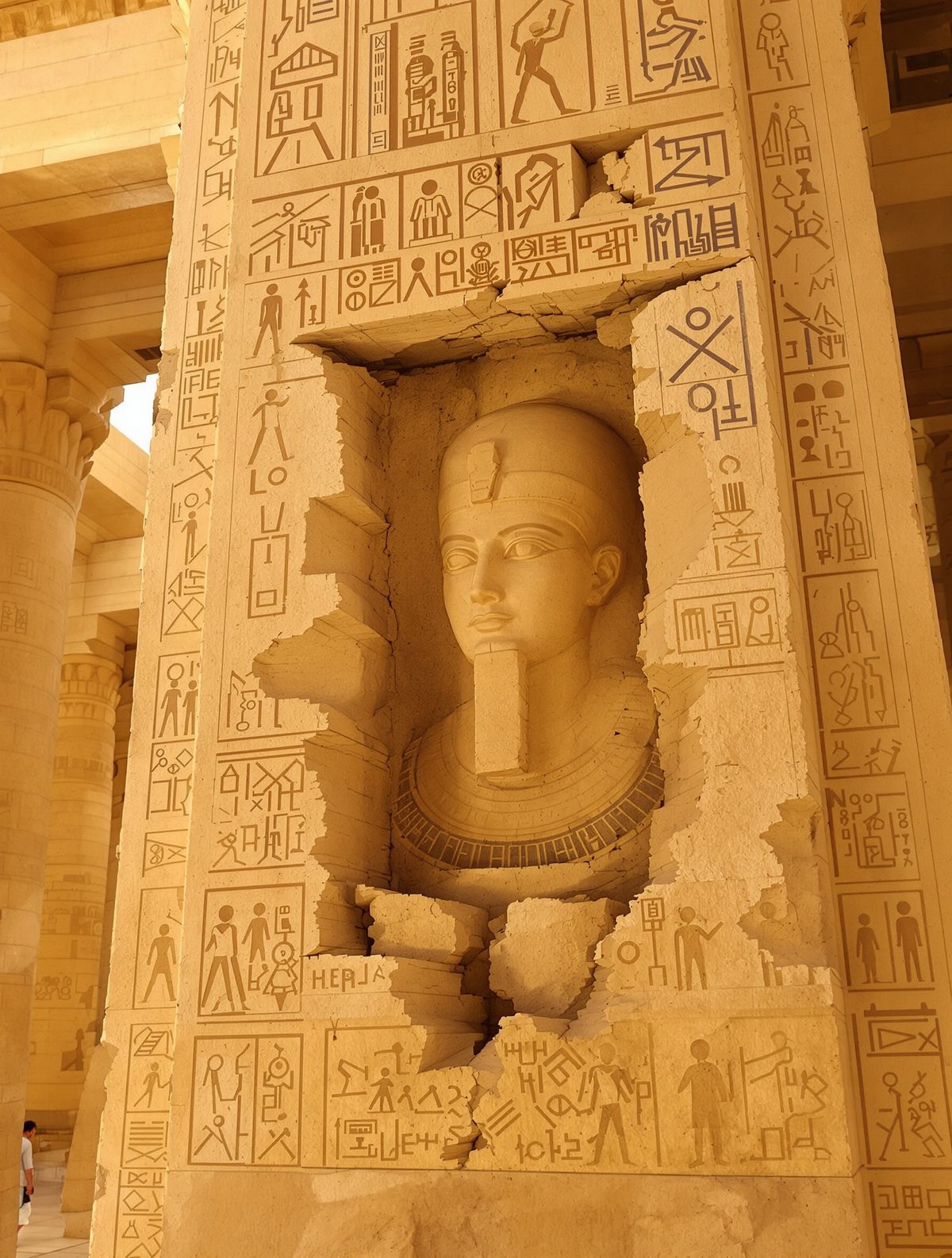
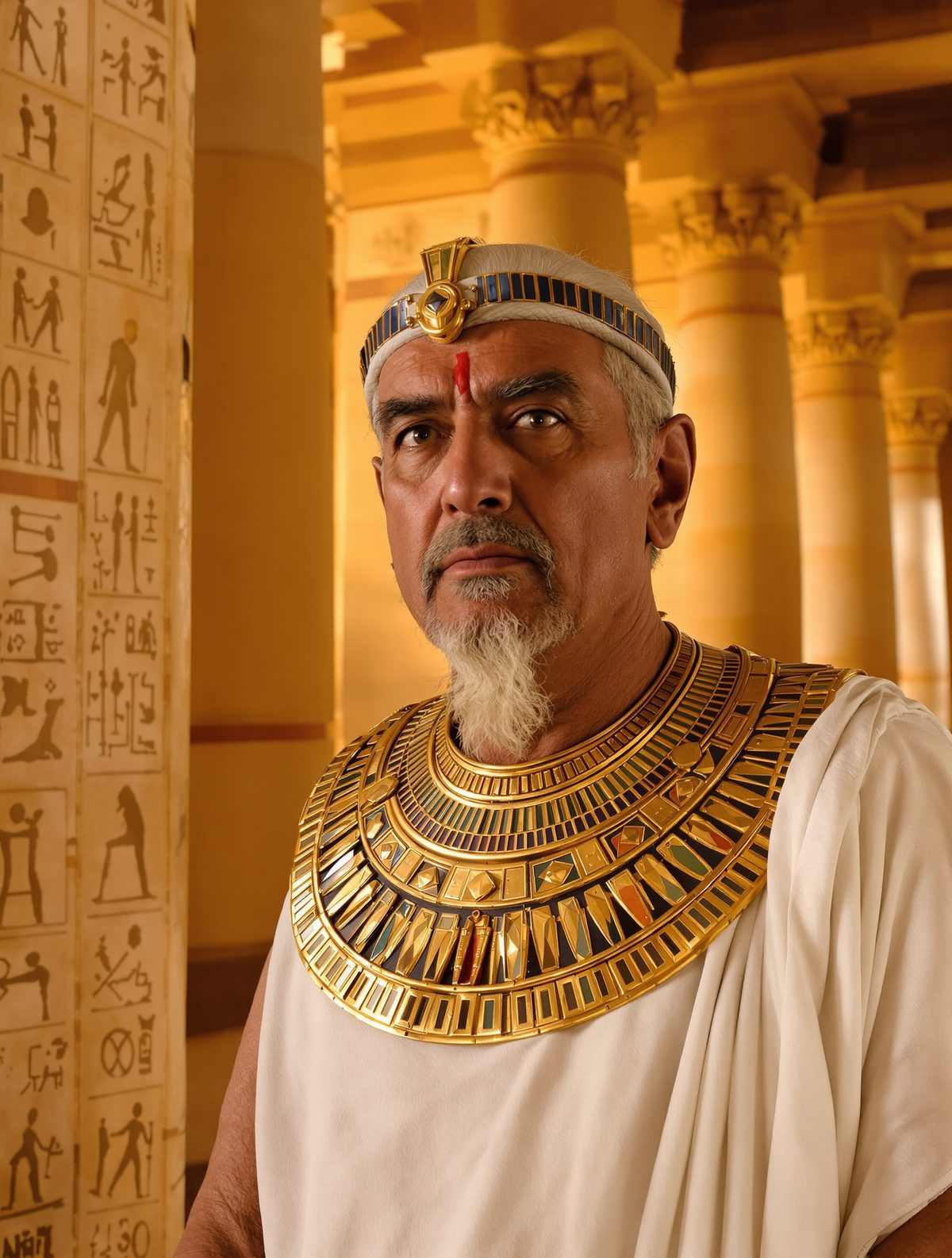
The flickering oil lamps cast dancing shadows across the royal chamber as King Ur-Nammu hunched over his work table, his weathered hands carefully pressing a reed stylus into the soft clay before him. The year was approximately 2100 BC, and in this modest palace in the ancient city of Ur, something revolutionary was taking shape. With each wedge-shaped mark he pressed into the wet earth, the king wasn't just writing—he was inventing the very concept of written justice. Three centuries before the famous Hammurabi would claim credit for the world's first law code, this Sumerian ruler was quietly creating humanity's first attempt to govern society through written rules that applied to everyone equally.
What Ur-Nammu couldn't have known as he worked by lamplight was that his clay tablets would survive four millennia, only to be overshadowed in history books by a later, flashier Babylonian king. But the truth, as it often does, tells a more fascinating story than the legend.
The King Who Built More Than Ziggurats
Ur-Nammu wasn't supposed to change the world—at least not in the way we remember him today. When he seized power around 2112 BC, founding the Third Dynasty of Ur (often called Ur III by historians), his contemporaries knew him primarily as a builder king. His massive ziggurat at Ur, a towering temple that scraped the ancient sky at over 100 feet tall, was considered one of the marvels of the ancient world. Even today, its ruins dominate the Iraqi landscape near Nasiriyah.
But Ur-Nammu's true genius lay not in the stones he stacked, but in the words he carved. Archaeological evidence suggests he ruled for approximately 18 years, and during that time, he transformed the very idea of governance. Unlike previous rulers who governed through royal decree and personal whim, Ur-Nammu understood something profound: a kingdom built on predictable, written laws would be stronger than one built on the shifting sands of royal mood.
The king's law code, discovered in fragments and painstakingly reconstructed by scholars, reveals a ruler obsessed with fairness. Here was a man who understood that true power came not from the ability to crush his subjects arbitrarily, but from creating a system where even the weakest members of society had protections.
Clay Tablets That Shattered Ancient Norms
Picture the scene: in workshops across Ur, scribes carefully copied Ur-Nammu's laws onto dozens of clay tablets. These weren't hidden away in some royal archive—they were meant to be public, accessible to anyone who could read cuneiform. The very act was revolutionary. For the first time in human history, the rules that governed society were written down where people could see them, reference them, and hold their rulers accountable to them.
The laws themselves reveal a surprisingly sophisticated understanding of justice. Take Law 6, for example: "If a man divorces his first wife, he shall pay her one mina of silver." This wasn't just about divorce—it was about recognizing that women deserved economic protection in a male-dominated society. Or consider Law 8: "If a man proceeds by force to deflower the virgin slave of another man, he must pay five shekels of silver."
What's remarkable isn't just that these laws existed, but their underlying philosophy. Unlike later legal codes that often prescribed harsh physical punishments, Ur-Nammu's laws frequently called for monetary compensation. An eye for an eye? Not in Ur. Instead, the king seemed to believe that most wrongs could be righted through fair payment rather than brutal retaliation.
The Protector of Society's Forgotten
Perhaps most surprisingly for a Bronze Age ruler, Ur-Nammu's code reveals an almost modern concern for society's most vulnerable members. The prologue to his laws reads like a social justice manifesto: "I did not deliver the orphan to the rich man; I did not deliver the widow to a mighty man; I did not deliver the man of one shekel to the man of one mina."
This wasn't mere royal propaganda. The laws themselves back up these grand statements with specific protections. Widows couldn't be forced into unfavorable remarriages. Orphans couldn't be exploited by wealthy guardians. The poor couldn't be steamrolled by the rich in legal disputes. These weren't abstract principles—they were enforceable laws with real consequences for violators.
Archaeological evidence from Ur III period tablets shows this wasn't just theoretical. Court records reveal cases where these protections were actually enforced, where wealthy citizens were held accountable for their treatment of society's weakest members. In a world where might typically made right, Ur-Nammu was arguing that justice should be blind to wealth and power.
The King Time Forgot (Until Now)
So why don't we know Ur-Nammu's name the way we know Hammurabi's? The answer lies partly in the cruel irony of archaeological discovery. When French archaeologist Jean-Vincent Scheil discovered Hammurabi's famous black stone stele in 1901, it was intact and dramatic—a perfect artifact for the world's museums and history books. Ur-Nammu's code, by contrast, was discovered in fragments scattered across multiple excavation sites, painstakingly reconstructed by scholars over decades.
Hammurabi was also a masterful marketer of his own legacy. His code opens with grandiose proclamations about the gods choosing him to "bring about the rule of righteousness in the land." Ur-Nammu's prologue, while revolutionary in its content, was more modest in its tone. History, it seems, favors kings who know how to write their own press releases.
But there's more to it than that. Hammurabi's code was written in Akkadian, which became the diplomatic language of the ancient Near East. Ur-Nammu wrote in Sumerian, which, while older and arguably more culturally significant, didn't have the same staying power. It's a reminder that sometimes the first to do something isn't the one who gets remembered for doing it.
When Clay Tablets Become Crystal Balls
The tragic irony of Ur-Nammu's story is how it ended. According to surviving records, the king who invented written law died in battle around 2094 BC, possibly fighting against the Gutians, a mountain people who threatened his kingdom. The man who tried to replace the chaos of arbitrary rule with the order of written justice died in the ultimate expression of might-makes-right: warfare.
But his laws outlived him. His son Shulgi expanded and refined the legal code, ruling for an remarkable 48 years and spreading Ur-Nammu's legal innovations across an empire that stretched from the Persian Gulf to the Mediterranean. The Third Dynasty of Ur became known for its sophisticated administration, its detailed record-keeping, and its relatively just treatment of citizens—all built on the legal foundation Ur-Nammu had laid.
More importantly, Ur-Nammu's code established a template that would echo through history. The idea that rulers should be bound by written laws, that justice should be predictable rather than arbitrary, that society's vulnerable members deserved protection—these concepts, first pressed into clay in ancient Ur, would eventually find their way into the Twelve Tables of Rome, the Magna Carta, and ultimately into the founding documents of modern democracies.
The Ancient King's Modern Legacy
As we grapple today with questions about equal justice under law, the protection of vulnerable populations, and the accountability of those in power, it's worth remembering that these aren't new concerns. Four thousand years ago, a Sumerian king working by oil lamp understood something that still challenges us: true strength lies not in the ability to impose one's will arbitrarily, but in creating systems that protect everyone fairly.
Ur-Nammu's clay tablets, crumbling and fragmentary as they are, represent humanity's first attempt to encode the radical idea that justice should be blind, predictable, and protective of the weak. Every time a modern court rules that the law applies equally to rich and poor, every time a constitution protects minority rights against majority tyranny, every time written law constrains the arbitrary exercise of power, we're seeing the distant echo of those wedge-shaped marks pressed into wet clay in ancient Ur.
The next time you hear someone invoke "the rule of law," remember the king who invented it—not Hammurabi with his famous eye-for-an-eye brutality, but Ur-Nammu with his revolutionary belief that silver could substitute for suffering, that the mighty should be constrained by the same rules as the weak, and that justice was too important to be left to royal whim. His name may be forgotten by most, but his ideas echo in every courtroom and every constitution in the world.