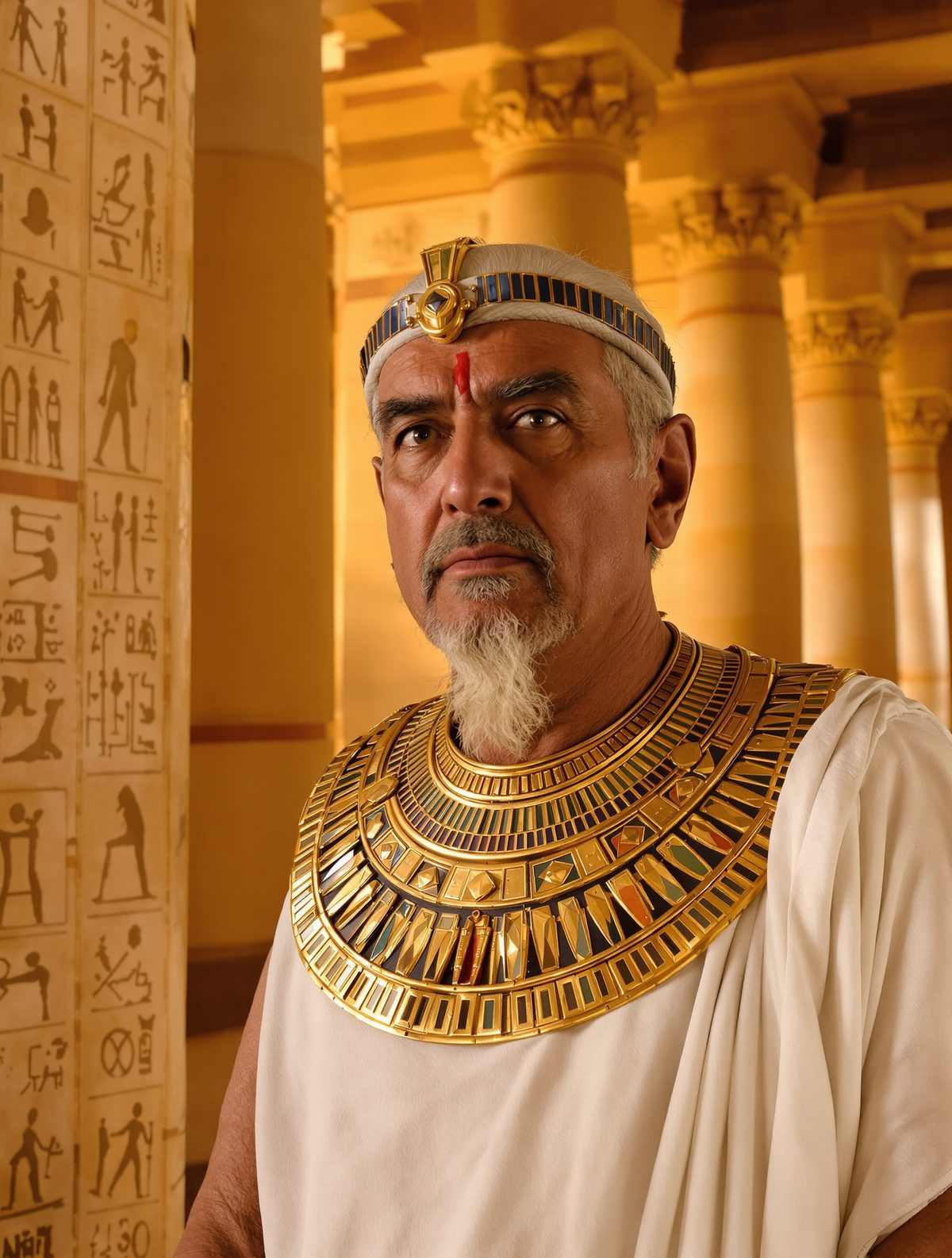
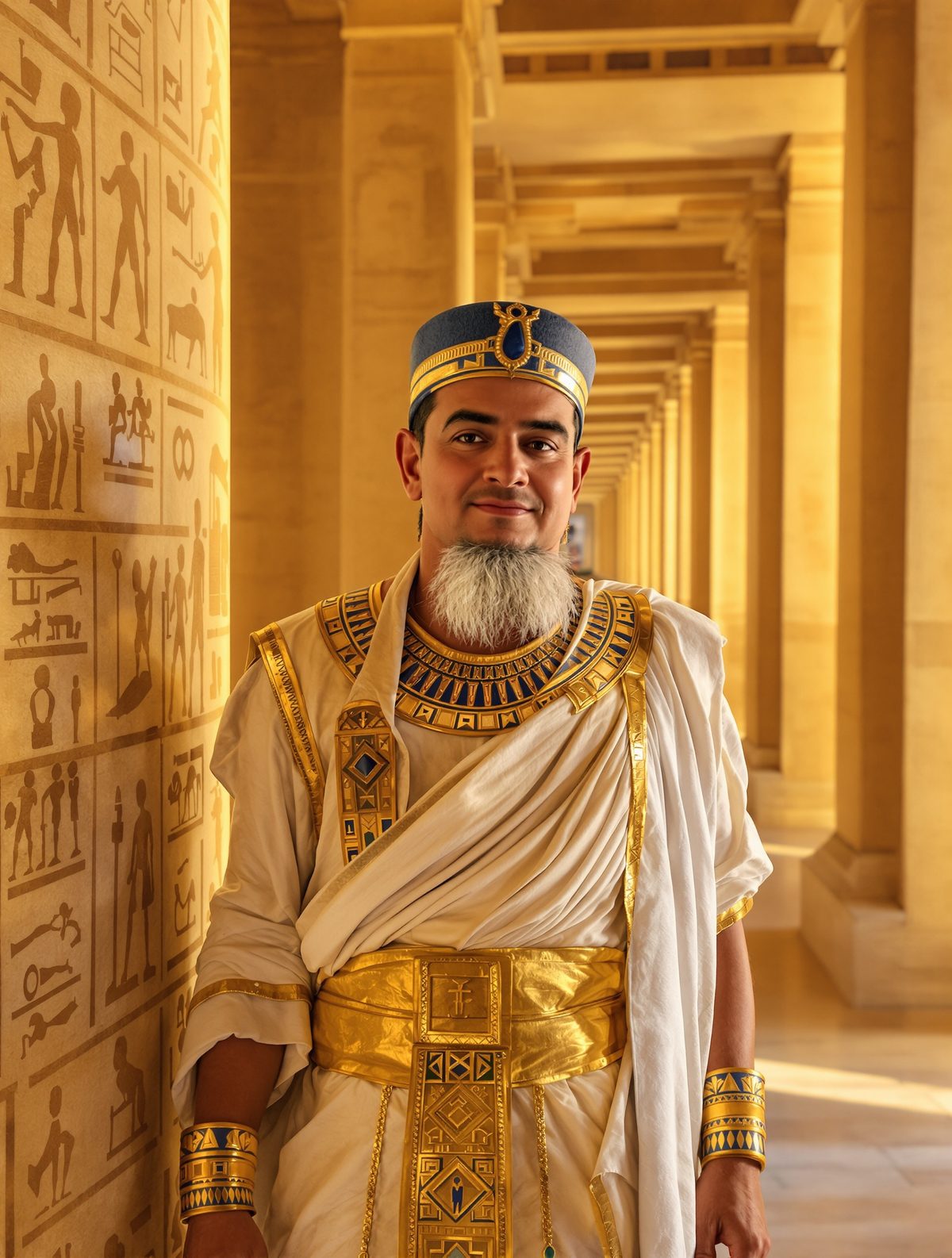
Picture this: You're standing in the shadows of Karnak Temple, running your fingers along ancient limestone walls that once blazed with royal portraits. But something's wrong. Wherever a pharaoh's face should be, there's only a crude, chiseled void. Names that once proclaimed divine kingship have been scraped away so violently that stone dust still seems to hang in the air. You're witnessing the aftermath of ancient Egypt's most systematic character assassination—one that nearly erased the most successful female pharaoh in history.
For over three millennia, the sands of Egypt buried not just monuments and mummies, but the truth about Hatshepsut, a woman who ruled the ancient world's greatest empire for 22 years. Someone wanted her forgotten so badly that they launched a campaign of erasure that would make modern propagandists jealous. But why? And who was so threatened by a woman who had been dead for decades that they spent years methodically chiseling her from existence?
The Woman Who Would Be King
Hatshepsut's story begins around 1507 BC, in the glittering court of Thutmose I. Born into royalty, she was destined for power—but not the kind she would eventually seize. As the daughter of a pharaoh, her role should have been simple: marry strategically, produce male heirs, and fade gracefully into the background of male-dominated Egyptian politics.
But Hatshepsut had other plans. When her husband and half-brother Thutmose II died around 1479 BC after ruling for just three years, he left behind only a young son from a minor wife—the future Thutmose III. As the boy's stepmother and most powerful relative, Hatshepsut initially served as regent, a common arrangement when pharaohs died young.
Here's where the story gets fascinating: somewhere around 1473 BC, Hatshepsut made a move that shocked the ancient world. She didn't just influence the throne—she took it. In a political masterstroke that would have made Machiavelli proud, she declared herself pharaoh, complete with the false beard, royal regalia, and divine authority that came with Egypt's highest office.
This wasn't just rebellion; it was revolution. In a civilization that had been ruled by men for over a thousand years, Hatshepsut didn't just break the glass ceiling—she obliterated it.
The Pharaoh in a False Beard
Ruling ancient Egypt required more than political cunning—it demanded divine legitimacy. Hatshepsut understood this better than perhaps any pharaoh before her. To justify her unprecedented rise to power, she crafted one of history's most elaborate propaganda campaigns, literally carving her version of events into stone.
At Deir el-Bahari, her magnificent mortuary temple that still takes visitors' breath away today, Hatshepsut commissioned reliefs showing the god Amun choosing her as pharaoh while she was still in the womb. She claimed that her earthly father, Thutmose I, had publicly declared her his successor before the royal court. These weren't just political statements—they were carefully crafted mythology designed to make her rule seem inevitable, even divinely ordained.
But here's what makes Hatshepsut truly remarkable: she didn't just claim to be a great pharaoh—she actually was one. Her 22-year reign was marked by unprecedented prosperity, ambitious building projects, and successful trade expeditions. She launched trading missions to the mysterious land of Punt (modern-day Somalia/Ethiopia), returning with exotic animals, gold, ivory, and frankincense that filled Egypt's temples and treasuries.
Under her rule, Egypt built more monuments than it had in centuries. The towering obelisks she erected at Karnak Temple—weighing over 300 tons each—still stand today, testament to the engineering marvels achieved during her reign. She didn't conquer through warfare like her male predecessors; she conquered through commerce, diplomacy, and sheer architectural ambition.
The Systematic Destruction Begins
When Hatshepsut died around 1458 BC, something unprecedented happened in Egyptian history. Not immediately—that's what makes this mystery so intriguing—but about 20 years later, someone began a campaign of destruction so thorough and methodical that it would have impressed Stalin's propagandists.
Starting around 1440 BC, workers armed with chisels and hammers began appearing at temples across Egypt. Their mission was simple but staggering in scope: erase every trace of Hatshepsut's reign. At Karnak Temple, her towering obelisks were walled up, hiding her inscriptions from view. At Deir el-Bahari, her elaborate reliefs showing divine birth and royal coronation were systematically defaced.
But this wasn't random vandalism. Whoever orchestrated this destruction understood exactly how Egyptian royal propaganda worked. They didn't just remove Hatshepsut's images—they replaced them. Where her cartouches (royal name seals) once proclaimed her divine kingship, the names of Thutmose I, Thutmose II, and Thutmose III appeared instead. It was as if they were rewriting history itself, creating a seamless narrative where Hatshepsut had never existed.
The precision was chilling. Workers knew exactly which walls to target, which inscriptions to modify, which statues to smash. This wasn't the work of angry mobs or religious zealots—this was state-sponsored historical revisionism on an industrial scale.
The Prime Suspect Emerges
For decades, historians assumed the obvious culprit: Thutmose III, the stepson whose throne Hatshepsut had claimed. The narrative seemed perfect—a bitter young prince, forced to wait decades for his birthright, finally getting revenge on his usurping stepmother. It had all the elements of a classic power struggle.
But here's where the story gets complicated. Modern archaeological evidence suggests this theory might be wrong—or at least incomplete. The systematic destruction of Hatshepsut's monuments didn't begin immediately after her death, when Thutmose III first assumed sole power. Instead, it started around his 42nd regnal year, nearly two decades into his independent rule.
Why would Thutmose III wait 20 years to take revenge? Some historians now believe the erasure campaign had less to do with personal vendetta and more to do with political necessity. As Thutmose III aged and planned his own succession, the existence of a successful female pharaoh in recent memory may have seemed dangerous—a precedent that could inspire other royal women to challenge male authority.
There's another possibility that's even more intriguing: the destruction might have been ordered by Thutmose III's son and heir, Amenhotep II, who wanted to ensure his own succession by eliminating any suggestion that women could successfully rule Egypt. In this version of events, Hatshepsut wasn't just erased from history—she was sacrificed to preserve the masculine mythology of pharaonic power.
Resurrection from the Rubble
For over 3,000 years, the plan worked perfectly. Hatshepsut remained buried not just in her tomb, but in historical oblivion. Classical historians like Herodotus, who wrote extensively about Egyptian pharaohs, never mentioned her. Medieval Islamic chroniclers, who preserved many ancient Egyptian traditions, had no record of her existence.
Then, in the 19th century, something remarkable happened. As European archaeologists began systematically excavating Egyptian sites, they started finding pieces that didn't fit the official narrative. At Deir el-Bahari, they discovered statues of a pharaoh with feminine features. At Karnak, they found inscriptions referring to a mysterious ruler whose name had been carefully chiseled away.
The breakthrough came when archaeologists realized that many "headless" statues and "nameless" inscriptions belonged to the same person. By painstakingly reconstructing damaged reliefs and comparing artistic styles across different sites, they began to piece together the story of Egypt's lost queen.
Auguste Mariette, the French archaeologist who founded the Egyptian Museum in Cairo, was among the first to recognize what they had found. "We have discovered," he wrote in 1871, "not just a forgotten pharaoh, but perhaps the greatest female ruler the ancient world ever knew."
Today, Hatshepsut's mummy lies in the Egyptian Museum, identified through DNA analysis in 2007. Her magnificent mortuary temple at Deir el-Bahari, partially reconstructed by modern archaeologists, stands as one of Egypt's most visited monuments. The woman someone tried so hard to erase has become one of ancient Egypt's most famous rulers.
The Power of Forgotten Stories
Hatshepsut's story isn't just ancient history—it's a masterclass in how power structures attempt to control historical narratives, and how those narratives can be recovered by careful detective work. Her deliberate erasure reveals something profound about ancient Egyptian society: the threat that a successful female ruler posed to male-dominated political systems was so great that her very existence had to be denied.
But perhaps more importantly, Hatshepsut's resurrection from historical oblivion reminds us that the stories we're told about the past—and the stories we're not told—are often shaped by the prejudices and political needs of those in power. For three millennia, the world believed that ancient Egypt was ruled exclusively by men, simply because someone worked very hard to make that appear true.
Today, as we grapple with our own questions about women in leadership and the ways history gets written and rewritten, Hatshepsut's story feels remarkably contemporary. She proved that women could wield power as effectively as men, build monuments as grand as any pharaoh, and earn the loyalty of subjects through wisdom rather than warfare. The fact that someone felt compelled to erase this evidence tells us as much about ancient Egyptian anxieties as it does about modern ones.
Standing today in the shadow of her reconstructed temple, watching tourists from around the world marvel at the achievements of Egypt's greatest female pharaoh, one thing becomes clear: you can chisel a face off a wall, but you cannot chisel greatness out of history forever. Hatshepsut's legacy survived three millennia of deliberate forgetting, and in our age of rediscovered stories, she has finally reclaimed her place among the pharaohs.