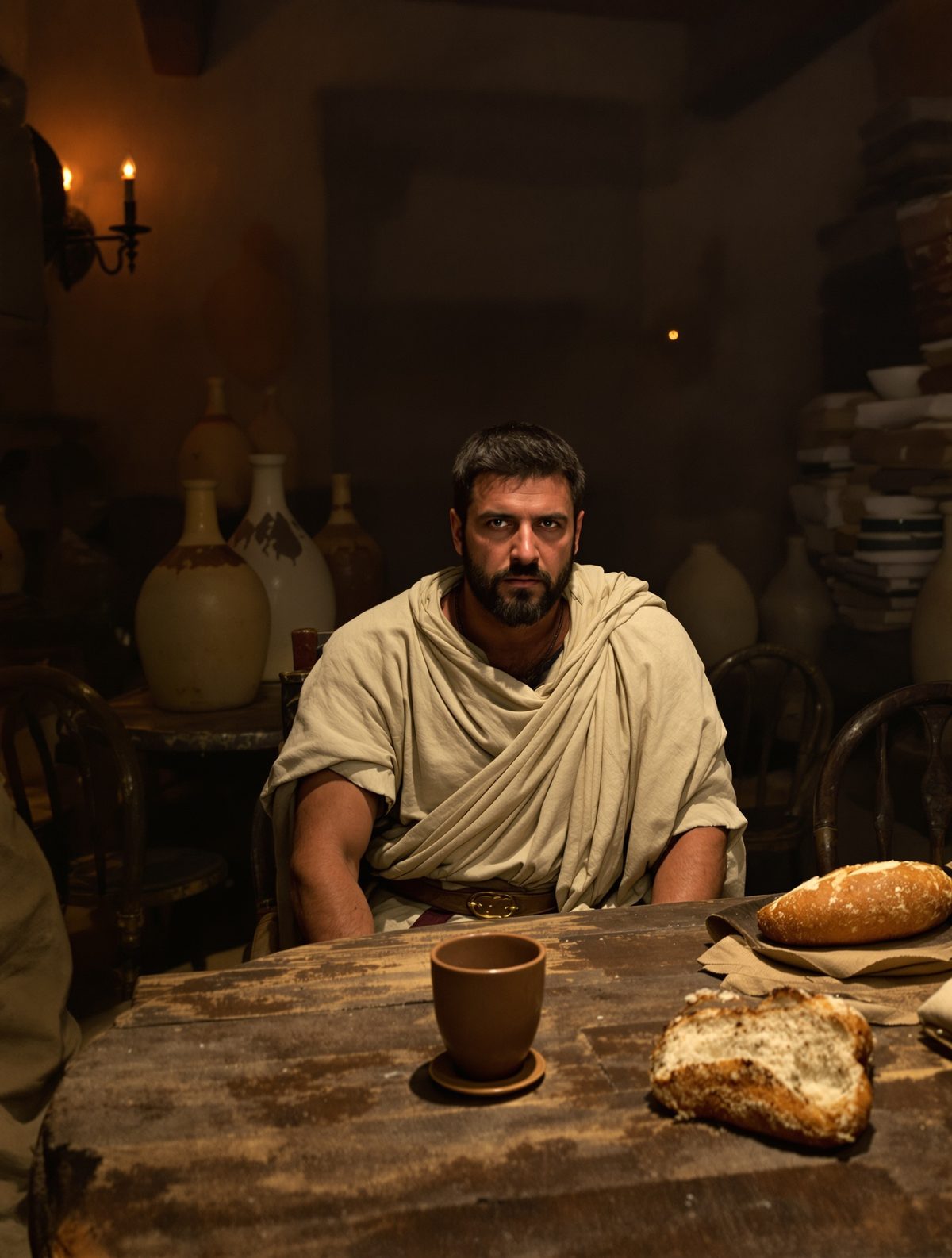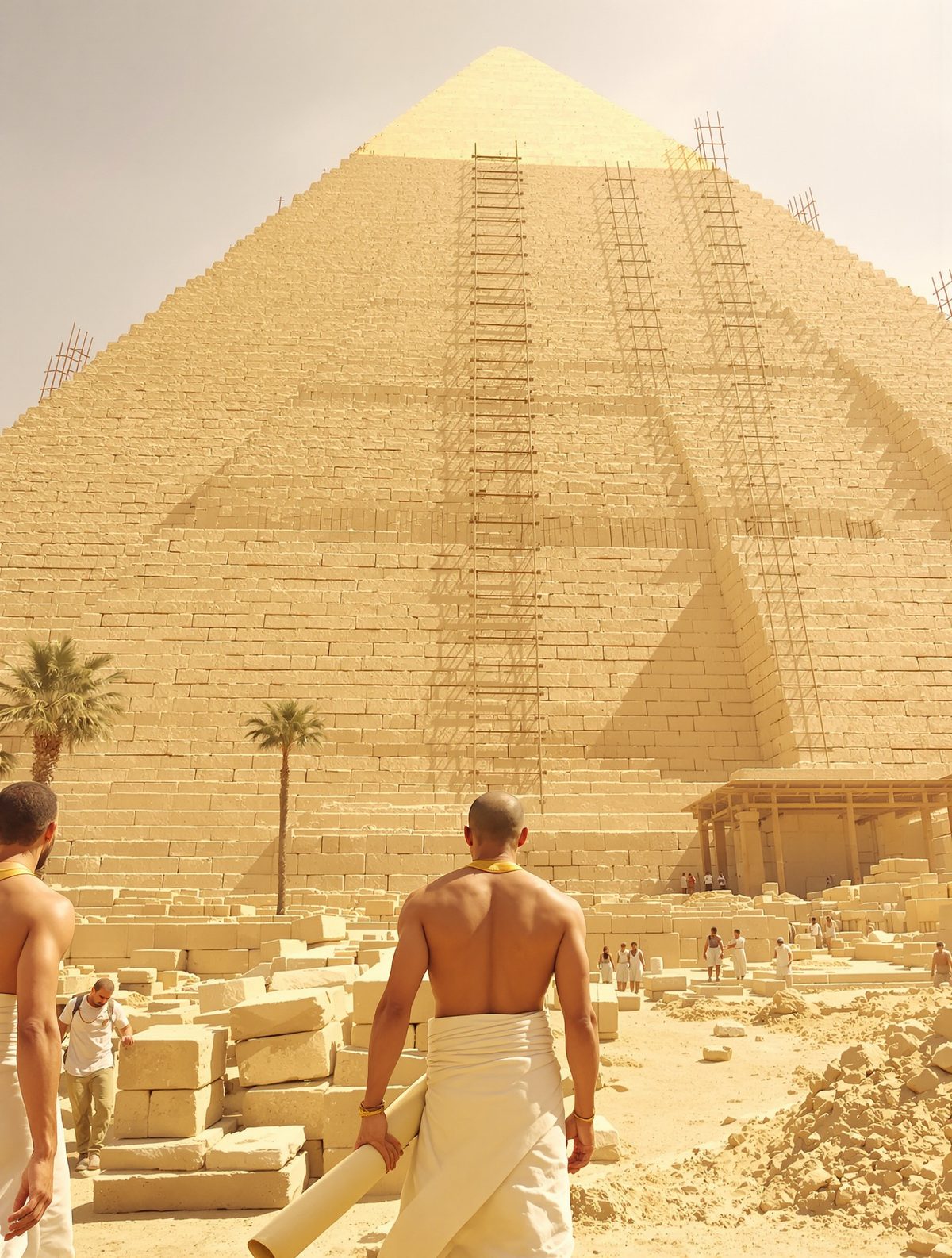
Picture the barren landscape of ancient Saqqara, its hues of sand and stone stretching endlessly beneath the scorching Egyptian sun. Now, imagine that same scene disrupted by the silhouette of a structure like no other, rising majestically above the desert floor. This is no ordinary tomb. This is the Step Pyramid of Djoser, an architectural marvel born from the audacious vision of one man: Imhotep.
The Visionary Behind the Stones
In 2650 BC, under the reign of Pharaoh Djoser — the second king of Egypt’s Third Dynasty — there emerged a figure whose name resonates through millennia as an icon of genius. Imhotep, a man of many talents, served not only as Djoser’s chief architect but also as a high priest, medical practitioner, and astronomer. But it was his revolutionary approach to construction that would secure his legacy.
For centuries, the rulers of Egypt were entombed in *mastabas*, structures that resembled elongated bench-like mounds made of mudbrick. These flat-topped edifices, while symbolic, were modest affairs, certainly lacking in grandeur. But Imhotep imagined something that would capture the majesty of the Pharaoh's divine status and ensure an everlasting legacy in stone.
Stacking towards the Sky
Imhotep’s innovation was deceptively simple yet profoundly transformative: stack one mastaba atop another. The result was a towering, six-tiered step pyramid that soared nearly 200 feet into the sky, a form of architectural evolution no civilization had previously conceived. This leap from horizontal to vertical was not merely about height; it was about reaching toward the divine, bridging the mortal and the celestial.
With this ingenious construction, Imhotep effectively invented monumental stone architecture, crafting the world’s first pyramid over two centuries before the Great Pyramid of Giza would redefine the term once more. The pyramid's base stretched an imposing 358 by 411 feet, demonstrating both the scale of Imhotep’s ambition and the resourcefulness of his workforce.
The Silent Story Within the Stones
Behind these impressive statistics lies a story of labor and innovation. While the ancient Egyptians did possess the tools and techniques for working with stone, the transition from sun-baked mudbrick to limestone was monumental. It required the extraction of hundreds of thousands of tons of stone from quarries, carefully shaping and transporting them across the Nile. The logistical and organizational prowess demanded by such an endeavor would be impressive even by today's standards.
Imhotep’s vision did not stop at the pyramid itself. It included a mortuary complex sprawling 37 acres, featuring decorative reliefs, intricate chapels, and a series of corridors and courts. Alongside the sheer physical construction was an artistic achievement underscored by carvings and engravings that celebrated religious motifs and the Pharaoh's supremacy.
The Marvel of Imhotep’s Design
Stepping into the courtyard of Djoser’s complex, one might have heard the murmur of clerics chanting invocations or the echoing footfalls of high priests. The grandeur of Imhotep’s Step Pyramid stood not just as a tomb, but as a testament to human innovation and an offering to the gods. Each tier of the pyramid represented a step closer to the heavens, a bold statement of the Pharaoh’s ascendancy both in life and in the afterlife.
Imhotep’s contribution transcended mere architecture. The pyramid embodied a spiritual journey, each stone meticulously placed to capture the cosmic harmony perceived so vital in ancient Egyptian cosmology. This was not simply about building upwards but about structuring a path from earth to eternity, where Pharaoh Djoser would reign supreme in the afterlife.
Legacy Set In Stone
The ingenuity of Imhotep’s design and its flawless execution would echo through history, influencing not just Egyptian architecture but civilizations far beyond. Indeed, the advent of the Step Pyramid catalyzed an epoch of pyramid-building throughout Egypt's Old Kingdom, reflecting the divine power of the Pharaohs and the pinnacle of architectural achievement.
Imhotep himself was later deified, revered as a god of wisdom and medicine, enshrined in both Egyptian and Greek lore long after the stones of Saqqara were stacked. His intrepid spirit and innovative prowess continue to inspire, serving as a reminder of what audacious vision coupled with human effort can achieve.
Today, as we navigate our own paths to the stars and grapple with the monumental challenges of our era, Imhotep’s story poses a timeless question: how will we stack our own efforts atop the foundations laid before us, and what monuments, in ideas or accomplishments, will we leave for futures untold?