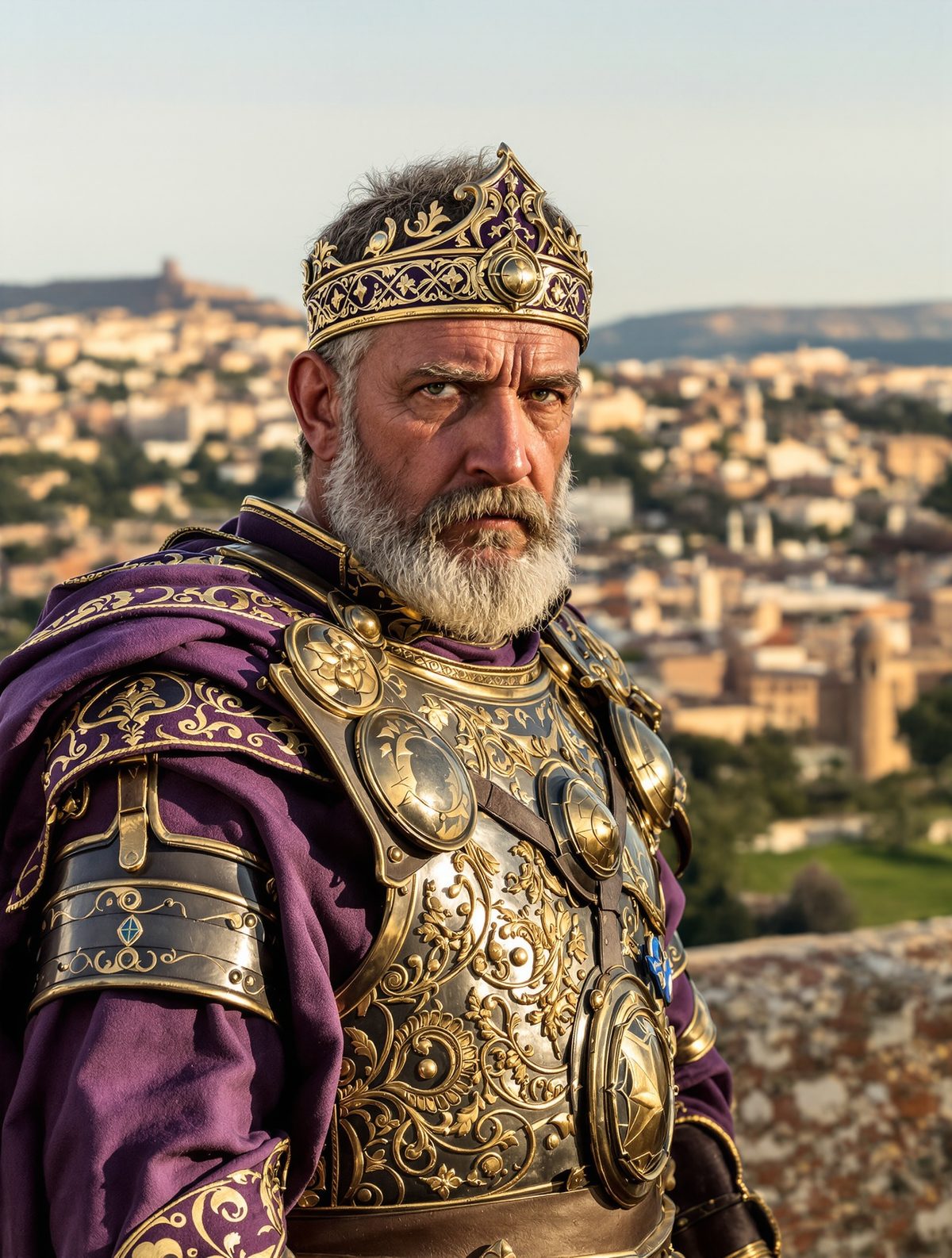
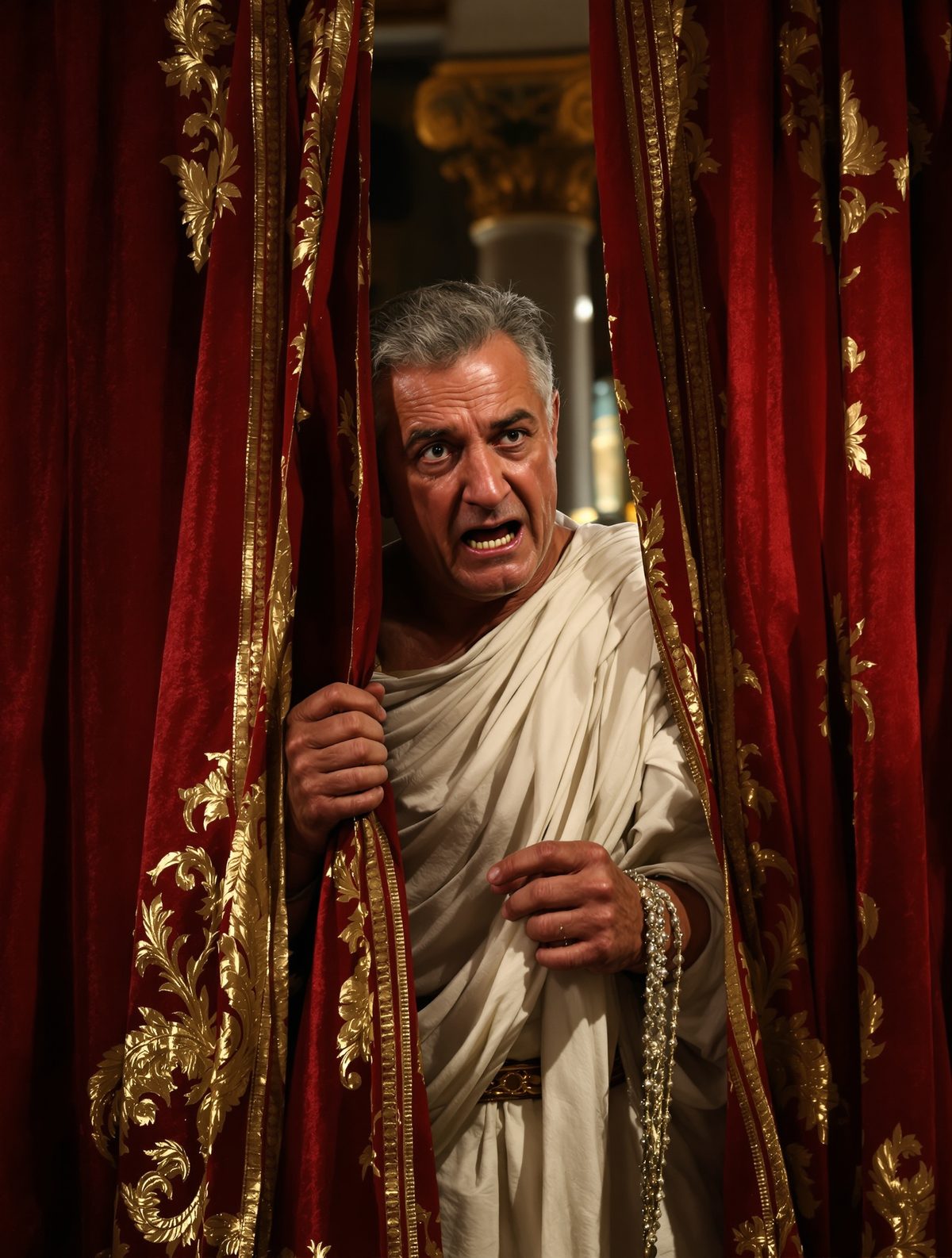
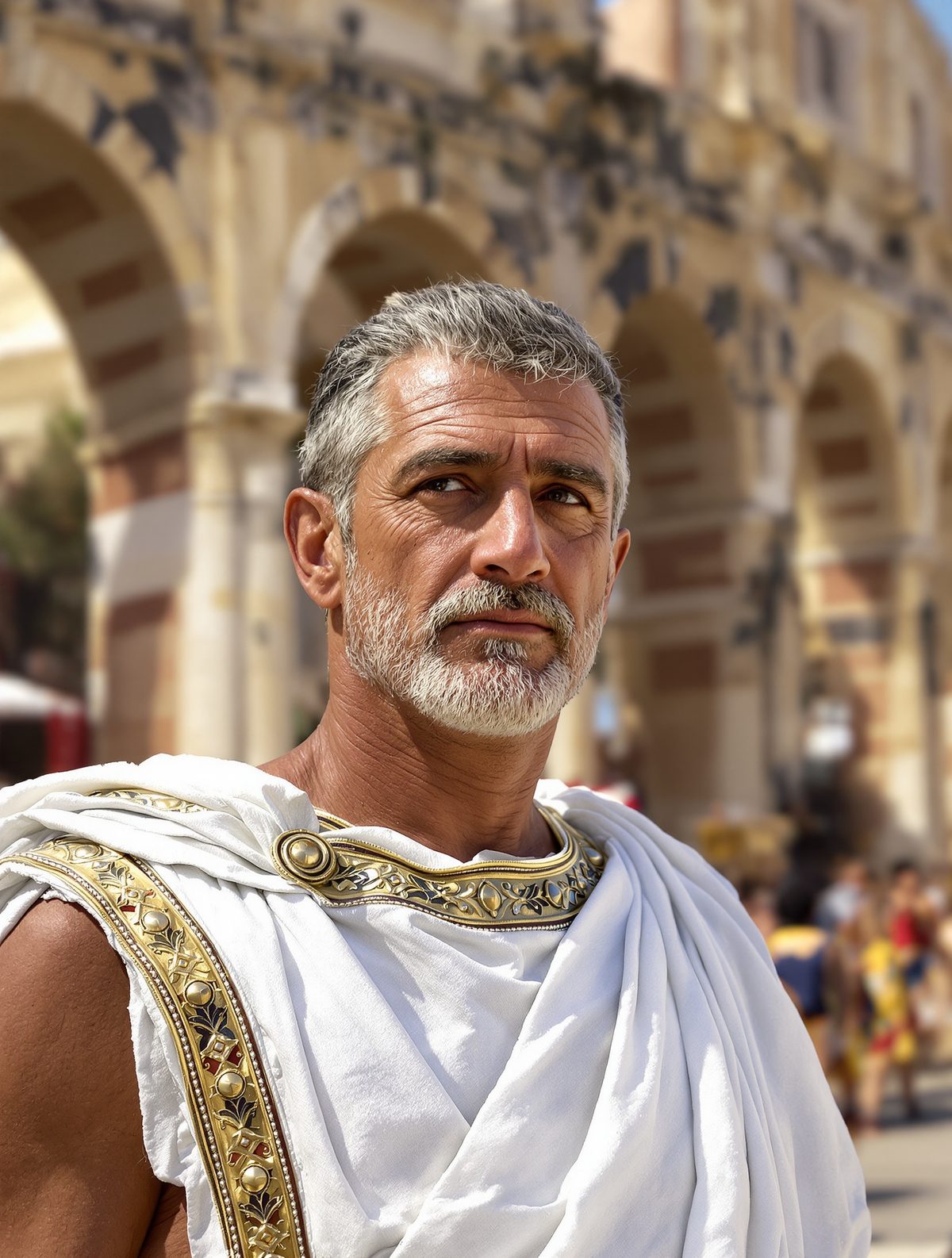
Picture this: A curious Greek man with too much time on his hands sits in a tavern around 450 BC, buying drinks for grizzled old soldiers and wide-eyed merchants returning from distant lands. He's not a general or a philosopher—just a guy who loves a good story. As wine flows and tongues loosen, he furiously scribbles down tales of massive battles, bizarre foreign customs, and larger-than-life characters. What he doesn't realize is that he's about to accidentally invent an entirely new way of understanding the world.
Meet Herodotus of Halicarnassus, the man who stumbled backward into creating history as we know it. While his contemporaries were content with myths passed down through generations, this chatty Greek decided to do something radical: he would write down what actually happened, interviewing real people who had been there. In doing so, he didn't just document the past—he fundamentally changed how humans would remember and learn from it forever.
The Gossipy Greek Who Started It All
Born around 484 BC in Halicarnassus (modern-day Bodrum, Turkey), Herodotus grew up in a world where the line between fact and fiction was delightfully blurry. Epic poems like Homer's Iliad mixed historical events with gods, monsters, and divine interventions. But young Herodotus had a different obsession: he wanted to know what really happened during the recent Persian Wars that had rocked the Greek world.
The timing couldn't have been more perfect. Veterans from Marathon (490 BC) and Salamis (480 BC) were still alive, their memories fresh with the terror and triumph of facing Xerxes' massive invasion force. Persian refugees had fled to Greek cities, bringing firsthand accounts from the other side. And trade routes buzzed with merchants who had witnessed the aftermath across the vast Persian Empire.
But here's what makes Herodotus fascinating: he wasn't trying to write a textbook. He was essentially the world's first war correspondent and travel blogger rolled into one, collecting stories that were simply too incredible not to share. His approach was revolutionary yet charmingly naive—he would interview everyone he could find, then decide for himself what seemed believable.
The Ancient World's First Investigative Reporter
What set Herodotus apart wasn't just his curiosity—it was his method. While other writers relied on divine inspiration or poetic tradition, Herodotus hit the road with the determination of a modern journalist. He traveled extensively throughout the Greek world and beyond, conducting what we would recognize today as interviews, fact-checking, and field research.
His process was remarkably thorough for its time. When researching the Battle of Marathon, he didn't just talk to Athenian veterans—he sought out Plataean allies who had fought alongside them. He interviewed Persian deserters, Egyptian priests, and Scythian traders. Sometimes he'd present multiple versions of the same event, essentially saying, "Here's what the Athenians told me, here's what I heard from a Persian, and here's what I think actually happened."
Take his investigation of Xerxes' invasion force. Rather than accepting the mythical numbers thrown around in tavern tales, Herodotus attempted actual calculations. He estimated that Xerxes' army numbered around 1.7 million fighting men, plus an equal number of support personnel—numbers that modern historians consider wildly inflated, but which represented a genuine attempt at factual reporting rather than poetic exaggeration.
From Battlefield Chronicles to Ethnographic Marvel
Here's where Herodotus' project took an unexpected turn. What began as a straightforward account of the Persian Wars transformed into something far more ambitious: the world's first comprehensive study of different cultures and civilizations. Herodotus couldn't just tell you about the Battle of Thermopylae—he had to explain who these Persians were, where they came from, and how they built such a massive empire in the first place.
This led him down countless fascinating rabbit holes. To understand Persian power, he traced their rise under Cyrus the Great. To explain Egyptian involvement, he spent months interviewing priests in Memphis and Thebes, documenting mummification processes, crocodile worship, and pyramid construction techniques. He became obsessed with Scythian nomads, Libyan tribes, and Babylonian marriage customs.
The result was a work that reads like a cross between a war memoir and National Geographic. One moment he's describing the tactical brilliance of Themistocles at Salamis, the next he's explaining how Ethiopian kings choose successors (by picking the tallest, most handsome man in the kingdom) or detailing the Amazonian warrior women of the Black Sea region.
The Accidental Birth of Critical Thinking
Perhaps Herodotus' most revolutionary contribution was his approach to source evaluation. Unlike his predecessors, who presented stories as unquestionable truth, Herodotus openly discussed his doubts and disagreements with his sources. He pioneered phrases that would become the foundation of historical scholarship: "I am obliged to report what is said, but I am not obliged to believe it."
Consider his famous account of the Phoenix, the mythical bird that rises from its own ashes. After describing the Egyptian version of the legend, Herodotus adds with characteristic skepticism: "I have never seen a Phoenix myself, except in pictures, for it is very rare and visits the country only at intervals of 500 years." This wasn't cynicism—it was the birth of evidence-based inquiry.
He applied this same critical lens to more significant matters. When multiple sources gave conflicting accounts of major battles, he would present the contradictions rather than choosing arbitrarily. When stories seemed too fantastical (though his threshold for "fantastical" was admittedly high), he noted his reservations while still recording them for posterity.
The Man Who Taught the World to Remember
By the time Herodotus completed his Histories around 430 BC, he had created something unprecedented: a systematic investigation into cause and effect in human affairs. He wasn't content to simply chronicle events—he wanted to understand why things happened. Why did the Persian Wars begin? How did a collection of fractious Greek city-states defeat the world's greatest empire? What factors determine the rise and fall of civilizations?
His work became an immediate sensation. Herodotus gave public readings throughout Greece, and his dramatic storytelling style—complete with dialogue, character development, and narrative tension—made history accessible and entertaining. He proved that factual investigation could be just as gripping as mythological epic poetry.
The impact was immediate and lasting. Within a generation, Thucydides would refine Herodotus' methods to create even more rigorous historical analysis. Within a few centuries, historical writing had become a recognized literary genre throughout the Mediterranean world. The Romans, inheriting this Greek innovation, would use historical writing to understand and justify their own imperial expansion.
The Gossip That Changed Everything
Today, we take for granted that we can learn about the past through systematic investigation rather than just accepting traditional stories. We assume that historians should interview witnesses, examine evidence, and present their reasoning transparently. We expect that different perspectives on controversial events will be acknowledged and debated rather than simply decreed by authority figures.
None of this was obvious before Herodotus. His "accidental" invention of history represented a fundamental shift in how humans understand themselves and their world. By insisting that human events could be investigated, understood, and learned from, he laid the groundwork for everything from journalism to anthropology to political science.
Perhaps most importantly, Herodotus demonstrated that curiosity about other people and cultures—even when mixed with gossip, speculation, and the occasional tall tale—could lead to genuine wisdom. In our current age of information overload and competing narratives, his example reminds us that the patient work of listening to different voices, questioning our assumptions, and seeking evidence for our beliefs remains as revolutionary today as it was 2,500 years ago.
The next time you read a news article, watch a documentary, or even scroll through social media posts about current events, remember that you're participating in a tradition that began with one curious Greek who simply couldn't resist a good story—and cared enough about truth to write it down.