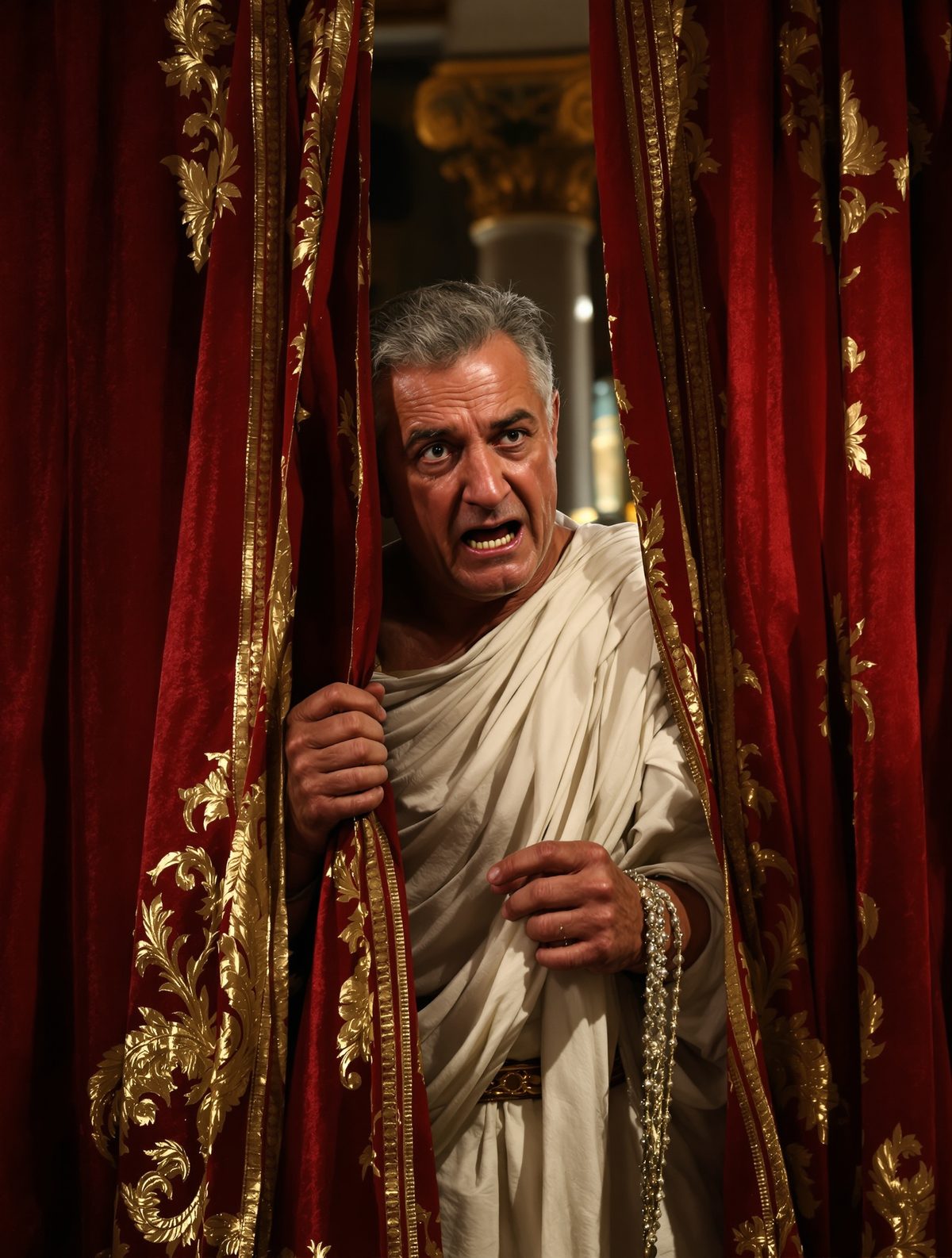
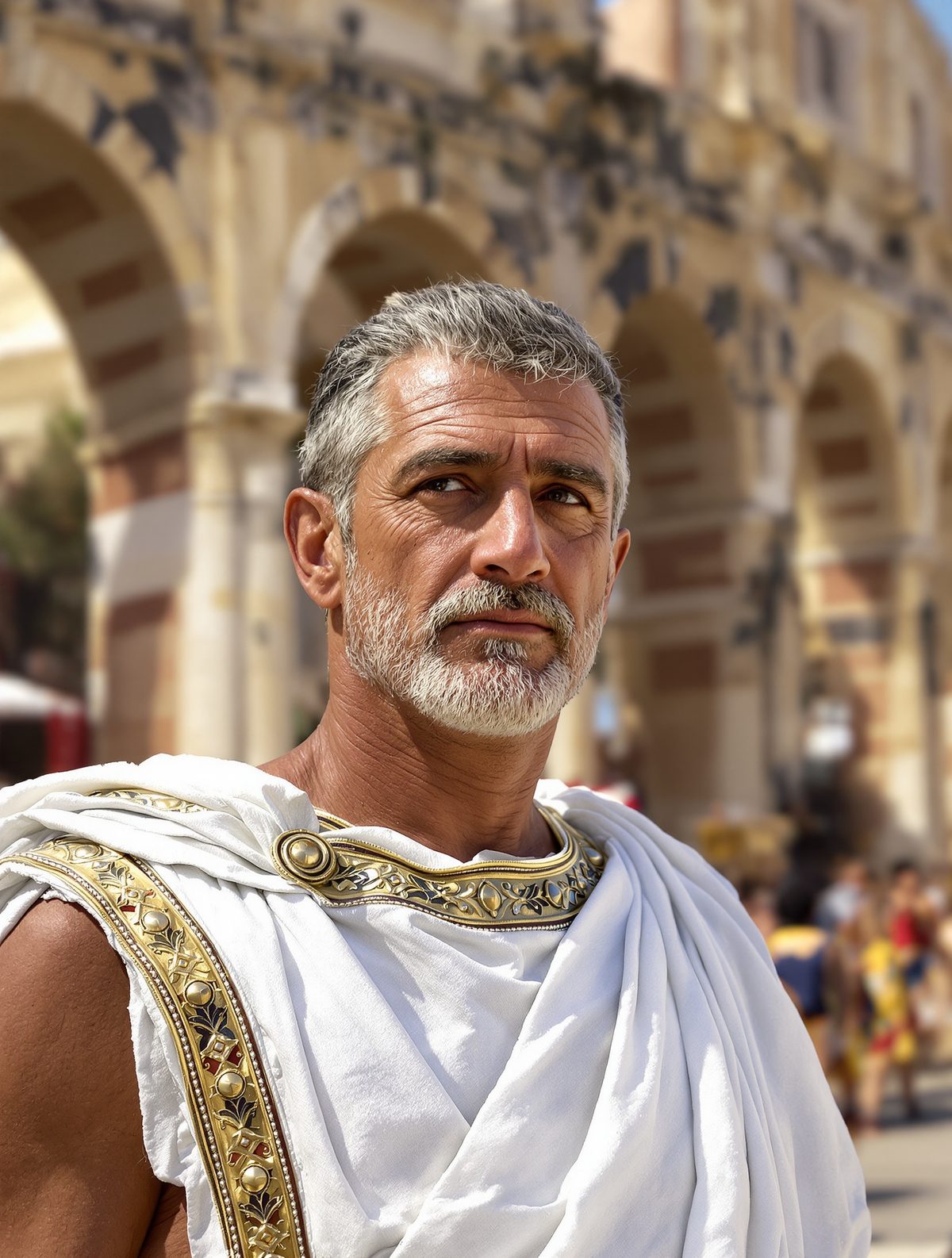
Picture this: It's 535 AD, and a single Byzantine ship cuts through the Mediterranean waves toward the Italian coast. On board stands a man whose name will echo through history—Flavius Belisarius. Behind him sail just 7,500 soldiers, with another 7,500 following by land. Their mission? To reconquer the entire Western Roman Empire from the Gothic Kingdom that had ruled it for over half a century. The Ostrogoths commanded 150,000 battle-hardened warriors and controlled every major fortress from the Alps to Sicily. By every measure of military logic, Belisarius was sailing toward certain death.
What happened next would rewrite the map of Europe and prove that sometimes, audacity trumps overwhelming odds.
The Impossible Dream of a Purple-Born Emperor
Emperor Justinian I wasn't content with ruling just the Eastern Roman Empire from Constantinople. Born into the imperial purple, he harbored an obsession that his courtiers whispered was madness: renovatio imperii—the restoration of the entire Roman Empire to its former glory. The Western Empire had fallen to barbarian kingdoms decades earlier, but in Justinian's mind, these were mere temporary setbacks.
The Ostrogothic Kingdom of Italy presented the ultimate prize. Under their king Theodoric the Great, the Goths had transformed Italy into a prosperous realm, blending Roman administrative genius with Germanic military might. But Theodoric was dead, and succession disputes had weakened Gothic unity. Justinian saw his chance.
For this impossible mission, he chose his most brilliant general—a man who had already achieved the unthinkable by crushing the Vandal Kingdom of North Africa with just 15,000 troops. Belisarius was only in his early thirties, but he possessed something rarer than experience: an almost supernatural ability to turn desperate situations into stunning victories.
The plan seemed suicidal. Intelligence reports indicated the Goths could field armies ten times larger than anything Belisarius could muster. They held impregnable fortresses at Ravenna, Rome, and Naples, each garrisoned with thousands of warriors. Yet Justinian's faith in his young general was absolute.
Landing in a Hostile World
When Belisarius's fleet approached the Italian coast near Reggio in late 535, the Gothic watchtowers erupted with signal fires. The invasion everyone said was impossible had begun.
But the general's first moves revealed the cunning that would define the entire campaign. Rather than attempting a costly assault on a fortified port, he negotiated the surrender of several Sicilian cities through a combination of bribery, diplomacy, and carefully orchestrated displays of strength. Local populations, weary of Gothic rule and nostalgic for Roman glory, began defecting to his banner.
The Goths had expected a conventional invasion—massive armies clashing in open battle. Instead, they faced something far more dangerous: a master of psychological warfare who understood that conquering minds was often more effective than conquering fortresses.
Belisarius's army was a marvel of 6th-century military engineering. His core troops were heavily armored cavalrymen equipped with both lance and bow—warriors who could charge like knights or fight as mounted archers. Supporting them were Hun mercenaries, Slavic infantry, and a corps of engineers capable of constructing siege equipment that Gothic defenders had never encountered.
The Miracle at Rome's Gates
By 536, Belisarius had captured Naples through an ingenious assault via the city's ancient aqueducts—a tactic that would have made Caesar himself proud. But his greatest test awaited: Rome itself, the eternal city that hadn't seen foreign conquest in over 800 years.
Here's where the story takes an almost unbelievable turn. When Belisarius approached Rome with his small army, the Gothic garrison simply... left. King Vitiges had pulled his forces back to Ravenna, apparently believing the city was indefensible. On December 9, 536, Belisarius walked through the gates of Rome virtually unopened, becoming the first foreign general to occupy the city since the Gallic sack of 387 BC.
But Vitiges wasn't finished. Realizing his catastrophic mistake, he assembled the largest Gothic army in generations—sources suggest over 100,000 warriors—and marched on Rome. In March 537, they surrounded the city in one of history's most lopsided sieges. Belisarius found himself trapped behind ancient walls with fewer than 8,000 effective soldiers, facing an enemy that outnumbered him more than twelve to one.
What followed was a masterclass in defensive warfare. Belisarius personally led sorties from the gates, his distinctive armor making him a target for Gothic arrows but inspiring his outnumbered troops to superhuman efforts. During one famous engagement at the Salarian Bridge, he single-handedly held off Gothic cavalry while his men retreated, an act of personal valor that became legendary even among his enemies.
The Art of Winning by Not Losing
The siege of Rome lasted over a year, but Belisarius understood something his enemies didn't: he didn't need to win decisive battles. He simply needed to survive long enough for Gothic unity to crumble under the strain of a prolonged campaign.
His strategy was diabolically clever. While the Goths focused their massive army on Rome, Belisarius used small detachments to capture Gothic strongholds throughout Italy. Each victory sent ripples of doubt through the Gothic ranks. Meanwhile, his agents spread gold and promises among Gothic nobles, exploiting the succession disputes that had never fully healed.
The general also demonstrated an understanding of logistics that was centuries ahead of his time. While the Gothic army struggled to feed itself around Rome's walls, Belisarius had secured supply lines from Sicily and North Africa. Gothic warriors began deserting as hunger and disease ravaged their camps.
Perhaps most importantly, Belisarius never allowed himself to be drawn into the massive pitched battle that Vitiges desperately sought. The Gothic king had the numbers to crush any Byzantine army in open combat, but he couldn't force Belisarius to fight on his terms. Instead, the Byzantine general waged a war of constant mobility, striking where his enemies were weakest and vanishing before they could respond in force.
The Collapse of an Empire
By 538, Gothic resolve was cracking. Vitiges lifted the siege of Rome and retreated to Ravenna, but the psychological damage was irreversible. Italian populations increasingly saw Belisarius as a liberator rather than a conqueror. Gothic nobles began switching sides, bringing entire regions with them.
The campaign's climax came in 540 when Belisarius besieged Ravenna itself. The city was supposedly impregnable, protected by marshes and garrisoned by the kingdom's elite troops. But after months of siege, something extraordinary happened: the Gothic nobles offered to make Belisarius their king if he would spare their lives and property.
It was the ultimate recognition of his genius. The barbarian warriors who had carved out their kingdom through conquest now begged their conqueror to rule them. Belisarius pretended to accept, entered Ravenna peacefully, then revealed his true loyalty to Justinian. King Vitiges was taken prisoner, and the Ostrogothic Kingdom—which had seemed so mighty just five years earlier—effectively ceased to exist.
The general who had landed with 15,000 men had conquered an empire of millions.
Legacy of the Last Roman
Belisarius's reconquest of Italy represents one of history's most stunning examples of strategic brilliance overcoming impossible odds. But perhaps more importantly, it offers timeless lessons about the nature of power itself.
In our modern world of corporate takeovers, political campaigns, and technological disruption, Belisarius's methods seem remarkably contemporary. He understood that perception often matters more than reality, that psychological warfare can be more decisive than physical force, and that the most dangerous enemy is one who refuses to play by conventional rules.
The Gothic Kingdom fell not because it was weak, but because it couldn't adapt to face an opponent who had reimagined the very nature of warfare. In boardrooms and battlefields today, the lesson remains the same: sometimes the greatest victories belong not to the strongest, but to those bold enough to attempt the impossible.
Belisarius proved that with enough audacity, intelligence, and sheer force of will, even a handful of determined individuals can reshape the world. In an age that often feels dominated by faceless institutions and overwhelming forces, that's a lesson worth remembering.