April 22, 1519. The sails of eleven Spanish ships filled the horizon.
A New Dawn on the Gulf Coast
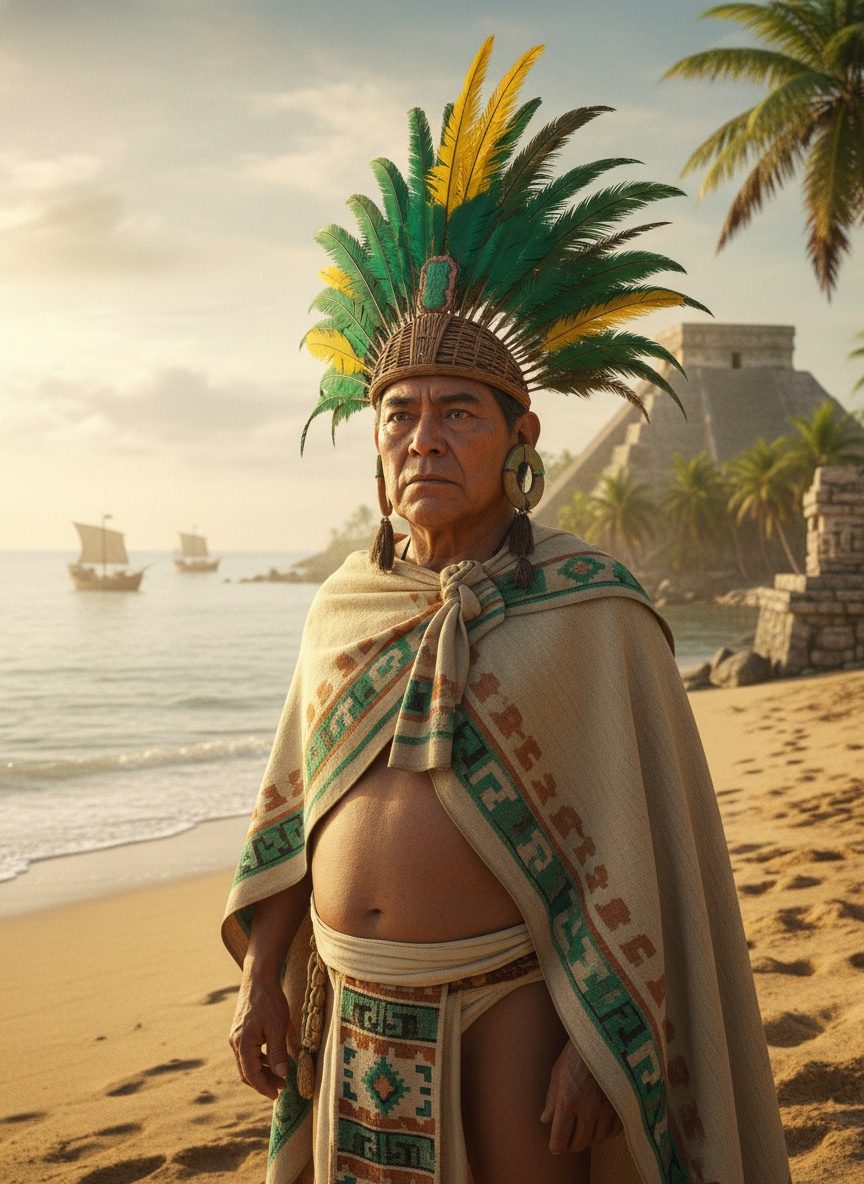
The morning sun cast long shadows across the sands of the Gulf of Mexico. From his vantage point atop a small rise overlooking the coastline, Chieftain Tlacochcalcat of the Totonac people watched the immense shadows of the Spanish fleet looming larger by the moment. For years, whispers had floated through the markets and temples of Mesoamerica: bandits from the sea, clad in metal, speaking strange tongues. Many dismissed these tales as nothing more than legend. But now, as the ocean breeze carried with it the unmistakable scent of change, his people of Cempoala faced an uncertain future.
Tenochtitlan’s Heavy Hand
For decades, Cempoala and its surrounding regions bore the oppressive yoke of the mighty Aztec Empire. From their heartland in the bustling city of Tenochtitlan, the Aztecs demanded tribute in the form of goods, precious stones, and, tragically, human lives for sacrifice. Tlacochcalcat, like many subjugated leaders, had long chafed under this blood-stained tyranny. Each tribute sent north was another testament to their subordination, a vivid reminder of autonomy lost. But beyond the mountains, amid the talk of gods and warriors from distant lands, Tlacochcalcat sensed a flicker of opportunity.
The Gamble of Cempoala
When the Spanish finally set foot on the shores, they were an unfamiliar sight, garbed in armor that glinted in the sunlight and bearing crossbows and strange animals the likes of which none in Cempoala had ever seen. While others might have been paralyzed by fear, Tlacochcalcat saw potential. Instead of fearing these newcomers, he envisioned them as the catalyst needed to ignite the long-suppressed flames of rebellion.
Summoning courage, the chieftain sent a trusted emissary to Hernán Cortés, the Spaniard leading this small but formidable contingent. It was an extraordinary decision, to reach out with a hand of tentative friendship rather than one of hostility or submission. After days of careful negotiation, a simple handshake sealed a burgeoning alliance that would soon destabilize the status quo of an entire empire.
From Alliance to Upheaval
As the alliance between Cempoala and the Spaniards took hold, the impact reverberated far and wide. The Totonacs, fueled by the hope of liberation and emboldened by Cortés's promises of support, stood up against the Aztec tribute collectors. Suddenly, the power the Aztecs wielded over their vassals seemed less invincible. Word of the Spanish presence and the chieftain’s defiance spread rapidly, reaching other oppressed regions and sowing the seeds of doubt and rebellion.
This partnership gave Cortés the foothold he desperately needed. The Spanish had their differences, their ambitions often stark and ruthless, but in Tlacochcalcat, they found an invaluable guide and ally. The chieftain’s intimate knowledge of the land and its people provided key insights that aided in the rapid Spanish advance into the heartlands of the Aztec Empire. As the Spaniards marched forward, backed by new indigenous allies motivated by their own desire for freedom, the fortress city of Tenochtitlan began to feel the tremors of encroaching doom.
Echoes Through the Ages
April 22, 1519, might appear as just another date on the calendar, but it marked a pivotal turning point in the history of the Americas. The handshake between a Totonac chieftain and a Spanish conquistador sparked a series of events that culminated in the collapse of one of the greatest empires the world had ever known. What Tlacochcalcat initiated was more than mere collaboration; it was a profound defiance against imperial subjugation.
The consequences of this decision extended well beyond the shores of Cempoala. It redefined alliances and shattered old structures, heralding an era of new interactions, for better or worse, that reshaped the entire continent. The story of Tlacochcalcat's choice is a testament to the complexities of indigenous agency, resilience, and the indelible impact of choices made against the tides of time. As we reflect on these events, we're reminded that history is often forged not just by grand armies and rulers, but also by the courageous and calculated decisions of those whose stories remain largely untold, yet undeniably transformative.