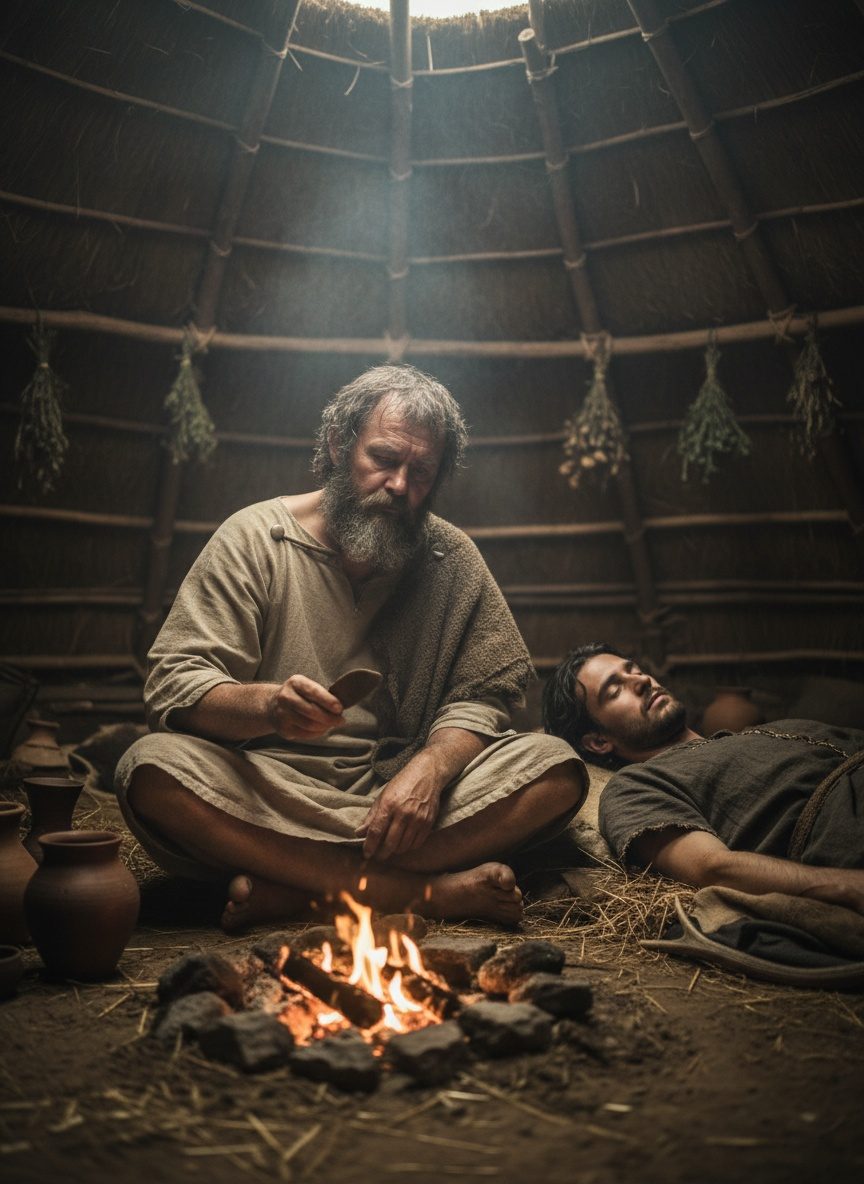
The air in Neolithic Britain hung heavy with mist, veiling the ancient landscape of rolling hills in a cloak of mystery. As the sun's first rays pierced the thinning fog, the rugged terrain of what is now Crichel Down in Dorset emerged, timeless and serene, except for the chorus of birds greeting the dawn. Here, amidst the echoes of nature, lay a secret of human ingenuity that would remain hidden for millennia. In this land where the sound of the wind was punctuated only by the whispers of the past, an extraordinary event unfolded thousands of years ago that would quietly yet profoundly change what we know of ancient medical practices.
In these remote reaches, where the druidic forests once stood dense and untamed, the life of a Neolithic Briton was marked by the cycles of nature and the rise and fall of seasons. But fate had something markedly different and perilous in store for one of these inhabitants. Whether by accident, illness, or unseen affliction, one individual required an intervention that even today elicits awe from medical historians: cranial surgery performed with stone tools, a daunting task in any era, let alone 5,500 years ago.
The skull, discovered during a routine archaeological dig at Crichel Down, immediately captured the attention of researchers not only because of its age but because of what it revealed about the people it belonged to. The ancient bone bore the unmistakable markings of trepanation, an ancient form of surgery that involved drilling or scraping a hole into the human skull. But this wasn't a case of cranial destruction; the edges of the hole showed signs of healing. This single discovery, seeming to glow with the sombre immortality of history itself, spoke volumes: the patient had lived, his body knitting bone back together, sealing the story into the very fabric of human endurance.
To understand the sheer audacity and significance of this ancient human's survival, we must first reconstruct the scene. Imagine a group of Neolithic individuals gathered around their kinsman, their expressions a mix of determination and trepidation. The operation might have been conducted in the dim confines of a dwelling, or perhaps beneath the open sky, the soil a theatre for prehistoric doctors wielding their simple yet effective stone implements. These tools, formed from flint or obsidian, were the sharpest edges available, capable of cutting through the dense tissue of the skull with unexpected precision.
The 'how' looms large, with a set of questions teeming in its steps. How did these early surgeons possess such knowledge? How were they able to deliberate on cause and remedy with neither written record nor numeric precision to guide them? Some theorists propose a wealth of accumulated knowledge passed through the generations, a verbal legacy of trial and error. Others suggest the influence of shamanistic rituals, where the spiritual journey intersected with the corporeal, offering explanations or guidance for the procedure and its intended outcome.
In every conceivable respect, the surgeon was conducting an operation in the dark, both metaphorically and literally. The absence of anaesthesia and antiseptics in this pre-metallic age adds a layer of horror to what might otherwise appear as a quaint study of ancient resilience. Yet, the evidence suggests a level of success worthy of deep reflection: the patient survived, the wound closed cleanly, and the bone regrew over time. Perhaps herbal concoctions or cultural rituals helped dull the pain, while innate knowledge of human anatomy guided the hand that dared cut into the sacred vault of the human skull.
This isolated yet momentous case gives voice to the unsung medical practitioners of the Neolithic era, engineers of survival and resilience amid a harsh existence. There is no written testament to their efforts, no stone tablet bearing their names, only silent testimony in the form of a scarred skull, recovered eons later. Their work also throws long shadows over our understanding of healthcare's ancient roots; it compels us to reassess our assumptions about the limitations imposed by prehistory on human resourcefulness and ingenuity.
The significance of this surgery is not just medical; it speaks to the human condition and the spirit innate in all who seek to preserve life. When the veil that time has drawn over the actions of our ancestors is momentarily lifted, we peer not just at the practical skills they had honed amid the harsh realities of their existence, but at their courage, empathy, and intellectual curiosity. These qualities, necessarily entwined with survival, are the traits that would later echo through history as the foundations of medicine as we know it today.
Today, as we delve further into the intricacies of our collective past, such stories light our path with profound insights into the resilience and ingenuity that have always defined the human race. The skull from Crichel Down is more than a relic—it is a potent reminder that the quest for healing, for understanding, and for survival is as old as humanity itself. Amidst the technology-laden scrutiny of modern science, the story of this ancient patient and their healer gently insists that we look closer, question deeper, and appreciate the unfathomable rivers of time and discovery that have brought us to where we stand today.