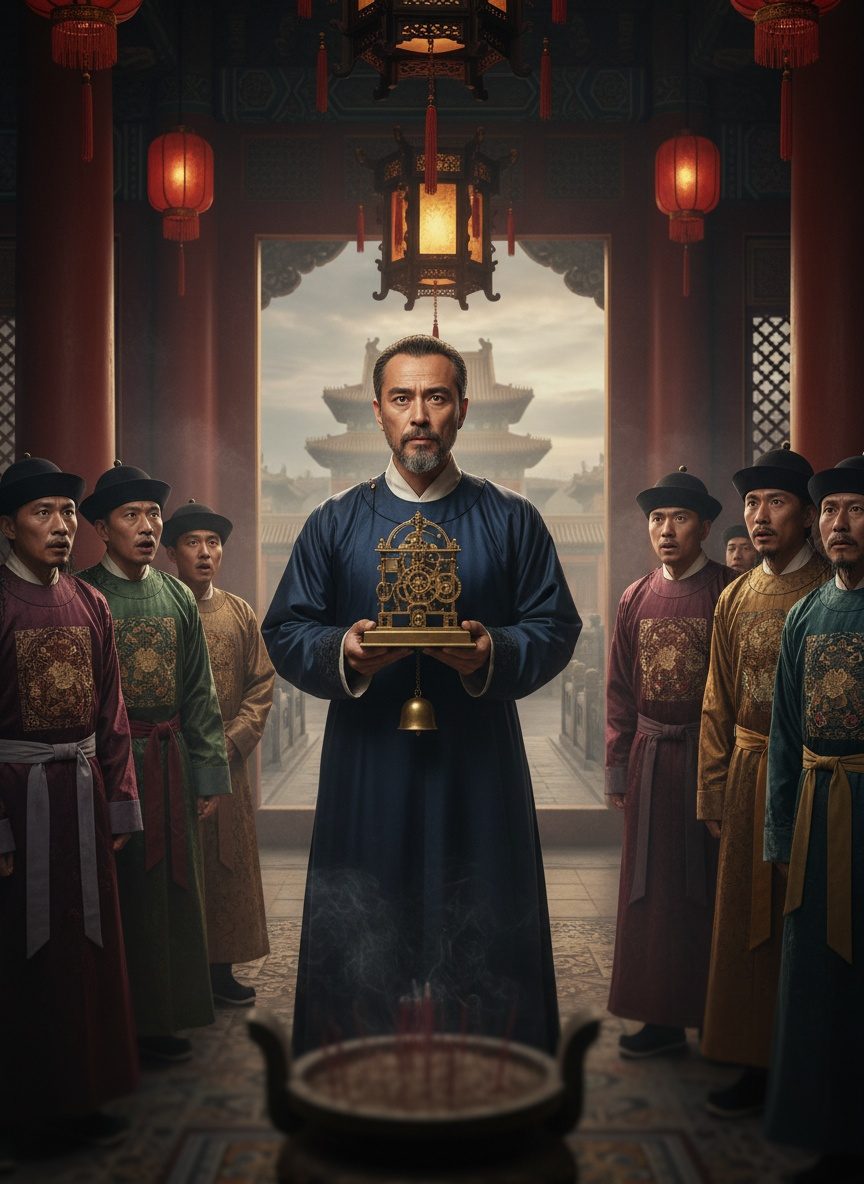
January 24, 1601. The cold air clung to the stone of the Forbidden City’s towering walls.
The Arrival of an Unlikely Visitor
On this crisp winter's day, beneath the imposing arches of China's imperial seat of power, an incongruous figure made an entrance. Matteo Ricci, a Jesuit priest from Italy, stepped into the awe-inspiring center of the Ming Dynasty, clutching a curious object that ticked with mechanical precision. This was no ordinary offering for the Emperor Wanli. It was a mechanical clock, a wondrous gadget that promised to mark the time with an accuracy and charisma unseen in the East. While China had a rich tradition of astronomical devices and water clocks, this intricate timepiece from the West captured the imagination of the Chinese court, transforming Ricci from just another foreigner into an invaluable ally.
The clock embodied the rhythm and ingenuity of European craftsmanship. Seeing it for the first time was like witnessing a small piece of magic encased in metal and gears. It struck not only hours but also the very concept of time in a way that resonated with the disciplined and hierarchical structure of the imperial court. Ricci's clock would eventually change more than just the time it displayed. It signaled the beginning of a remarkable intercultural dialogue between the East and the West.
From Schooling in the West to China's Forbidden City
Matteo Ricci wasn’t just an improbable visitor; he was a man with a mission. Born in the Papal States in 1552, he joined the Society of Jesus, a Catholic religious order devoted to education and missionary work. Ricci absorbed the Jesuits' rigorous inquiry and intellectual discipline, which equipped him with the knowledge that would later serve as his currency in the sprawling Chinese empire.
When the opportunity to travel as a missionary to China presented itself, Ricci saw it as both religious duty and scholarly pursuit. He meticulously studied Chinese language and culture for nearly 20 years before setting foot in the Forbidden City. His presence wasn’t immediately recognized as significant. Foreigners, especially Westerners, were typically regarded with suspicion. However, Ricci's patience and keen adaptability slowly earned him acceptance among the Chinese elite.
Ricci didn’t blend in by accident. In his Jesuit cassock, he donned Chinese robes and embraced Confucian courtesies to show respect. It was this balance of remaining authentic while wholeheartedly adopting local customs that made Ricci distinctive. Indeed, by the time he presented the mechanical clock to the Emperor, he was more than just a foreign craftsman; he was a bridge between worlds.
The Astonishment of Emperor Wanli
The Forbidden City was a world within its own impervious walls, a testament to China’s greatness. The court had seen tributes and gifts from lands near and far, yet, Ricci's clock offered something different: the allure of precision and the mystery of Western science. As Emperor Wanli observed the ticking mechanism, the court was abuzz with curiosity and awe.
Ricci's understanding of mechanics and cosmography impressed the Emperor, but his skill in presenting Western knowledge in a manner respectful to Chinese sensibilities was crucial. This wasn’t just a matter of technology; the clock symbolized two cultures beginning to understand one another. His intellectual exchanges catalyzed an interest in Western astronomy and mathematics, areas in which China would soon excel, influenced partly by Ricci’s enduring legacy.
This interaction marked a significant shift in the Emperor’s stance toward foreign influences and paved the way for increased cultural and technological exchange. Newly stirred interest unexpectedly placed the West in a positive light within imperial perceptions, creating ripples that would extend beyond China’s borders.
A New Clockwork Understanding of the World
The presence of Ricci and his clock in the Ming court signified more than the arrival of a new technological marvel; it prompted a rethinking of the relationship between faith, science, and culture. Through Ricci, the mingling of Western innovation and Eastern philosophy encouraged a dialogue characterized by mutual respect and scholarly curiosity.
The fact that Ricci was allowed access to the heart of Chinese power was a triumph of diplomacy and adaptability — a testament to the potential for understanding between disparate cultures. His subsequent influence was widespread, shaping the manner in which China viewed European sciences and resulting in a unique cultural synthesis that unmarred the rigid boundaries of the age.
As we reflect on this historical episode, it stands as a potent reminder of the transformative power of knowledge exchanged across borders. The mechanical clock that ticked its way into the heart of the Forbidden City serves as a metaphor for time itself — fluid, relentless, and universally understood. Ricci's experience demonstrates that even the smallest cultural bridge, like a clock, can span an ocean of differences and inspire centuries of progress. In today's era of rapid globalization, this story remains relevant, urging us to cherish and cultivate the intricate dance of cross-cultural dialogue that continues to shape our world.