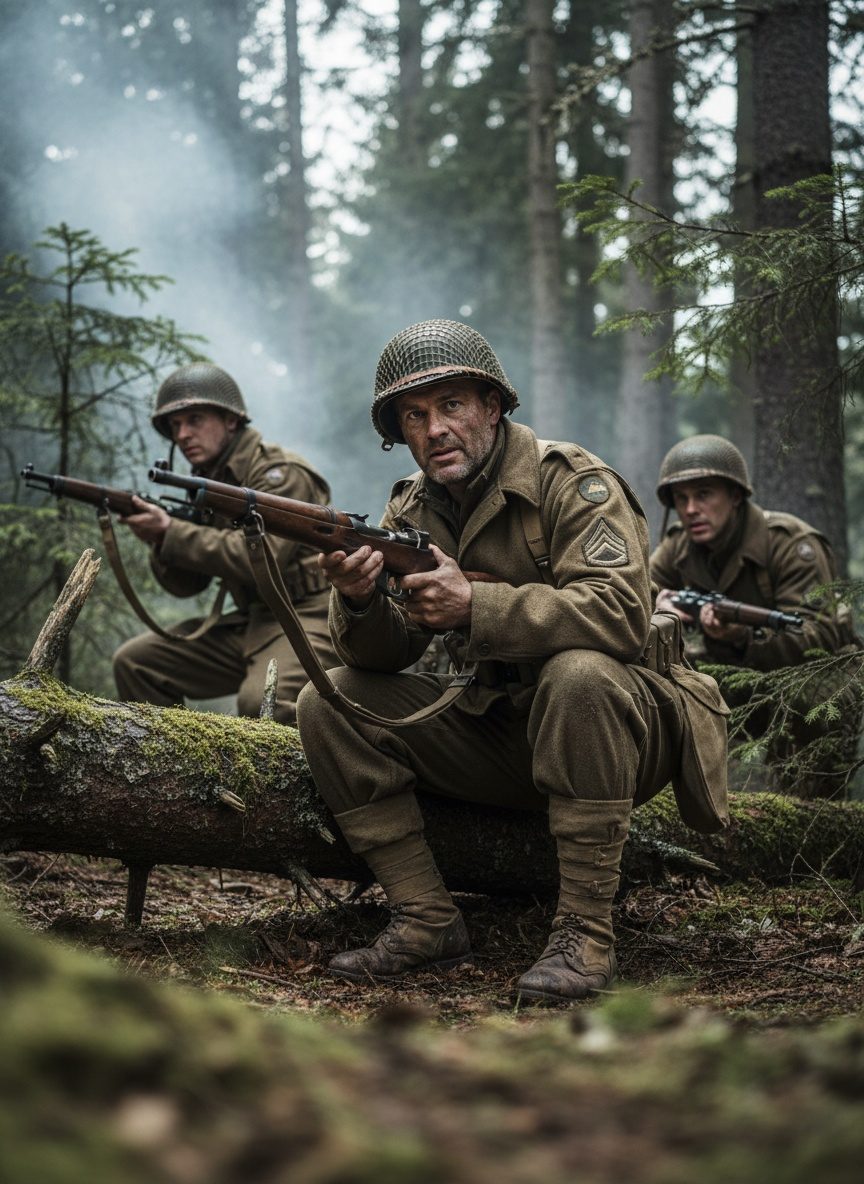
October 1944. The mist clung to the dense canopy of the Vosges Mountains.
A Hilltop in the Vosges
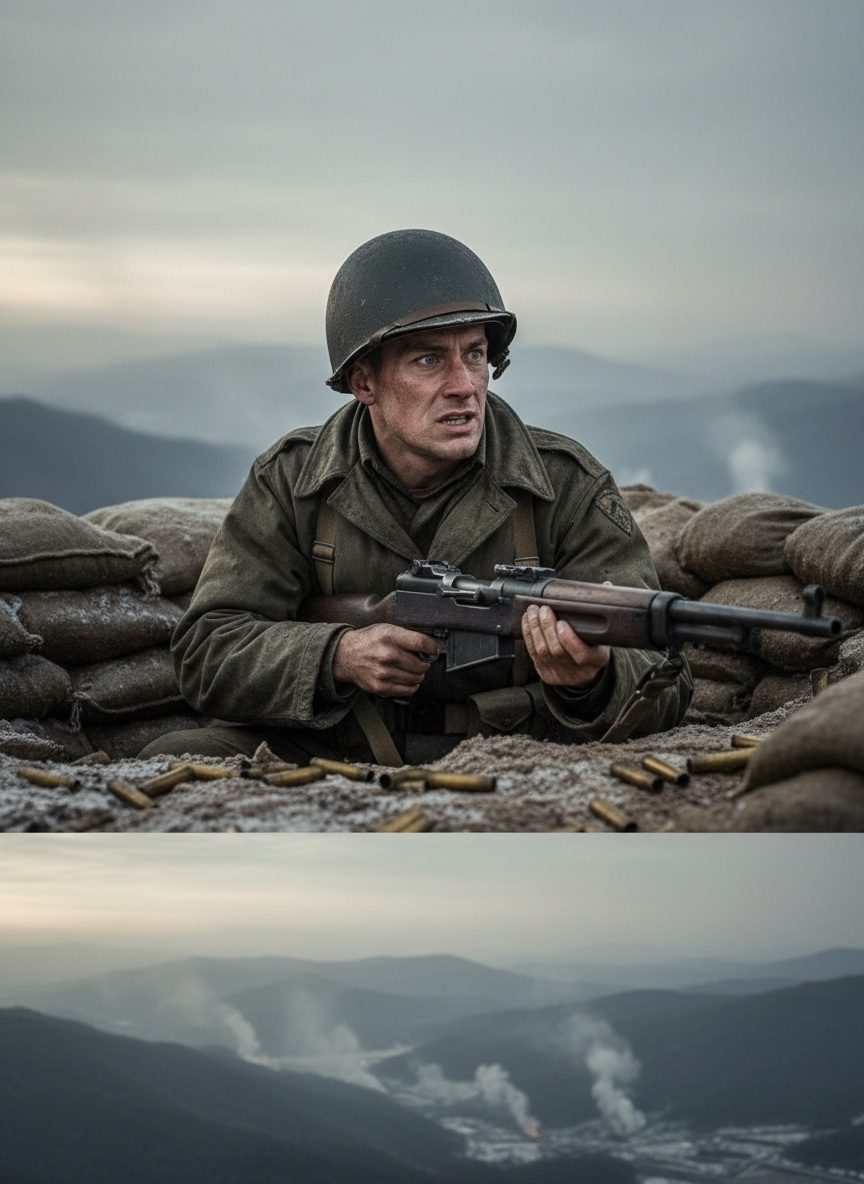
Perched atop a rugged hill in eastern France, a group of weary American riflemen braced themselves for the onslaught. The land around them, with its thick woods and craggy terrain, was a harsh and unforgiving battlefield. The allies hadn't anticipated that such seemingly impenetrable forests would become the site of arduously prolonged fighting. Yet here they were, navigating an arboreal battlefield that would test their resolve and ingenuity to its limits.
Atop the hill, Technical Sergeant Charles Coolidge, a man with steely nerves, surveyed his depleted platoon. The men under his command knew they were greatly outnumbered; they had been battling both terrain and enemy forces tirelessly for days. The German army, intent on regaining lost ground, came at them with everything they had—infantry, mortars, and even the thunderous clamor of tanks. Each attack felt like an eternity, yet the Americans held firm, their position on the hill a critical point to maintain control over the region.
Man Versus Machine
As the sun crept over the horizon, casting a faint glow over the landscape, the rumble of German tanks could once again be heard echoing through the forest. For four grueling days, this dance of war continued. The Germans advanced with relentless determination, the armored titans leading their infantry. Coolidge faced an impossible dilemma: how to weather yet another assault when their munitions supplies were dwindling to nothing.
Under Coolidge’s command, the men’s perseverance became legendary. He directed their fire with precision, conserving every bullet, and instilled an unshakeable confidence in them. Even as their numbers dwindled and their strength waned, Coolidge kept them together. His astute leadership turned every piece of available terrain into a strategic advantage, making the hilltop a fortress against the German tide.
The Turning Stones
Each German assault felt more desperate than the last, an indication that they too were aware of their shifting fortune. With ammunition nearly exhausted, Coolidge made an unorthodox call—a testament to his quick thinking under pressure. He ordered his men to gather stones, arming themselves with the natural debris strewn across the wooded hillside. As incredulous as it seemed, they launched an onslaught of rocks down towards the unsuspecting German forces.
The psychological impact of this tactic cannot be overstated. In the midst of a battle involving firepower and might, such a simple, almost primitive response threw the German soldiers off guard. They hesitated, unsure of what to make of this bizarre yet effective counterattack. It was a moment of ingenuity and desperation working in tandem—a tactic that would later become symbolic of the resourcefulness that defined the American fighting spirit during the war.
A Legacy of Tenacity
The events on that hilltop in the Vosges Mountains are a vivid tapestry of courage, innovation, and sheer willpower. Under Sergeant Coolidge's leadership, a small band of soldiers—cut off from reinforcements and running out of firepower—stood their ground in the face of overwhelming odds. Their endurance during those pivotal four days not only held the line but also became a powerful narrative of the human spirit in the theatre of war.
This remarkable episode in military history goes beyond strategy and weaponry; it underscores the unquantifiable elements of war—tenacity, courage, and the ability to adapt in the grimmest circumstances. It is a reminder that even in moments of dire scarcity, the human mind can find unorthodox solutions that turn the tide. The story of Charles Coolidge and his men is more than a tale of survival; it's a testament to the indomitable human spirit that perseveres against all odds, creating echoes in our collective memory that remind us of what is possible when the situation seems impossible.