Dust clung to the roof of Tibor Rubin's mouth, and every labored breath burned as he struggled to keep his feet moving forward. The footsteps behind him were a constant reminder—any faltering, any pause, and the butt of a gun would find the side of his ribs. The air was tense with suppressed cries and labored breathing, a sinister melody orchestrated by desperation and fear. Somehow, at just 13 years old, Tibor had found himself amidst a death march, trying to survive where so many others would not.
The Vow Born in Hell
Mauthausen was more than a camp; it was a cast-iron fist of Nazi brutality. Rubin had become all too familiar with its cold embrace, its existence tied to forced labor while starvation gnawed at the living. Surviving the death march to Mauthausen was just the prologue to Tibor's trial by fire. For 14 months—each one an eternity—he witnessed nightmares etched in barbed wire and stone.
American forces finally rolled in like a force of nature, liberating the camp in May 1945. The soldiers, with their foreign accents and strange uniforms, were angels in combat boots. At 15, the boy soldier eyes of Tibor Rubin drank in the sight of the stars and stripes, and a promise took root in his heart amid the ruins—one he swore he'd fulfill, no matter the cost.
From Survivor to Soldier
Rubin emigrated to the United States, a land whose armies had shattered the chains that once bound him. He absorbed the language and the culture like a dry sponge, and in 1948, at the age of 19, he joined the U.S. Army—a pathway to citizenship for this former Auschwitz detainee. Training was no easy feat for someone still mastering English, yet his tenacity won the admiration of many, though not all.
His service unfolded under the shadow of Sergeant Arthur Peyton, a man whose prejudiced gaze refracted Rubin’s valor into misfortune. The bravery Rubin displayed, even as a squad leader in Korean battles, would warrant the Medal of Honor. But whenever commendations came his way, Peyton buried them amid bureaucratic silence. Yet, it was within the cold theater of Korea that Tibor Rubin's character would be tested once more.
A Second Descent Into Captivity
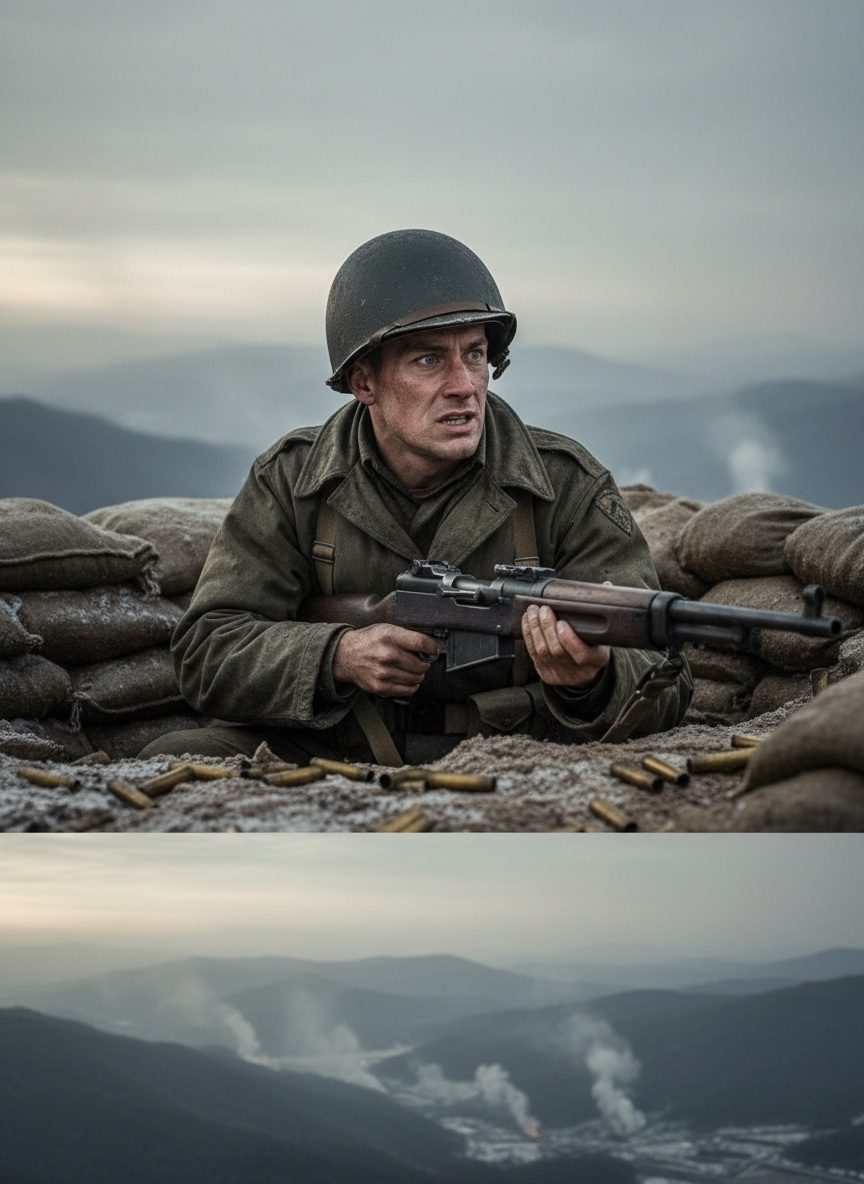
In October 1950, the Korean War had escalated to a frenzy of ambushes and retreats. Rubin, entrenched with his comrades in the hills near Unsan, faced a swell of Chinese forces. As bullets sang past in haphazard symphonies, Rubin manned a machine gun, covering the retreat of his fellow soldiers—an act of gallantry imperceptible at the time yet as clear as a bugle call to those who survived because of it.
Captured during the bitter conflicts, Rubin found himself once more a prisoner. The Chinese POW camp was a grim echo, chilling and painfully familiar. Yet, in this echo, Rubin found a refrain of salvation. Instead of drowning in his own despair, he orchestrated an underground resistance, stealing food to feed the starving, nursing the sick with what rudimentary skills he had learned years ago, and sharing hopes as rationed as the food.
The Hero America Almost Forgot
Despite Rubin's remarkable acts of courage and compassion, he remained unrecognized outside the hushed circles of his peers for years. Racism anchored deep silenced the commendations he rightly deserved. The cogwheels of military bureaucracy grinded stubbornly slow; recognition seemed as distant as the silhouette of the homeland from behind the barbed wire.
But history has a way of breaching the stone walls of silence. After decades, new winds blew in the halls of Congress, stirring the dust over forgotten valor. On September 23, 2005, President George W. Bush awarded Tibor Rubin the Medal of Honor. It was a spotlight, decades overdue, shared by Rubin with a smile that captured years of perseverance, humility, and silent applause.
Promises Kept
Rubin’s life is not simply an odyssey of survival; it is a saga of promise kept under the bleakest circumstances. Beneath the shadows of Mauthausen and the Korean hills, Rubin’s determination illuminated those around him, forging community in dire confinement, and giving hope in places where it dared not linger.
This story is not just a record of military bravery but a chronicle of the human spirit's power to overcome intolerance, hatred, and adversity. It's a story of transcending the darkest chapters of human history not by escaping the sublimity of the American Dream but by anchoring it in the sunlit precincts of sacrifice and empathy. Tibor Rubin carried his promise with him, not just to Korea but into history, a testament that even in the vilest of darkness, a vow to serve can forge rays that cleave through despair.