In the year 508 BC, during the early days of the Roman Republic, a moment of extraordinary valor unfolded that would be etched into the annals of history forever. It was a time when Rome, though not yet the mighty empire it would come to be, faced an existential threat. The Etruscan army led by King Lars Porsenna was advancing, hoping to bring Rome to its knees. But as the enemy approached, a single Roman warrior stood defiant, his actions creating a legend that would echo through the ages — the story of Horatius at the bridge.
The Darkness Before Dawn
By the dawn of 508 BC, the fledgling Roman Republic was in turmoil. The previous king, Tarquin the Proud, had been overthrown and exiled, but his thirst for power was far from quenched. Seeking to reclaim his throne, Tarquin forged an alliance with the powerful Etruscan leader, Lars Porsenna. Together, they amassed an enormous force, intent on subduing Rome.
The Etruscan army was massive — numbering at least five thousand, if not more. Their ranks were organized and well-armed with spears and swords, their shields gleaming in the sunlight as they marched determinedly toward Rome. Panic began to spread among the Roman citizens, and many feared the city’s walls could not withstand such an assault. All that stood between the invaders and the vulnerable heart of Rome was a single wooden bridge over the Tiber River — the Pons Sublicius.
The Cry for Heroes
As the Etruscan army closed in, the Roman Senate and commanders realized the inevitable — they had to destroy the bridge to prevent the enemy from crossing. The task seemed impossible with the Etruscans so near. Among the Roman ranks stood a man named Publius Horatius Cocles, a soldier whose foresight and bravery would soon become legendary. Seeing the urgency of the situation, Horatius knew there was no time to waste.
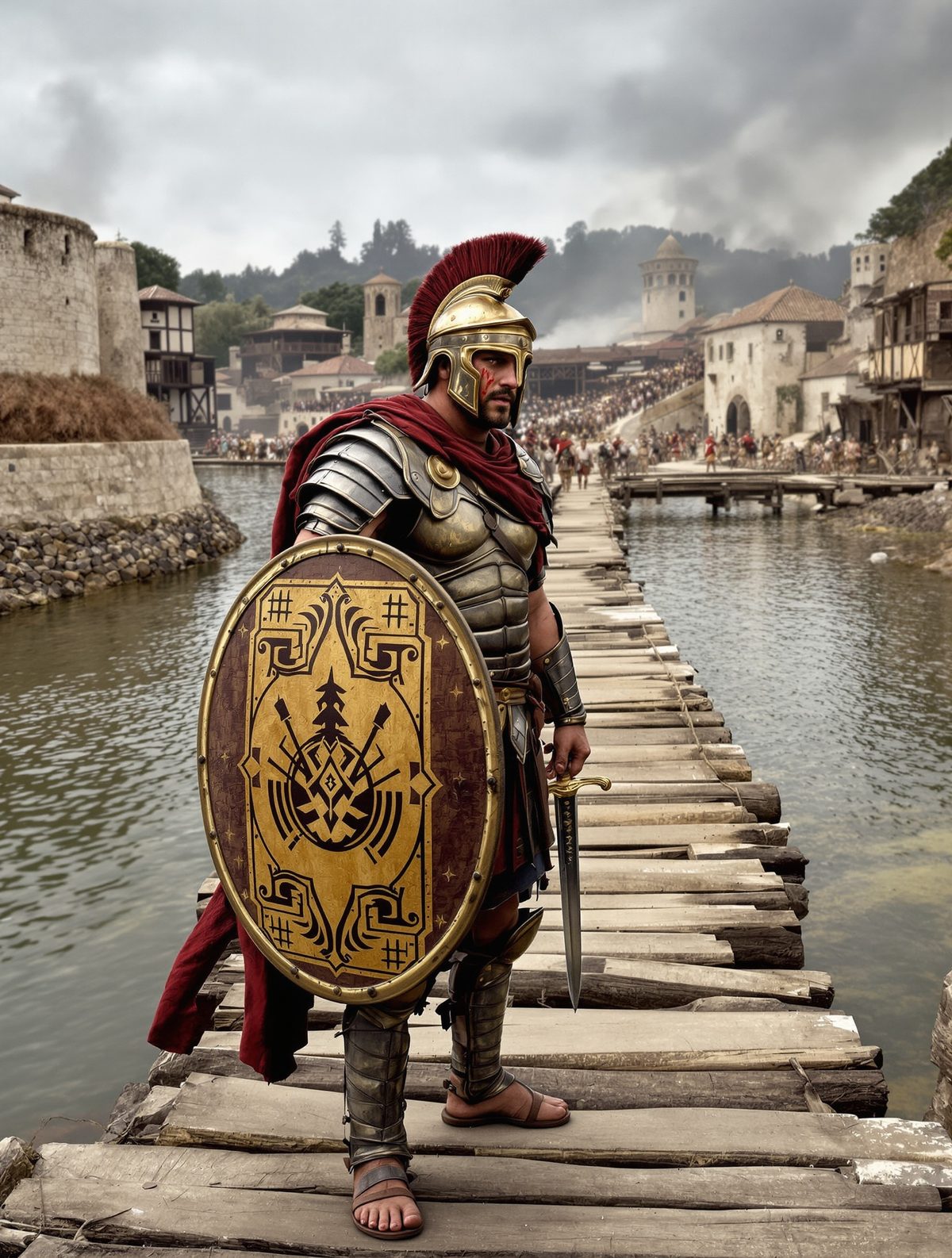
He called out to his fellow soldiers, urging them to dismantle the bridge while he held the line. It was a desperate gambit, yet he was resolute. With an earnestness that inspired some and terrified others, he took his place at the bridge’s narrow approach, shield raised, facing an army alone.
A Stand of Unyielding Valor
The scene was as surreal as it was tense. Horatius stood, his soldiers scrambling behind him, tearing planks from the bridge in a frantic effort to destroy it. The air was thick with tension as the Etruscans advanced with their mighty host. Yet in Horatius, there was no fear, only a steadfast resolve and the knowledge that Rome's fate rested upon his courage.
His solitary defense transformed into something of a miraculous spectacle. Snarling and resolute, he repelled the eager Etruscans with sheer indomitable spirit. Armed with little more than a sword and a shield, Horatius embodied the Roman virtues of bravery and self-sacrifice, standing as a bulwark against enemy spears.
His stand wasn’t entirely lonely. Accompanying him were two fellow warriors, Titus Herminius and Spurius Lartius, who chose valor over safety. As they held the enemy at bay, their fellow Romans persisted in destroying the bridge. One plank at a time, the distance between Horatius and the retreating Roman forces grew.
The Bridge Falls
Finally, with the bridge collapsing, Herminius and Lartius retreated, leaving Horatius alone on the enemy side of the river. As he faced insurmountable odds with the last plank falling away, Horatius turned to fate with a solemn prayer to the gods. With remarkable composure, he leaped into the Tiber River below.
His armor weighed heavily, yet he swam with fervor. Encouraged by their hero’s deeds, Romans on the riverbank erupted in cheers. Somehow, through sheer determination and the support of fortune seen in the eyes of his countrymen, Horatius emerged on Roman soil, soaked but unbowed. While his homeland was spared the immediate Etruscan threat, Horatius swam into eternal legend.
The Legacy of Courage
Much more than a mere legend, the deeds of Horatius served as a rallying cry for Roman valor. His courage inspired generations of Romans, becoming a staple of military history and a testament to the power of individual acts of heroism in changing the fate of nations.
Porsenna, impressed by the courage of Romans like Horatius, ceased his attempts to restore Tarquin to power shortly after the failed siege. Rome secured a sovereign future, and Horatius was immortalized in poetry and prose, most famously celebrated by the 19th-century poet Lord Macaulay in his work "Horatius," which exclaims, "How can man die better than facing fearful odds...?"
A Reflective Epilogue
The story of Horatius bridges the millennia, not simply as a tale of martial heroism but also as a profound lesson in the power of courage amid overwhelming adversity. Today, in a world that may not often demand the defense of a physical bridge, it poses an equally potent question: what bridges do we each guard against the tides of our time? Horatius’ legacy remains a testament to the strength residing in humanity's ability to face daunting challenges with valiant resolve. History must never forget, nor should we.