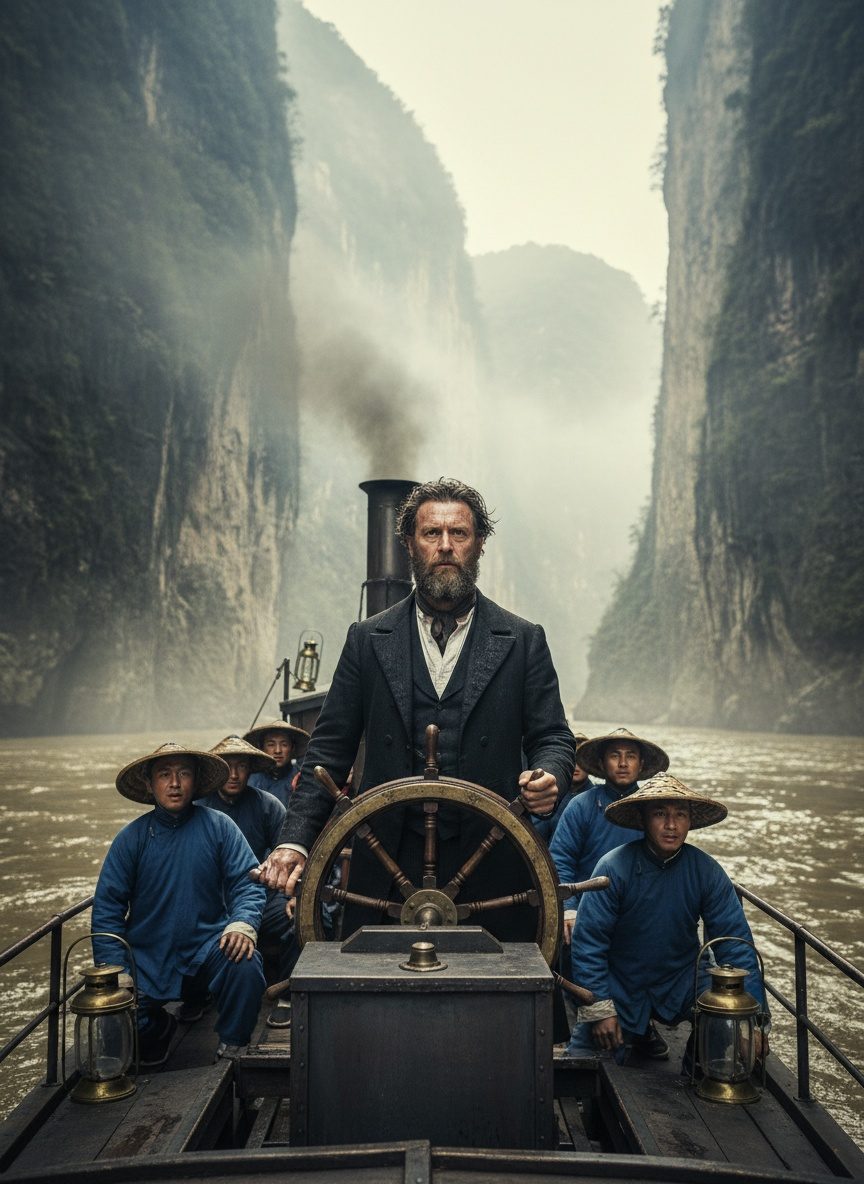
1876. The mist clung to the surface of the Yangtze River like a shroud, hiding the dangers that lurked beneath its turbulent waters.
The Unforgiving Waters
The Yangtze Gorges, with their notorious reputation, had been the bane of sailors for centuries. Known for their treacherous currents and towering cliffs, these waterways were as revered as they were feared. For generations, local boatmen whispered tales of entire ships vanishing without a trace, swallowed by the chaotic embrace of the river. Even the most seasoned Chinese pilots were wary of the unforgiving gorges, often refusing to navigate them with foreign passengers aboard. To attempt such a journey was seen as an act of sheer madness.
Despite all the stories, rumors, and outright warnings, Archibald Little, a British merchant with a keen interest in opening China's interior to Western trade, found himself drawn to this formidable challenge. The promise of an undiscovered map route, a chance to open new pathways for commerce, was too tempting to resist. Little's ambition was not just about trade; it was personal. To chart a course through the Gorges was to achieve the impossible, to conquer an unconquerable force of nature.
A Journey Into the Unknown
With steely determination, Little set out alone on his small steam launch, a vessel dwarfed by the towering rock faces of the gorges. His journey was unprecedented; no Western vessel had ever passed through and lived to tell the tale. The steam launch was resolute against the swirling currents and jagged rocks, its engine a steady pulse in the tumultuous symphony of the river. Little himself took the wheel when Chinese pilots balked at the task, guiding the craft with a blend of skill, stubbornness, and no small measure of luck.
Through sheer force of will, Little navigated the chaotic waters. Every bend in the river brought new perils; a hidden rock, a sudden drop. Yet with each mile, he gained a deeper understanding of the currents and eddies that had so long remained a mystery. His journey was a trial by water, each tributary and rapid a test of human endurance against nature's relentless forces.
Mapping the Unmappable
As Little emerged from the gorges, battered but unbroken, he carried with him more than just the knowledge that he had achieved the impossible. He had gathered invaluable information, precisely charting this formidable stretch of river for the first time in Western history. His detailed maps and notes offered new insights into the geography of China's vast interior. They provided a key to unlocking the potential for commerce and communication that had been out of reach for so long.
Britain, with its growing interest in expanding trade routes in Asia, had found a valuable asset in Little's work. His documentation of the Yangtze Gorges transformed these dreaded waters from an insurmountable barrier into a navigable path, connecting communities and markets across the region. These maps were not merely lines on paper; they represented new opportunities and alliances, a reshaping of perceptions between East and West.
The Impact of a Daring Voyage
Many in Britain hailed Little's achievement as nothing short of miraculous, his maps offering a new perspective on what was possible. The Yangtze Gorges, once considered a remote and untouchable frontier, now lay firmly within the grasp of Western ambition. Yet Little's journey was more than a mere act of exploration or trade facilitation. It served as a bridge between different worlds, a testament to the tenacity and courage required to overcome the most daunting challenges.
What Archibald Little accomplished went beyond the mere charting of the Yangtze Gorges. His journey forged connections where none had existed before, altering perceptions and opening dialogue between cultures. The tale of his venture into these perilous waters invites us to consider the relentless human spirit, forever driven to explore the unknown, to map the unmappable. In doing so, Little helped define an era of burgeoning global interaction, setting the stage for the intertwining destinies of nations once separated by seemingly impassable barriers.