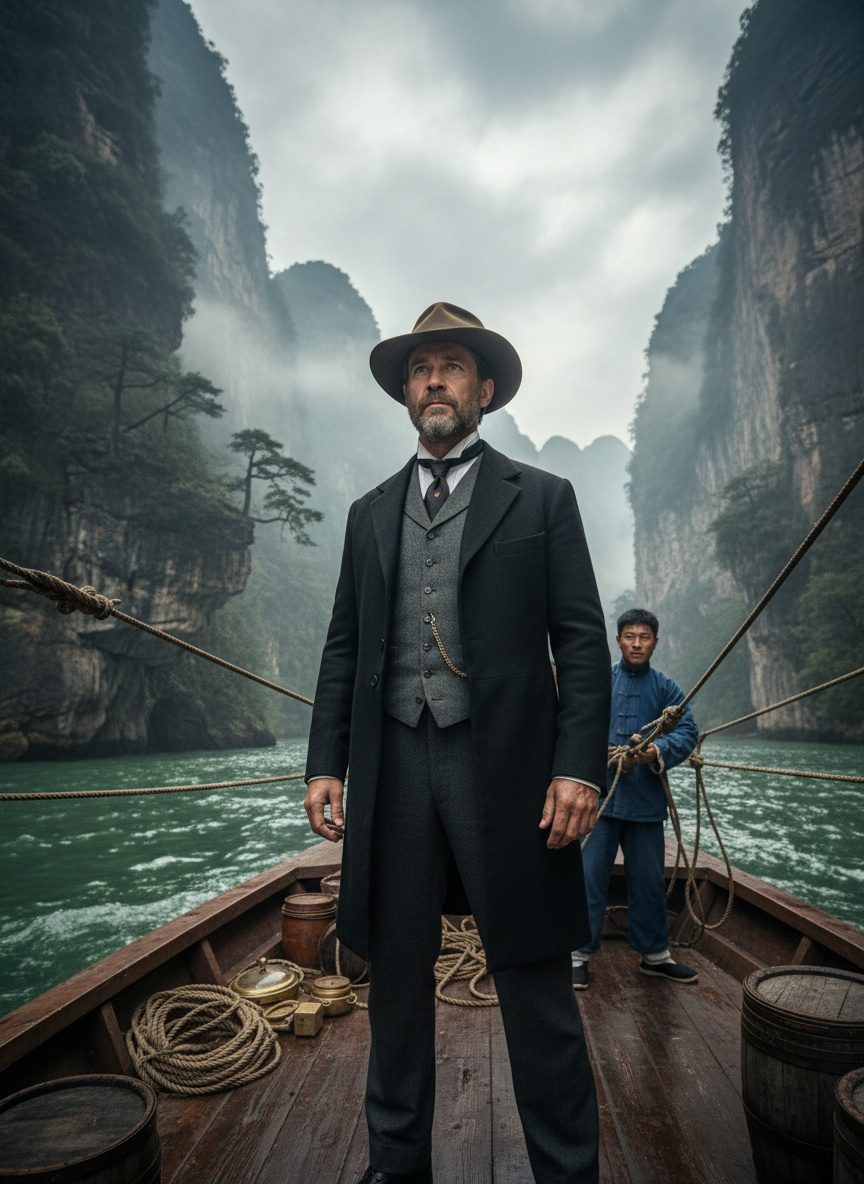
Archibald Little charted a path through the heart of China. No one else dared to follow.
The Untamed Heart of China
The Yangtze River is the lifeline of China, snaking its way through the vast landscapes of this ancient land. Its waters were both a blessing and a curse for those who lived along its banks. While it provided sustenance and a mode of transport, it also housed dangers unknown to the unfamiliar. The Yangtze's upper reaches, particularly the great gorges, were formidable and untamed. Large rocks, swift currents, and steep cliffs made navigation a gamble with fate, especially for those from distant lands unfamiliar with its treacherous twists.
During the Victorian Era, when the British Empire was at the zenith of power, few Westerners had ventured far into these parts. The mighty Yangtze remained a mysterious force that demanded respect and inspired awe, even as China's Qing Dynasty sought control over it. For British explorers, the river was more than just a geographic feature; it represented the unknown, waiting to be harnessed and understood.
A Bold Decision
Archibald Little was not your typical Victorian adventurer swathed in grandeur and glory. Known for his practicality and keen navigation skills, he was determined to push beyond existing boundaries. Inspired by the earlier exploits of Thomas Blakiston, who had successfully mapped the upper reaches of the Yangtze, Little set his sights even farther into China’s enigmatic interior. His intentions were met with skepticism. Friends and colleagues ridiculed the very notion of venturing into the gorges, places they deemed impassable for any vessel, let alone one steered by a foreigner.
Undeterred, Little decided on a small river steamer that could withstand the challenging conditions of the gorges. The vessel was stripped of any non-essentials to reduce weight and increase maneuverability. It was a craft not only of technology but also of necessity, designed to endure what lay ahead. Little was also meticulous in other preparations. He learned from locals, absorbing vital knowledge of the river's patterns and characteristics. As observers curiously watched, he set forth on this dangerous expedition, confident that he would not only map the course but also return with invaluable insights.
Into the Roaring Waters
The day he embarked was marked by thick mist creeping over the river, cloaking the expedition as if nature itself conspired to hide its secrets. The Yangtze roared—a symphony of swirling currents echoing against timeworn cliffs. Yet under Little's careful helm, the steamer cut through the tumultuous waters. The gorges loomed ahead, majestic yet intimidating, like stone sentinels guarding ancient mysteries.
As Little pressed further, the river seemed to test his resolve at every turn. Rapids that could overturn unwary boats appeared without warning. Debris from rockfalls floated perilously, requiring agile navigation to avoid. Husked by the tight corridor of the gorges, echoes magnified every splash and crack, a reminder of the danger concealed by the river's endless depths. Yet Little was unwavering, driven not just by the thrill of exploration but by the desire to understand—an understanding that held the promise of connecting cultures and economies.
The Insights of a Journey
By the time Archibald Little completed his daring expedition, he was not the same man who had set out. He had painstakingly charted maps, recorded river depths, noted significant landmarks, and penned observations that would prove invaluable to those who followed. Little’s accounts transformed British perceptions of a region that was previously deemed too perilous to traverse.
His insights did more than enhance geographic knowledge; they laid the groundwork for future economic ventures. The possibilities for trade routes opened by Little’s success made the British dream of accessing China's vast interior seem within reach. His charts and descriptions provided reliable data for merchants considering the Bo river’s potential, shifting it from the ephemeral to the attainable.
Ripple Effects on the Fabric of Empires
Archibald Little’s journey deep into the Yangtze Gorges was more than just a personal victory; it was a harbinger of the change that lay ahead. His expedition signaled a pivotal moment in Sino-British relations during the twilight of the Qing Dynasty—a time when both powers grappled with the dynamics of trade, influence, and adaptation.
The expedition also symbolized the endless human quest for understanding and exploration—the relentless push against the barriers of the known world. For China, this meant confronting the inevitable currents of modernization, catalyzed in part by those, like Little, who ventured into their heartlands. While his maps would eventually guide steamers and goods, they also marked the end of an era when parts of the river ran wild, like stories untold.
Today, the Yangtze continues to inspire and challenge, a testament to nature's raw power and man's indomitable spirit to explore. Little’s journey into its depths wasn't just a brush against danger; it was a bridge of understanding—a potent reminder of how the confluence of determination and courage can chart new courses that illuminate paths forward even amidst the most daunting landscapes.