399 BC. The dusty ground of Athens was vibrant under the relentless sun.
The Philosopher and His City
Athens, a city celebrated for its intellectual vigour and democratic ideals, was in turmoil. The city’s streets, usually bustling with market chatter and philosophical debates, now buzzed with tension and speculation. In the midst of this was a man whose ideas and probing questions had both enlightened and unsettled his fellow Athenians for decades—Socrates. At seventy years old, he was more than just a familiar figure; he was a cornerstone of the city's philosophical life. But now, the very brilliance that had earned him respect and admiration was about to lead to his downfall.
Socrates was charged with impiety and corrupting the youth, accusations that reverberated through the very fabric of Athenian society. The reality of the trial lay not just in judicial assessment but in a community wrestling with its identity post-Peloponnesian War. Athens, once a beacon of democracy and power, had been humbled by Sparta. The trial of Socrates reflected an uneasy city grappling with its past and its future.
The Trial of the Century
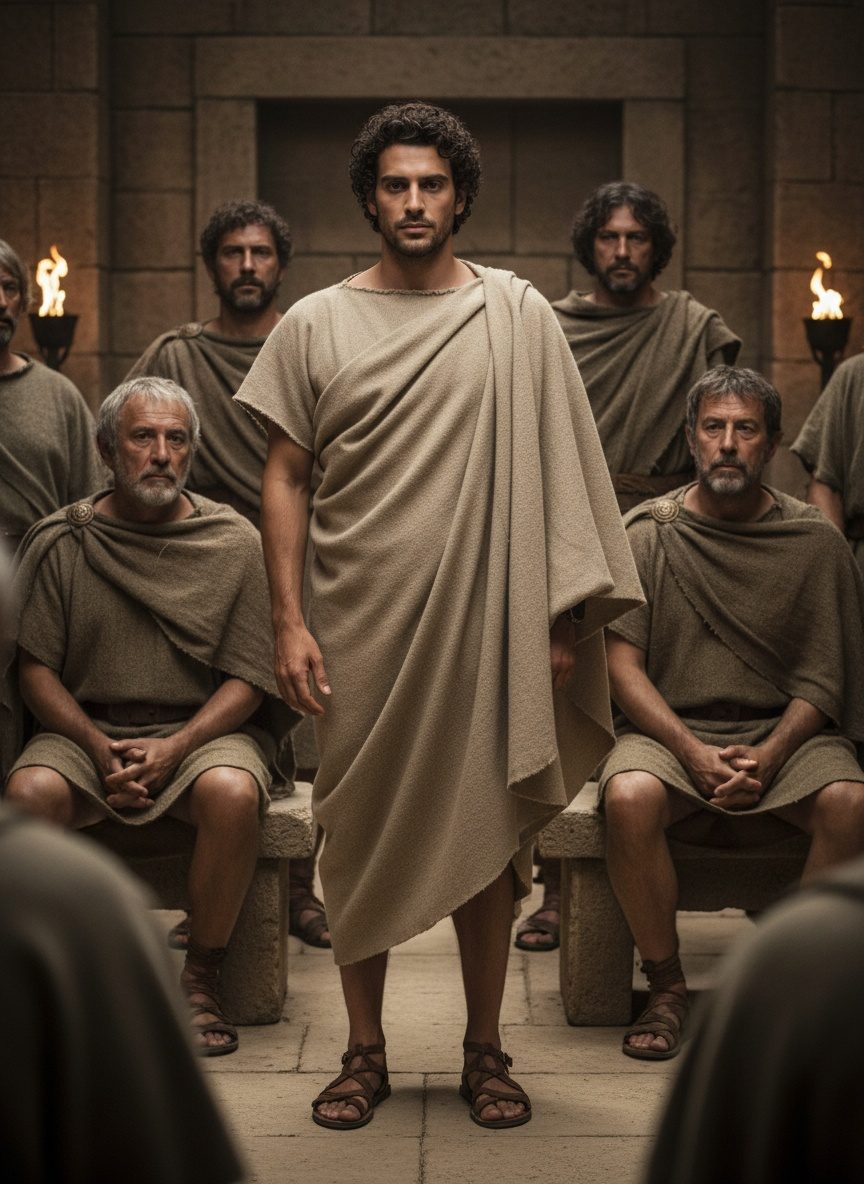
Inside the courtroom, the atmosphere was electric. The trial was held before a jury of 500 Athenian citizens, reminiscent of a modern democratic process yet tinged with the dramatics of ancient theatre. The magnitude of the event echoed through the corridors of power and stone. Socrates faced his accusers—Anytus, Meletus, and Lycon—each representing a different aspect of society that sought to silence the philosopher’s relentless questions.
The charges were serious yet ambiguous: impiety against Athens' gods and corrupting its youth. Socrates, however, did not flinch. It was an opportunity, he believed, to pursue what he had always sought—truth and wisdom. His defense was not a plea but a demonstration of his philosophy. He challenged his accusers with the very method they feared: a relentless sequence of questions that exposed contradictions and assumptions.
Despite his arguments—or perhaps because of them—Socrates was found guilty. Offered the chance to propose his own penalty, he suggested free meals for life, an ironic proposition that highlighted his belief in his contributions to the city. When asked for something more severe, he proposed a fine but reserved exile as a final option. To flee, he argued, would be a betrayal of all he practiced.
The Hemlock Cup
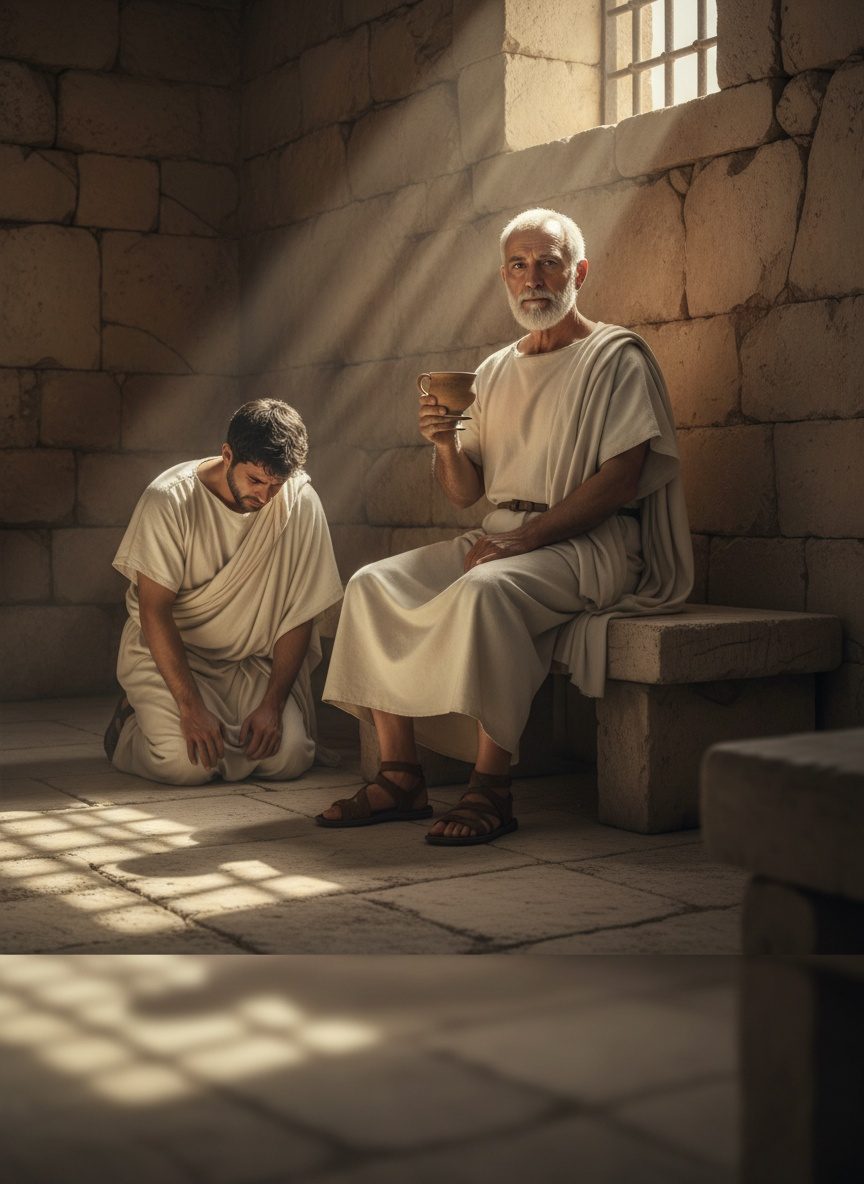
Sentenced to death, Socrates met his fate with the characteristic calm and introspection that defined his life. During his final days, he continued to engage in dialogue with his followers, discussing the nature of the soul and the afterlife. For Socrates, drinking the hemlock was not a moment of despair but one final act of philosophical defiance.
The process was simple yet profound. Socrates was guided to drink from a cup of hemlock, a poison that would ease him into unconsciousness and ultimately death. Those present recorded how he remained tranquil and continued to converse with clarity until the effects took hold. His last words were a cryptic reference to a rooster owed to Asclepius, the god of healing—perhaps a final nod to his belief that death was a form of cure.
As he laid down and covered his face, the moment transcended the courtroom walls, echoing through time as an embodiment of the pursuit of truth over life itself.
The Echoes of His Silence
Socrates’ death marked a pivotal moment not just for Athens but for the world. In executing him, the city unknowingly cemented his legacy as a martyr of free thought and intellectual inquiry. His method of persistent questioning, known as the Socratic method, became a cornerstone of Western philosophy, influencing generations of thinkers, from Plato and Aristotle to the philosophers of the Enlightenment.
However, the city's decision also signaled a broader, more tragic unraveling. Athens, a place that once thrived on the exchange of ideas and public discourse, demonstrated the dangers that come with fear of dissent and the stifling of free expression. In seeking to silence a single voice, the city set a precedent—a warning etched into the annals of history about the price of intellectual oppression.
The story of Socrates’ trial and death is more than a tale from antiquity; it is a perpetual reminder of the value of questioning, the power of ideas, and the enduring need for spaces where voices can be raised in dialogue and debate. As long as we remember Socrates’ cup of hemlock, we are reminded that the pursuit of truth is a path fraught with peril, but ultimately, it defines the essence of humanity itself.