January 1945. The harsh winter winds whipped across the desolate plains of Stalag IX-A, a German prisoner-of-war camp outside the small town of Ziegenhain. A bitter cold settled over the wooden barracks, its icy tendrils creeping into every crevice, as if nature itself conspired to break the spirits of the men held captive within its perimeter. The ground, rock-hard and dusted with snow, crunched underfoot, a constant reminder of the bleak circumstances. Above, the sky was an endless stretch of grey, a cold, indifferent canvas. The only sounds were the eerie whistle of the wind and the occasional barked command of a guard. It was here, amidst the numbing chill and oppressive silence, that a moment of humanity shone through the darkness. In the stillness, a decision was made that reverberated far beyond the confines of the camp—a decision that would test the very essence of courage and solidarity.
The Commandant's Demand
Among the prisoners in Stalag IX-A, Master Sergeant Roddie Edmonds found himself navigating the cold reality of captivity alongside 1,291 fellow American soldiers. They huddled together for warmth, sharing stories of home and holding onto the hope that the end of the war was near. Despite the dire circumstances, Edmonds upheld his role as a leader, a beacon of strength for those around him.
As dawn broke on a frigid January day, the camp's foreboding atmosphere hung heavy with anticipation. The German commandant, charged with maintaining order amidst the chaos unfolding across Europe, issued a chilling command. He demanded that all Jewish prisoners step forward. This was a demand driven by the Nazi regime's persistent brutality, even as defeat loomed. The implication was unmistakable; stepping forward meant certain death.
Silence enveloped the group of captured soldiers as they processed the command, a shared understanding passing between them. For the Jewish soldiers, stepping forward was not an option. Instead, it was the time to stand together or fall alone.
Standing as One
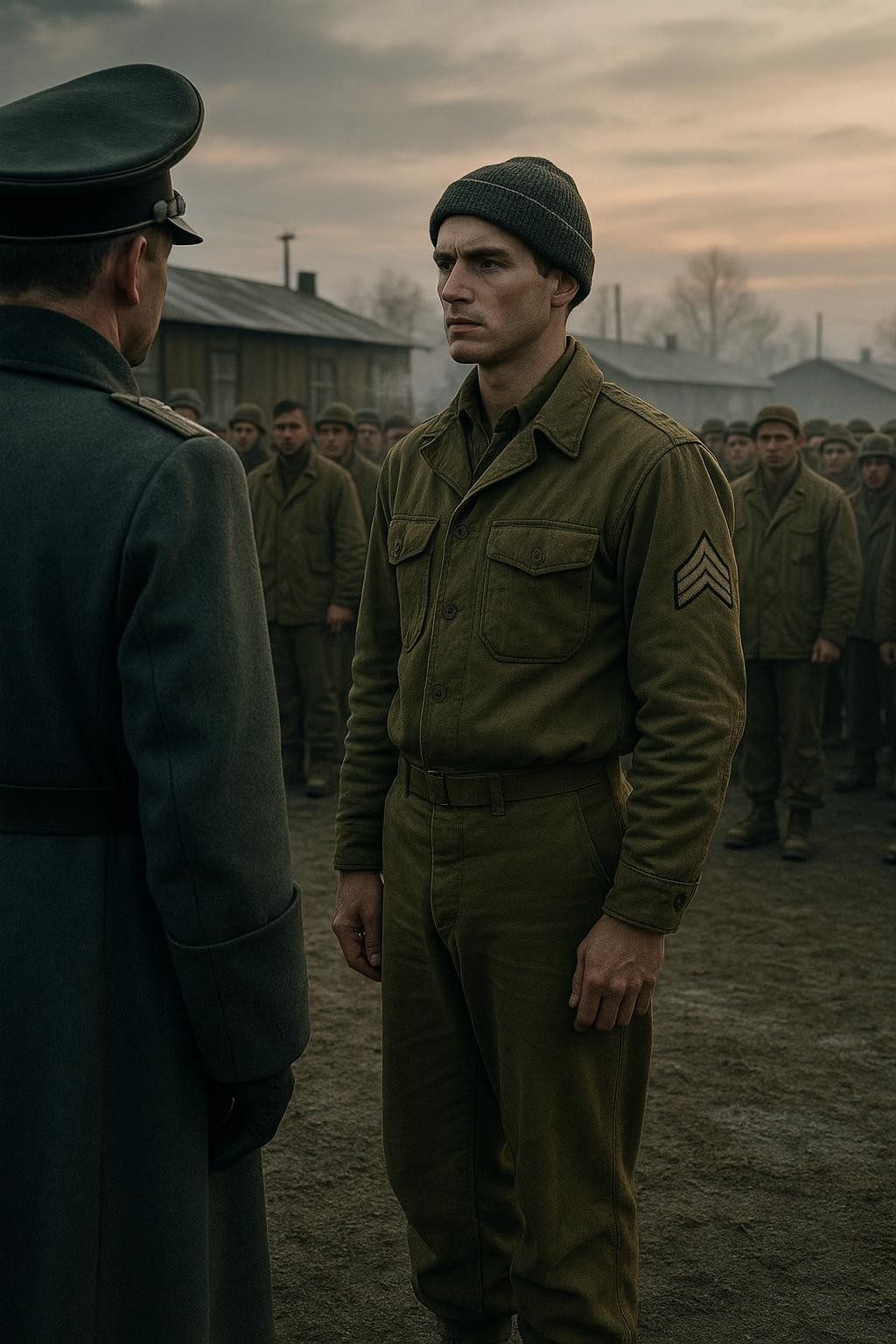
It was in this moment of peril that Master Sergeant Roddie Edmonds rose to the occasion. He gave a counter-command: "We are all Jews here." It was a bold stand, a repudiation of the divisive and deadly demand made by the commandant. Without hesitation, Edmonds rallied the men to fall out together, regardless of faith, creating a unified front that echoed the values of brotherhood and solidarity that defined their shared struggle.
The scene that unfolded was one of extraordinary defiance. Nearly 1,300 soldiers stood as one, shoulder to shoulder, faces lined with determination. The tension in the air was palpable, a silent but powerful rebuke of the commandant's authority. As the men stood together, the wind howled around them—a stark reminder of the fragility of life, but also of the strength found in unity.
At the heart of this collective stand was Edmonds, unwavering in the face of the German officer who now approached with pistol in hand. Each step the commandant took was measured, his intentions clear, yet Edmonds did not flinch, embodying the very spirit of resistance.
The Unyielding Confrontation
An angry exchange ensued, the commandant demanding that Edmonds single out the Jews among them. But Edmonds, with steely resolve, refused to capitulate. He boldly declared, "If you shoot, you will have to shoot us all." The enormity of his words hung in the frigid air, a challenge that cut through the fear and doubt like a knife through the haze. It was a gamble—a calculated risk imbued with the conviction that the international laws of war might yet prevail, even in this remote outpost.
The repercussions of shooting an American soldier, let alone over a thousand of them, were not lost on the commandant. The complexity of the war’s laws, coupled with the imminent pressure from advancing Allied forces, served as an unlikely shield in that critical moment. Still, it was Edmonds’s innate belief in the brotherhood of his men that fortified him, strengthening his conviction to protect not only the lives of Jewish captives but every man standing there.
As moments stretched into an eternity under the strained confrontation, a shift became evident. Perhaps it was the weight of Edmonds’s unwavering stance or the silent daring of the men united behind him, but the commandant’s resolve began to wane. With a final decisive moment, he chose to holster his weapon and walk away, his authority diminished before the noble defiance of those he sought to divide.
A Courage Rediscovered
For decades, the magnitude of this event remained largely unknown, shrouded by the passage of time and the humility of the man at its center. Roddie Edmonds never spoke of the day he safeguarded his men from segregation and likely death. It was only through the discovery of his wartime diaries, decades later by his son, that this profound act of bravery came to light, illuminating a forgotten chapter of human courage.
Edmonds’s actions transcend the mere recounting of a heroic deed; they resonate deeply in the human spirit's collective consciousness. In the face of unimaginable hardship, he exemplified the unyielding power of moral courage and the shared strength found in unity. It is a narrative that challenges us to consider the principles we hold dear and the lengths to which we are willing to defend them, even when faced with overwhelming adversity.
This story from the frigid bounds of a German POW camp in January 1945 offers more than just a historical account; it is a reminder of the enduring capacity for human decency and solidarity in the most harrowing of times. Edmonds’s silent insistence on equality and protection speaks volumes about the values that bind us, revealing the timeless truth that even in the darkest winter of humanity, a single flame of courage can light the way to a more hopeful future.