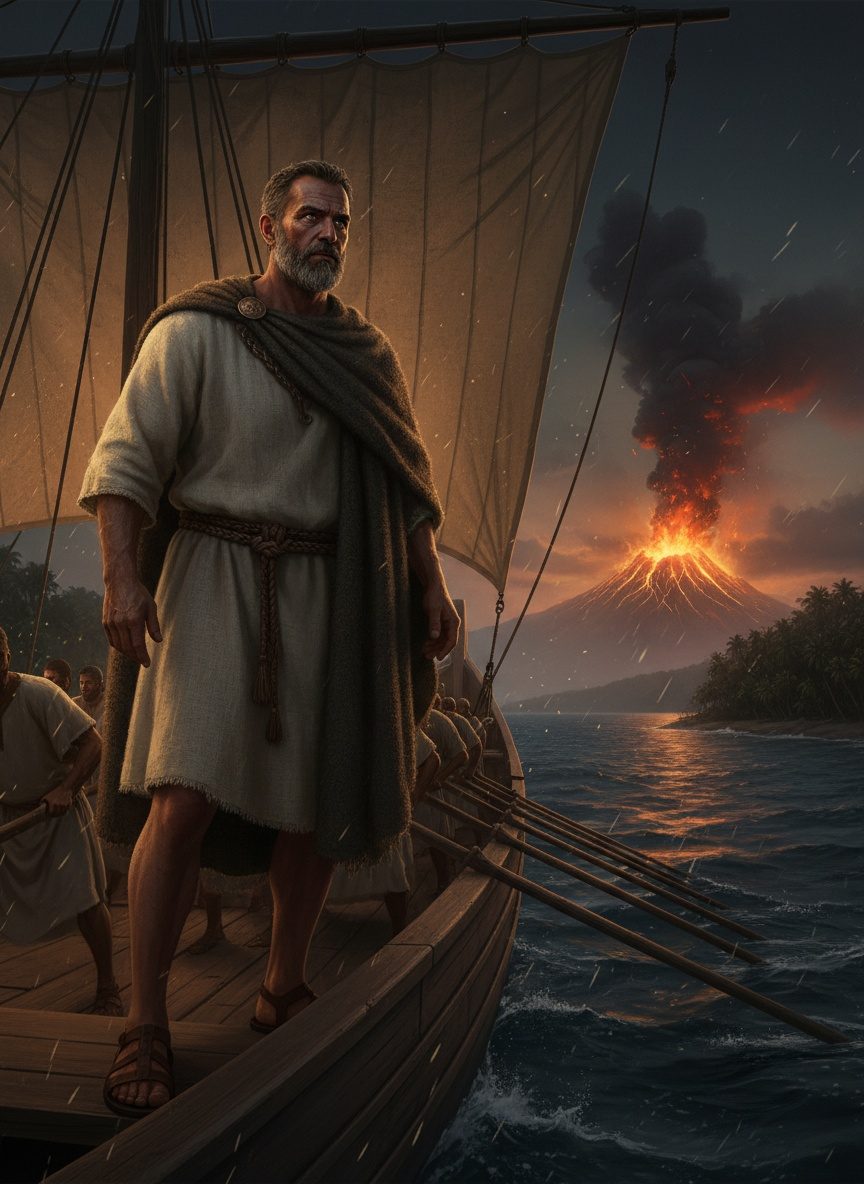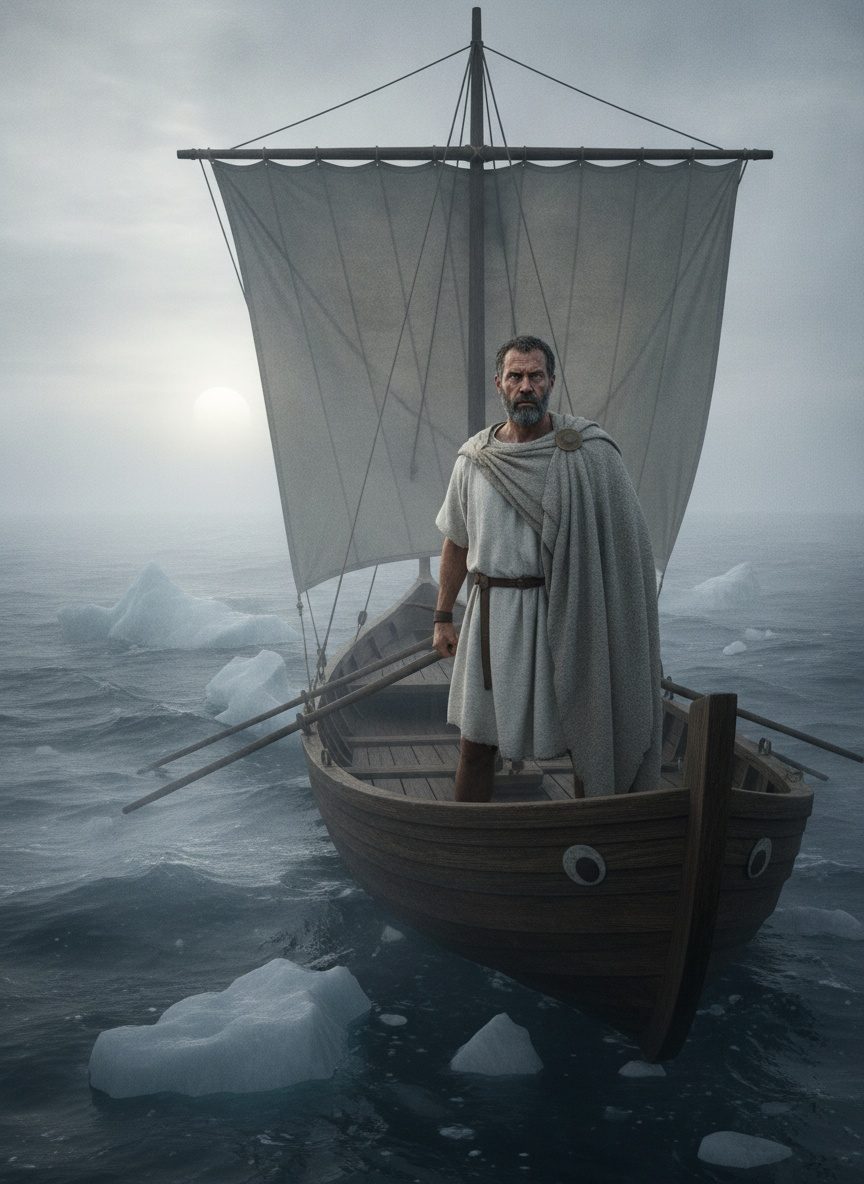
Pytheas of Massalia reached the edge of the world. Yet, nobody believed he had.
A Navigator Beyond the Known World
Pytheas hailed from Massalia, a thriving Greek colony nestled in what is now Marseille, France. During his time, around 325 BC, the Mediterranean world was at the apex of intellectual fever. It was a time of inquiry, exploration, and discovery, yet it still clung to certain geographical boundaries. While trade routes sprawled expansively across Greece, Egypt, and into the opulent Orient, lands lying beyond the clutches of the known world remained shrouded in mystery and myth.
Pytheas, a seasoned sailor and astronomer, decided to breach these boundaries, driven by his unyielding curiosity about the northern reaches. Armed with a sextant and a gnomon to measure the sun's angle, he embarked on a journey that would take him far beyond the limits of contemporary maps. It's said he sailed past the Iberian Peninsula, navigated around the British Isles, and ventured into the inscrutable waters of the North Atlantic.
His journey to the entity he labeled "Thule" was both groundbreaking and perilous. The term "Thule" signified a land at the extremities of the known world, thought to be located at the edge of the great Oceanus, a world end where ice choked the sea and rendered the waters unpassable. Thule was a place shrouded in perennial twilight, where the rules of nature were suspended. To reach this distant land was a feat of profound courage, pitting Pytheas against the gnarled waves and unforgiving climate that seemed to conspire in defining nature’s limits.
Despite the odds, Pytheas claimed to have reached this distant land, a feat that should have forged his name in the annals of history. Yet, Pytheas's audacious tale slipped through the membrane of Greek acceptance. His written account, On the Ocean, held descriptions of ice floes, a phenomenon utterly foreign to the Mediterranean basin, and an encounter with the midnight sun. But upon his return, his accounts inspired skepticism rather than awe.
Disbelieving the Lines of Ice
Curiously, it was not merely the imperial remoteness of Thule that strained credulity among his contemporaries. It was the reality of the natural phenomena he recorded — the frigid seas frozen into a slushy wasteland, a never-setting sun — that he insisted were true. Imagine being a well-traveled trader in bustling Athens, with countless tales from across the ancient world ringing in your ears, only to hear this bold Massalian recounting ethereal landscapes seemingly plucked from a poet's imagination.
The ancient Greeks, who worshipped Apollo, the sun god, and relished in the predictability of the Mediterranean seasons, found Pytheas's accounts baffling. There was an inescapable geographical bias at work; plenteous as their maritime ventures were, their vessels had yet to tamper with the whims of arctic climes. They simply couldn't comprehend a sun that never set or a sea locked in ice.
Moreover, Pytheas's assertions threatened the philosophically curated image of the world. With the world depicted as a flat disc in the midst of a vast Oceanus, the idea of regions where conventional maritime navigation found limits flew in the face of existing knowledge. Greek intellectual circles, particularly those skeptical of anything that couldn’t be experienced firsthand, quickly cast aspersions on Pytheas's observations. Influential figures such as Polybius deemed his writings nothing more than fantastical dalliances with the truth. They argued that Pytheas went too far—both literally and figuratively.
Thus, the incredulity among his peers inadvertently stifled his discoveries. Lyricism of the ice-locked lands, the rhythm of eternal daylight, none squarely resonated with societies entrenched in their interpretations of the world. Pytheas returned, not to triumphant acclaim, but to an audience that branded him a purveyor of improbability or, worse, a fabricator of fiction.
A Lost Legacy, A Timeless Truth
As the tides of history receded, Pytheas's memory suffered undeserved distortion. While his texts only survive in fragments, filtered and often dismissed through the skepticism of others, their echoes persist through the works of later geographers such as Strabo.
It's an enchanting irony that, in time, geographical advancements confirmed the very phenomena Pytheas described. As centuries unfolded, explorations by Vikings and later, the accounts during the Age of Exploration, vindicated his observations of northern realms. The phenomenon of the midnight sun and the presence of ice in the Atlantic were eventually accepted into the scientific canon.
In modern retrospection, Pytheas's expedition represents not merely one audacious voyage but becomes emblematic of human determination to stretch the boundaries of understanding. It poses the perennial question: how do we separate the courageous few who glimpse beyond the veil from the crowd who see only shadows? Pytheas's story challenges us to heed the fringes where knowledge and myth intersect.
Thus, Pytheas's narrative transcends its ancient seascape, evoking an enduring legacy. His journey invites us, time and again, to sail far, to seek more, to embrace the unsung truths that hover just beyond the horizon. Perhaps in echoing Pytheas's courage to look to Thule, fields of modern inquiry are constantly urged toward their edges—no longer entities of ice but of insight.