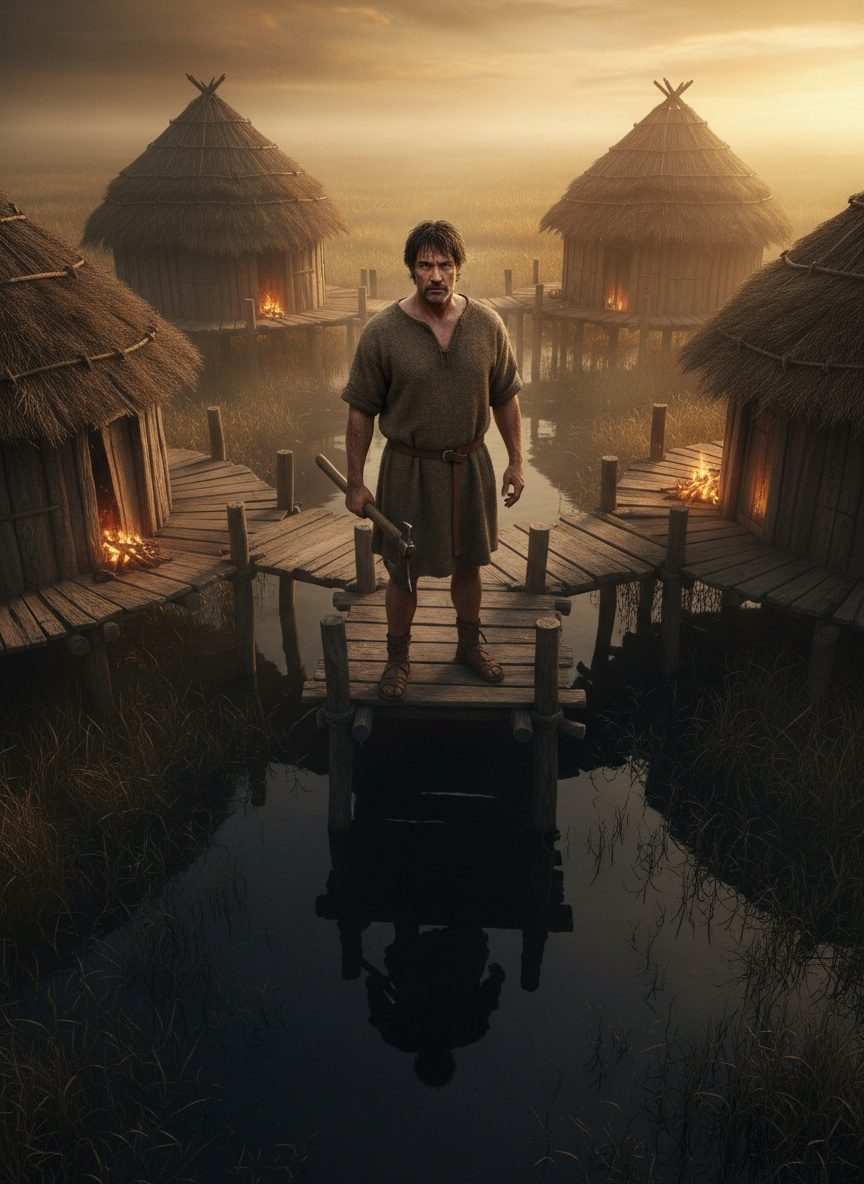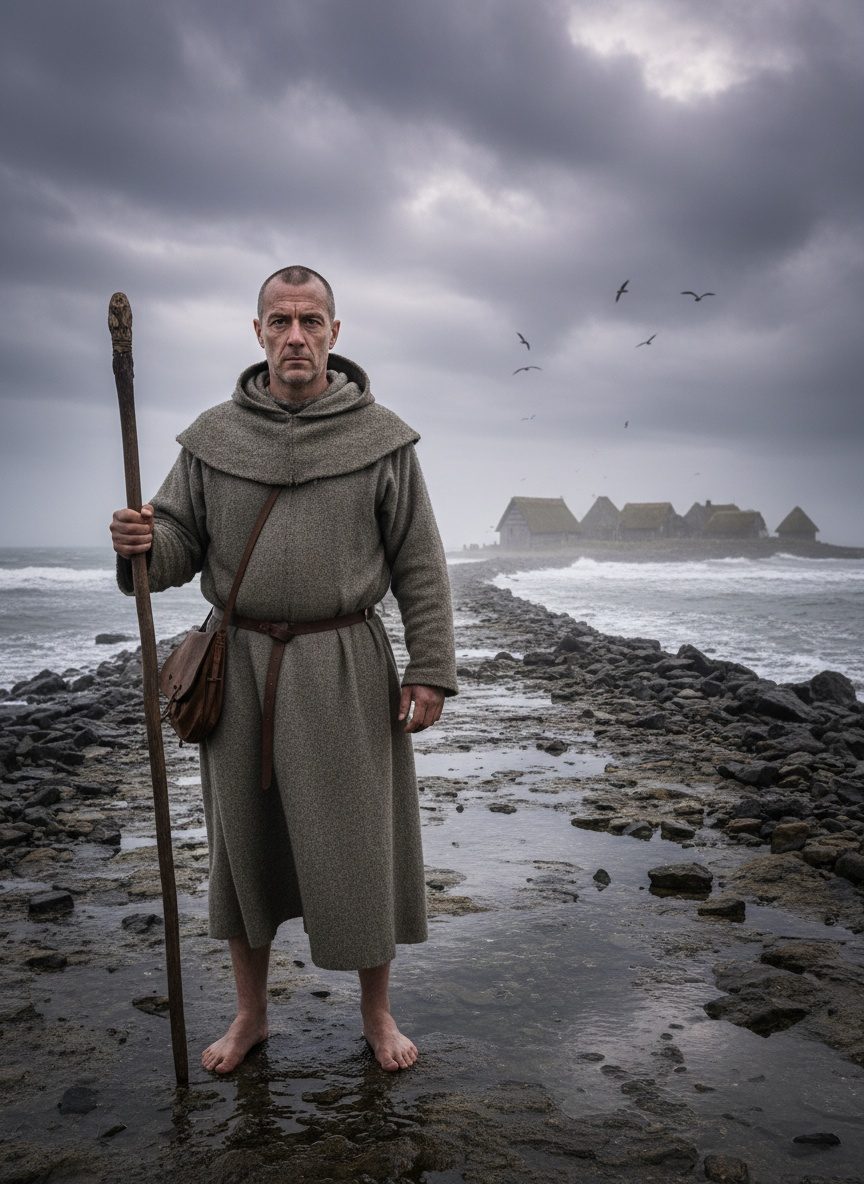
He was old enough to retire, yet at Maldon, he stood tall. Byrhtnoth's courage turned an impending defeat into a legend that echoes through England's past.
The Calm Before the Storm
In the summer of 991 AD, the calm Essex coast was charged with an air of anticipation. The Anglo-Saxon earl, Byrhtnoth, gazed upon the horizon as the morning mist began to lift, revealing the sleek silhouettes of the Viking longships that had beached beyond the tidal causeway at Maldon. These were not just any seafaring adventurers; they were seasoned Norse warriors, bold and unyielding, seeking riches from the wealthy English shores.
Byrhtnoth, a man of formidable presence despite his advancing years, had lived a life illumined by honourable service to his king. This was no mere skirmish for him; it was a question of principle. When the Vikings sent messengers to demand gold as a tribute—Danegeld, they called it—Byrhtnoth's response was defiant as the idea of paying an invader was against his every belief. There was no fear in his words, only the fire of resistance that raged brighter than the crimson sun that hung above the horizon that fateful day.
The geography of the land was perhaps the only ally Byrhtnoth could count on, the causeway a natural defense against the invading Norse. Yet, something shifted in the earl's heart, perhaps a fatal flaw or perhaps incredible bravery. He allowed the Vikings to cross the narrow isthmus that separated them, choosing to fight not on the advantageous high ground but in the open fields. Some say he wanted a fair fight; others believe he underestimated the enemy.
The Battle Unfolds
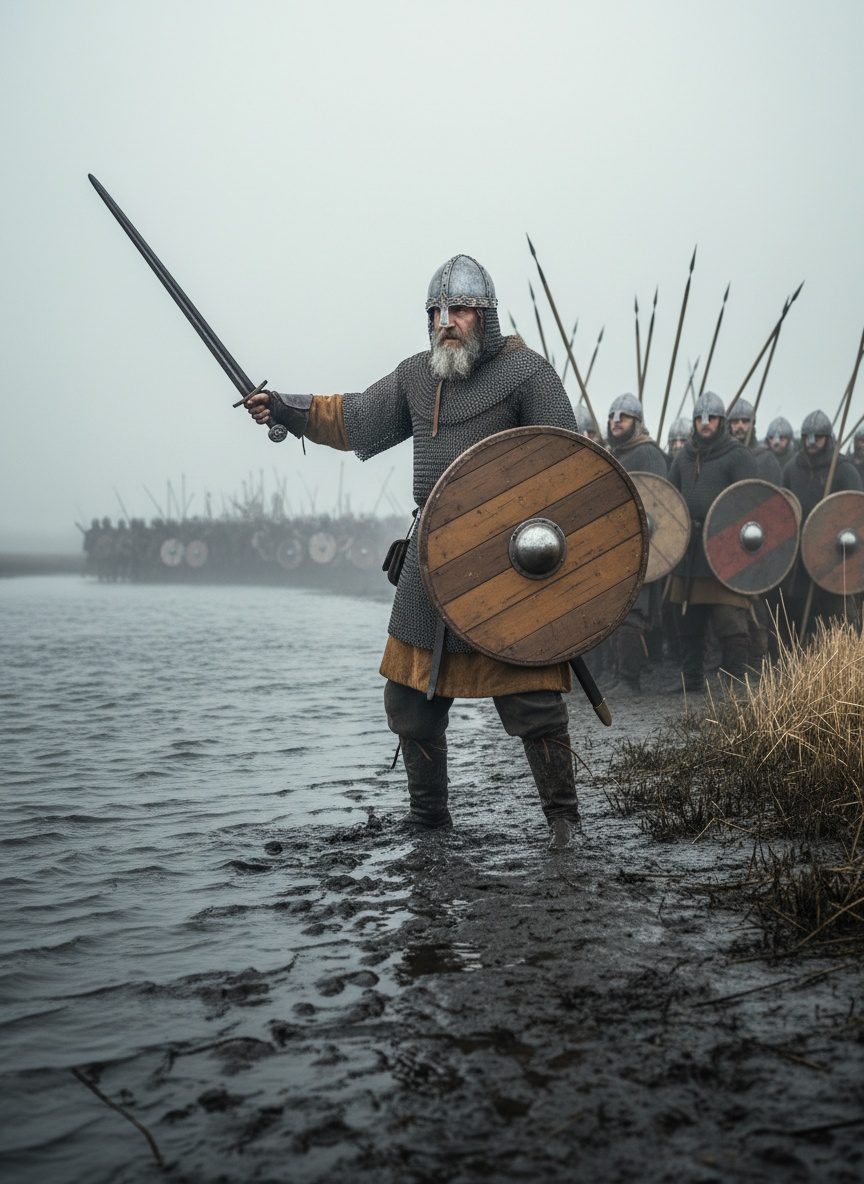
As the Vikings crossed, their chainmail glinting under the dull English sun, the saxons prepared. Byrhtnoth's men—farmers, villagers, and lifelong soldiers alike—stood beside him without flinching. Their adversaries, clad in well-worn battle gear, approached with grim mirth. One could almost hear the war horns echoing across the marshes, a fitting score to the impending clash. The battle lines drawn, there was no more room for contemplation or strategy—only the raw symphony of war was left to play.
The battle cries were a cacophony, both sides raising their voices to the gods who watched silently from the heavens. Close-quarters combat ensued, brutal and unrelenting. Byrhtnoth himself was said to move with surprising agility for a man of his years, striking down his adversaries with steadfast resolve. Yet, the odds were steep against him; the Vikings, fueled by their desire for plunder and conquest, seemed an unstoppable tide.
Within the swirling mists of chaos, Byrhtnoth fell. His death, however, did not mark the rout of the English. Instead, it was a rallying point for his remaining men. They surrounded their fallen leader, refusing to retreat or relinquish the field. One by one, they succumbed, but not before taking many of the enemy with them into the afterlife. Less a battle and more a saga of unwavering loyalty, their sacrifice became the stuff of legend.
A Legacy Carved in Stone and Song
The Battle of Maldon might seem a mere footnote in the annals of English history—a solitary clash among countless conflicts of the Viking Age. Yet, it is far more than that. The sacrifice of Byrhtnoth and his men found immortality in the words of poets who captured the saga in verses that resonated across generations. "The Battle of Maldon," an Old English poem, celebrates this bloody encounter and the valiant defiance of those who perished under the Saxon banner.
The tale of Byrhtnoth's courage extends beyond mere narrative. In choosing to meet the Vikings on equal terms, was Byrhtnoth embodying the zenith of chivalric honour, or was it an error that paved the way for further incursions into England? This question reverberates with historians and readers alike, for it reflects a timeless quandary about bravery and strategy in the face of overwhelming odds. Whether his decision was ultimately wise or foolhardy, Byrhtnoth's nobility in the face of death became a cultural touchstone for the English soul.
At Maldon, Byrhtnoth stood not just against Viking steel but against the currents of fate and time. England has never forgotten, nor has it ceased to draw lessons from that dawn of courage where a few stood against the might of many. It is a story that still flickers alive in the collective consciousness, encapsulating the eternal spirit of resistance and honour. As we reflect on this ancient tale, we are reminded of the power that individuals hold within determinative moments—by simply refusing to yield.