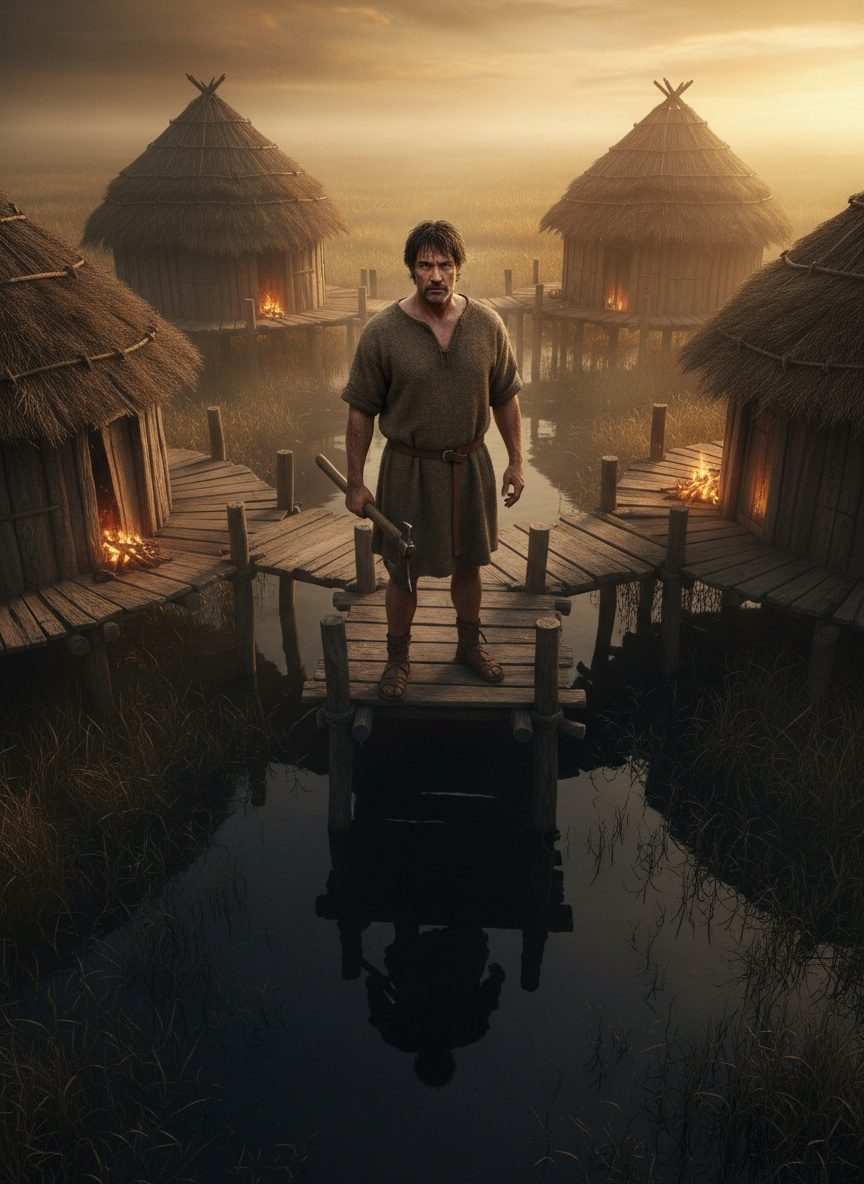
The flames danced wildly under the moonlit sky, casting flickering shadows on the waters of the fen. The crackling of wood echoed through the still night air as the embers rose, signaling the sudden collapse of an extraordinary Bronze Age city nestled above the marshlands of what is now Cambridgeshire. Families fled into the darkness, leaving behind all they held dear and an enigmatic story buried in silence for three millennia.
The Rise of the Fenland Settlements
The fertile landscape of Bronze Age Britain was a tantalizing stretch of land drawn up from the waters, weaving through the fenlands. Against this backdrop around 1300 BC, industrious communities began to carve out a remarkable existence, lifting their homes above the waterways on stilted platforms of oak logs. These structures, suspended over the shimmering fen, acted as more than just shelters; they were masterpieces of design and engineering, elevated to avoid floods and unwanted guests. The fens buzzed with life, as the rolling marshlands provided bountiful resources—fish teemed in the waterways, and the surrounding lands were rich with game.
Though remote, this settlement was no backwater. Here, people partook in the burgeoning Bronze Age culture, marked by skilled metalwork and flourishing trade networks. The tools and ornaments unearthed centuries later at Must Farm—a name given to the area—hint at connections that stretched far beyond these shores, perhaps even reaching down to the Mediterranean. The settlement echoed with the sounds of hammers on anvils and the weavings of looms, the air thick with the scent of smelted bronze and freshly spun wool.
The Night the Fires Burned
No one knows for certain what sparked the fire that consumed the city that fateful night. Some historians speculate a tragic accident under cover of darkness, others whisper of raiders seeking to sow chaos. What remains incontrovertible is that the flames spread swiftly, devouring the wooden walkways and structures, forcing the inhabitants to flee in sheer terror, abandoning meals still simmering over hearths, textiles strewn across workspaces, tools laid down in the midst of labor. It is as if time itself drew its breath at that moment—the bustling hum of life frozen in fiery tableaux.
The city, once a beacon atop the marshes, fell silent. Its remains subsided into the embrace of the fen, the waters swaddling the ruins as if unwilling to tell their secrets. Over centuries, layers of silt shielded the site, preserving an astonishing window into everyday Bronze Age life—one of the most complete of its kind, offering an unparalleled glimpse into a world caught abruptly at a standstill.
Unearthing the Lost World
Fast forward to the present day, when archaeologists descended upon Must Farm with the thrill of unwrapping a time capsule. Meticulous excavations brought to light treasures that had lain beneath the fen’s layers: exquisitely crafted bronze tools, well-preserved textiles still vibrant with ancient dyes, and—perhaps most hauntingly—a glimpse into daily life, frozen in time. Upon their wooden platforms, excavators discovered bowls of grains and hazelnuts left untouched, ceramic vessels spattered with broken dreams of meals unfinished.
Yet the richness of the site extends beyond mere artefacts. The skeletal remains of the dwellings reveal intricacies of Bronze Age architecture and social organization. Here was a society that knew the value of design and community, that deftly balanced on the cusp of an ever-advancing world while ensuring the safety and prosperity of its people despite the inherent perils of their chosen environment.
Lessons from the Marshes
The Bronze Age city beneath the fen survives as more than just a fascinating historical site—it is a testament to human resilience and adaptability. Must Farm offers an unprecedented snapshot of life long before modern history was ever chronicled, at once familiar for its humanity and distinct in its remoteness. In an age where written records did not exist, these people left behind a narrative crafted in wood and bronze, an indelible mark in the peat and waters of the fen.
As the waters shifted and human hands once again uncovered tales of time gone by, Must Farm reminds us of the fragility of civilization and the suddenness with which life can change, much like the flames that roused the city from its slumber so long ago. Amidst burnt timbers and lost belongings, the echoes of an ancient people whisper across the ages, inviting us to listen—if only briefly—to the stories they never taught us in school.