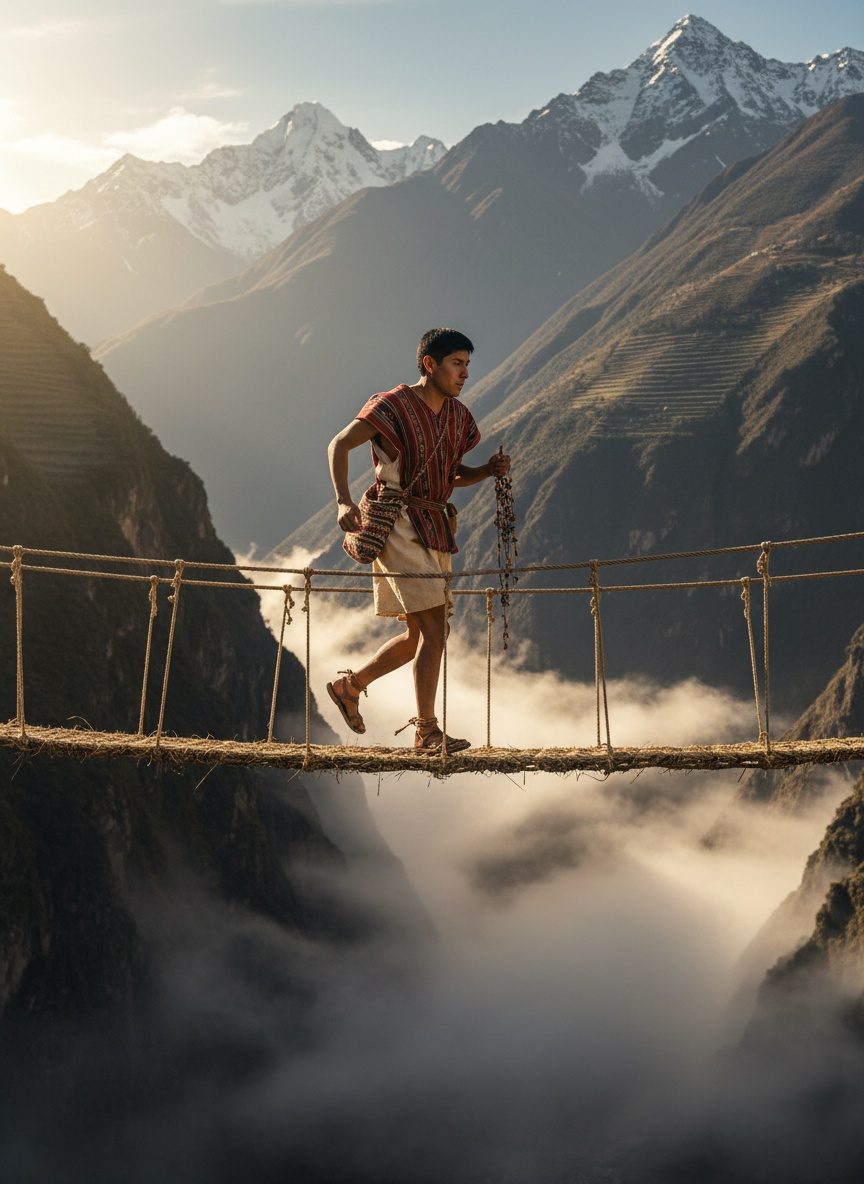
He wore no shoes. This young chasqui—a runner for the Inca Empire—crossed mountains barefoot, bearing messages that could change the fate of a nation.
In the height of its power around 1527, the Inca Empire was a formidable force, stretching over four thousand miles from modern-day Ecuador to Chile, its expanse rivaling some of the greatest empires the world had ever known. What most didn't know was how this sprawling territory was held together—not by roads alone or by the might of armies, but by the agility and speed of the chasquis. These fleet-footed athletes were responsible for maintaining the nerve system of the empire, sprinting across some of the harshest terrains without the aid of a horse, a wheel, or even a map. Among them was one young man whose journey would become legendary—a tale of endurance in the face of inevitable collapse.
The Andes, with their stark beauty and unforgiving terrain, were the main arteries through which the empire's life-blood flowed. The empire's communication system was unparalleled, especially considering the chasquis often traveled routes that even a seasoned mountaineer today would find daunting. These runners trained from childhood, acclimatizing to the altitude and learning the lay of the land to execute their critical missions. One such mission took place just as the threat of Spanish invaders loomed, a whispered shadow that had begun to cast a pall over the empire.
This particular runner set off from the coastal plains, tasked with delivering a message encrypted in quipu—a series of knotted strings that stored information through a complex language of knots and colors. His destination was Cusco, the navel of the world and heart of the empire. To get there, he would traverse coastal deserts, ascend steep glacial trails, and cross rickety rope bridges dangling perilously over deep abysses.
Just eleven days was all it took for the message to reach its destination. Eleven days that wove together the myriad landscapes of the empire underfoot. Few could imagine the challenges faced—blinding mountain snowstorms, the merciless heat of the desert sun, and the omnipresent fear of wild animals and ambushes. And yet, carrying a pouch with rations and the vital quipu, the runner sprinted tirelessly, his feet familiar with every stone and crevice.
The journey through the Andes was particularly treacherous. Crossing rope bridges required not only perfect balance but an unflinching nerve. These bridges—crafted from woven grass and ropes—could span hundreds of feet and sway with the wind, making even the slightest hesitation potentially deadly. Yet, the chasquis danced over them as if moving over solid ground, their steps influenced by generations of ancestral skill and confidence.
The path wasn't without civilization. Along his route were tambos—way stations that provided food, rest, and protection. Here, the relay system of chasquis could continue uninterrupted if necessary. However, this particular runner’s mission demanded he carry his message from start to finish without pause or handing off. His uninterrupted run was a testament not only to his speed but to his empire’s faith in his ability.
But this race was against more than time. Unbeknownst to most of the empire's citizens, imminent change rode the horizon like a dark cloud. The Spanish conquistadors had arrived on their shores, their presence barely visible but undeniably felt. As whispers grew, so did the importance of messages like the one carried by our chasqui—messages that may have contained calls for unity, warnings, or strategic plans for defense.
The chasqui's arrival in Cusco was celebrated by few and known by even fewer. His message delivered, he melted back into the realm of myth and stories, his feet likely already treading new paths for yet more missions. His anonymity was secured by a vast and disciplined network that worked tirelessly to keep the Inca Empire functioning like a well-oiled machine. Yet, as empires can only manage for so long against the tides of history, not even the swiftest chasqui could outrun the collapse that was soon to follow.
Before the fall, the Inca postal system was a marvel of human endurance and ingenuity, one that moved information faster on foot than many could on horseback, over distances that made other civilizations look parochial by comparison. The legacy of the chasquis survives today on the lips of Andean storytellers who still recount their feats, ensuring the rough pathways they once sprinted remain alive in cultural memory.
This tale of the chasqui runner is more than a story of the past; it is a poignant reminder of the countless unknown heroes whose efforts stitched together the quilt of an empire in its final days. As we gaze back and reflect on the ambition of the Inca and their runners, we are reminded of the power of communication and the will of individuals who, against unfavorable odds, played their part in the grand narratives of human history. In a world where messages are sent at light speed, remembering the determination of a solitary runner over barren landscapes can inspire a profound appreciation for the intangible connections that bind us all, past and present.