He wasn't a historian by trade. Thomas Young was a physician who had dabbled in a dizzying array of sciences and languages.
The Coffin Arrives in London
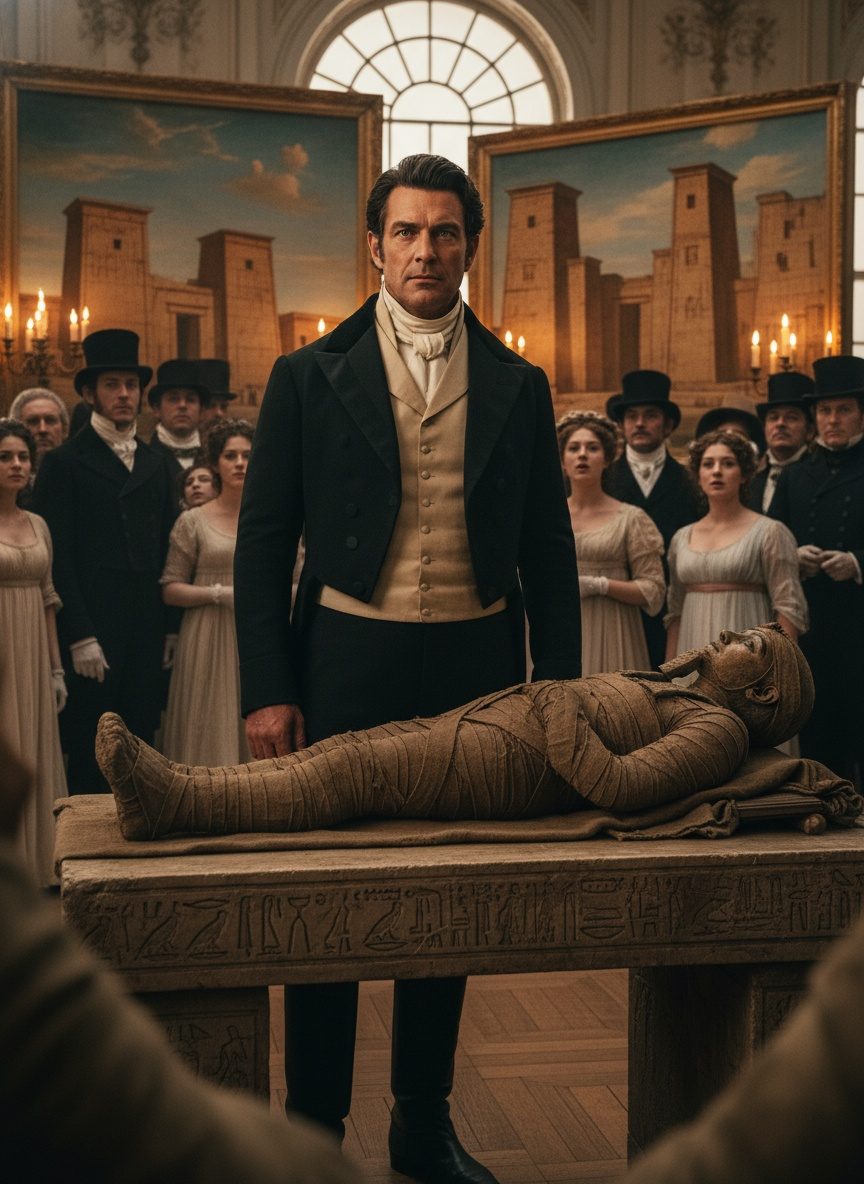
In 1821, a sense of enigmatic allure surrounded the Egyptian coffin transported by Giovanni Belzoni from the sands of the Nile to the cobblestone streets of London. Britain froze, captivated by the exotic symbolism and mystery entombed within the mummy’s wrappings, intricately adorned with hieroglyphs that whispered secrets across millennia. Belzoni, an intrepid traveler whose adventures had become the stuff of legend, sent shockwaves through London with his audacious discoveries that ignited Victorian imaginations.
The coffins of Ancient Egyptian mummies, secretive and serene, were an irresistible challenge to the minds of educated Europe. As the city buzzed with anticipation, Thomas Young, a savant of unparalleled breadth, prepared to unravel a mystery concealed for 3,000 years within ritualistic bandages that hinted at antiquity’s glorious past. This was a puzzle that invited him, not only to peer into another world but potentially to redefine the interface between cultures and epochs.
The Man Who Saw More Than Most
Thomas Young's eyes weren’t just those of a scientist; they were portals through which the relics of dead civilizations were reimagined. Holding a dual reputation as a polymath, Young was deciphering the Rosetta Stone—his grasp extending to languages and scripts that defied simpler minds. The son of a Quaker family from a small town in England, he had emerged as a linguistic virtuoso who had already made staggering strides in untangling the obscurities of Egyptian scripts.
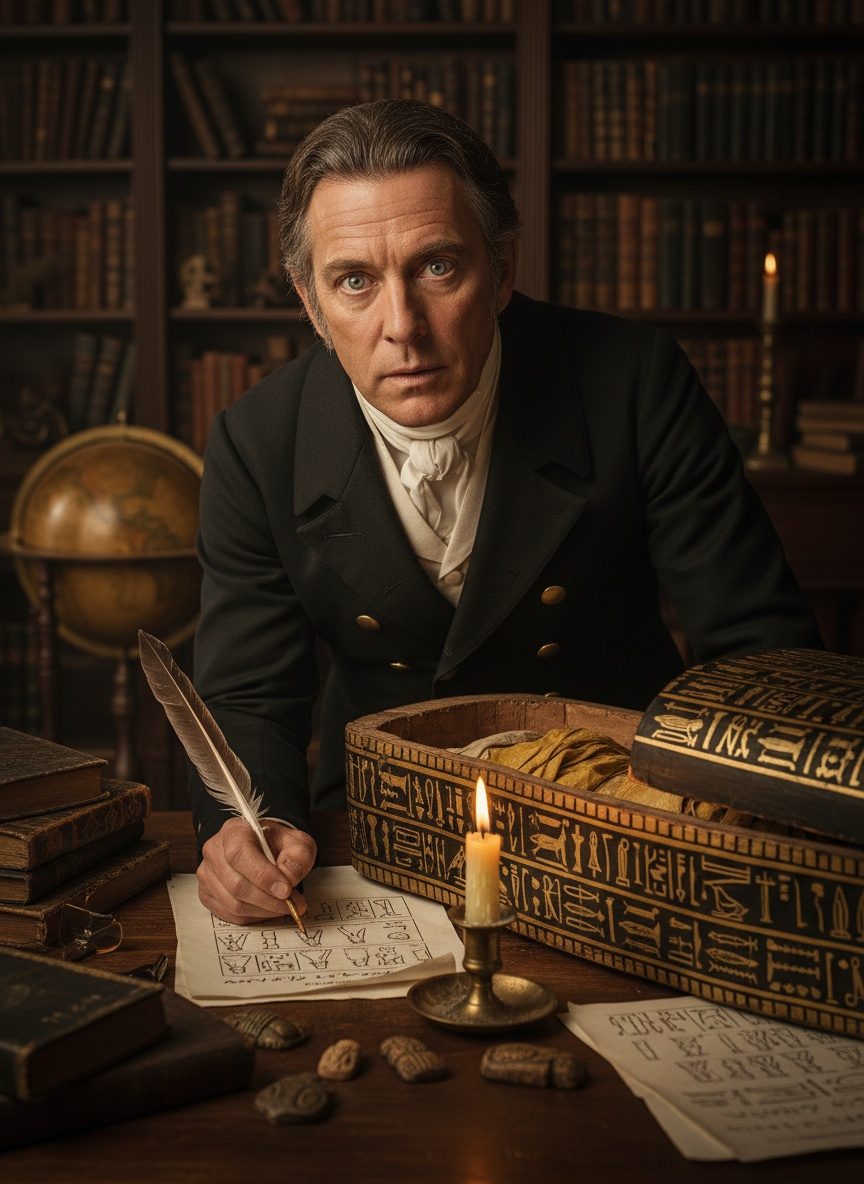
Yet, a mummy presented something uniquely personal. To peer directly at the hieroglyphs long thought indecipherable was to finally converse with a language believed dead. Young, armed with curiosity and a keen intellect, picked up his pen, ready to engage with symbols crafted to speak both to the gods and future generations. His work suggested an understanding that bridged time, drawing parallels between the ancients who authored these texts under the stars and the Victorians who marveled at them under the London skies.
Hieroglyphic Enigmas
The linen bandages, spun around the mummy with deliberate care, carried more than just embalming secrets; they were threads of narrative laced with incantations to the gods. Each hieroglyph was a key, and Young believed he could decode their meanings, turning nuances into narratives. His task was akin to solving a delicate puzzle where language, history, and spirituality intertwined.
The intricacies of hieroglyphic script lay in its dual nature—a ceremonial style continuous with cryptic symbolism and practical purpose. Every mark was purposeful, adorned with the art of scribes who saw writing as a divine act. Young’s exploration would illuminate why certain symbols were depicted in living detail and how they mapped out paths for navigating the afterlife. His insights underpinned future breakthroughs, motivating others to view these symbols as bridges to understanding the heart of Egyptian civilization.
Unveiling the Ancient World
The opening of the coffin was a spectacle, not just for the scientific community but for society. It was met with public wonder, much like the first peeks into uncharted lands. Young’s examination was precise and respectful, reflecting a fusion of awe and analytical prowess. As his pen moved over the linen, the mysteries that emerged rocked intellectual circles. His observations highlighted the sophistication of a civilization with secrets cached away, waiting to evolve into revelations.
Ultimately, what Young contributed went beyond translations. He looked past the literal to see reflections of cultural vibrancy. This decoding hinted at how interconnected humanity’s quest for meaning had always been and underscored the universality of human curiosity across ages. The echoes of a once-vibrant empire captured in a few lines of hieroglyphs revealed not only their creators' world but ours—a reminder of timeless human inquisitiveness.
In unwrapping the mummy's bandages, Young unconsciously unraveled a narrative that modernity had overlooked. It is tantalizing to think how a moment of revelation in London came to symbolize a milestone in unearthing Egypt for the wider world. His work, steeped in the thrill of discovery, speaks to a basic human truth: that every symbol and story offers a chance to transcend time, compelling us to ponder what questions about the past still remain unanswered.