The haunting landscape of Isandlwana on January 22, 1879, is forever enshrined in the annals of military history. Stand with me now amidst a sea of grass that stretches to the horizon. The British camp lies sprawled in disorder across the veld in South Africa, its inhabitants nervously awaiting the unseen enemy. As the sun reaches for its zenith, a dark tide of over 20,000 Zulu warriors surges over the hills like a shadow. This is the stage for a story of extraordinary valor, where one man’s indomitable spirit defied impending doom — the story of Lieutenant Teignmouth Melvill and the Queen's Colour.
The Gathering Storm
The Anglo-Zulu War commenced under grim circumstances. Arbitrarily shifting borders and condescending pretexts were the British Empire’s tools to expand its grip over Southern Africa. Led by Lord Chelmsford, a formidable force of about 1,850 troops made camp at Isandlwana, a rocky outcropping that jutted into the sky like a clenched fist. This location was thought to be secure, an oversight that would prove catastrophic.
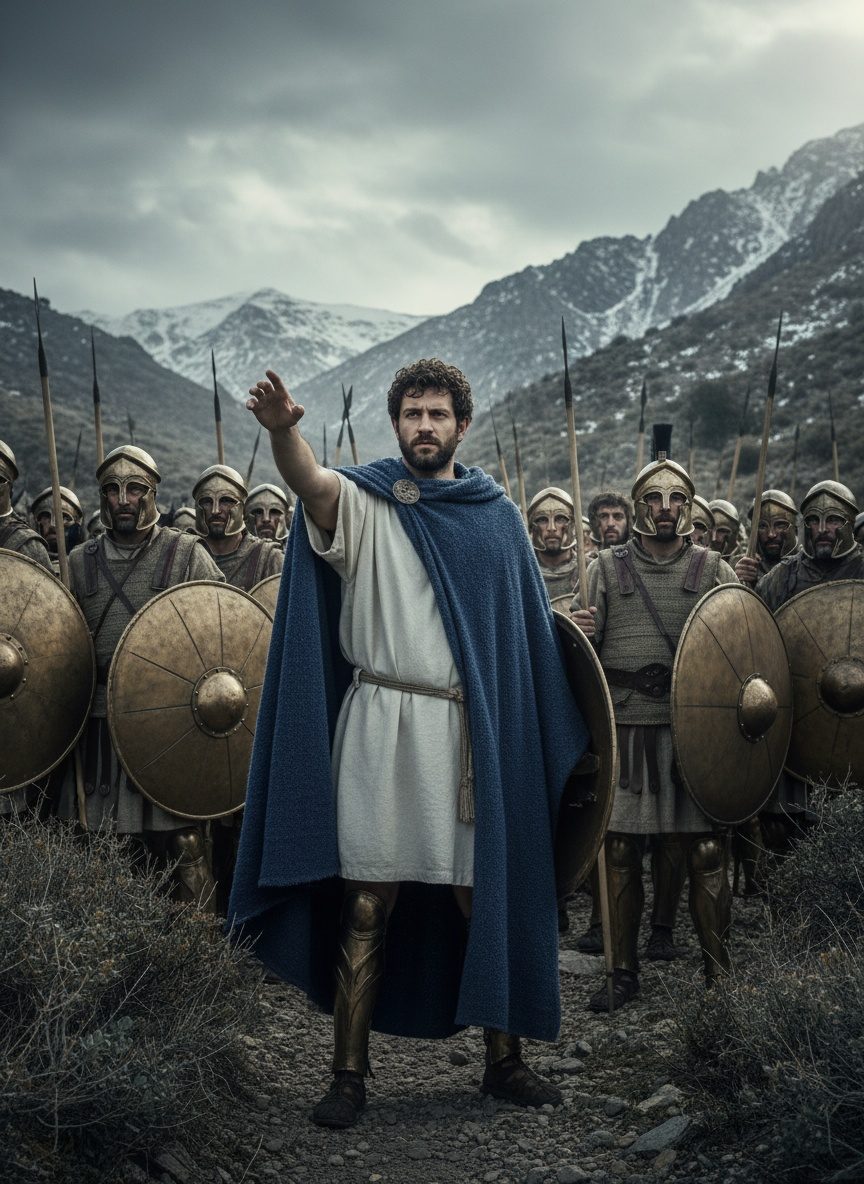
The Zulus, fiercely loyal to their king, Cetshwayo, were not to be underestimated. Armed primarily with spears and shields, their form of attack was not mere ferocity, but sophisticated strategy. Yet, the British command held a hubristic belief in their own martial superiority. Remarkably, plans were drawn with little regard for a possible Zulu counter-attack despite being in the heart of Zulu territory.
The Fall of Isandlwana
As the sun rose on that fateful January morning, the Zulu impis — regiments in traditional formation — advanced. Execution of Chelmsford’s errant tactics left the camp all but defenseless. In less than two hours, the camp was overtaken, and over 1,300 British and allied forces lay slain. Among them was Lieutenant Teignmouth Melvill, a man whose name would transcend the tragedy of Isandlwana.
As chaos erupted around him, Melvill seized the Queen’s Colour of the 1st Battalion, 24th Regiment of Foot. Discretely bestowed upon a regiment by the reigning monarch, the Colour was a symbol of their honor and duty. In those desperate moments, Melvill’s resolve to prevent it from falling into enemy hands became his singular purpose.
Into the Jaws of Death
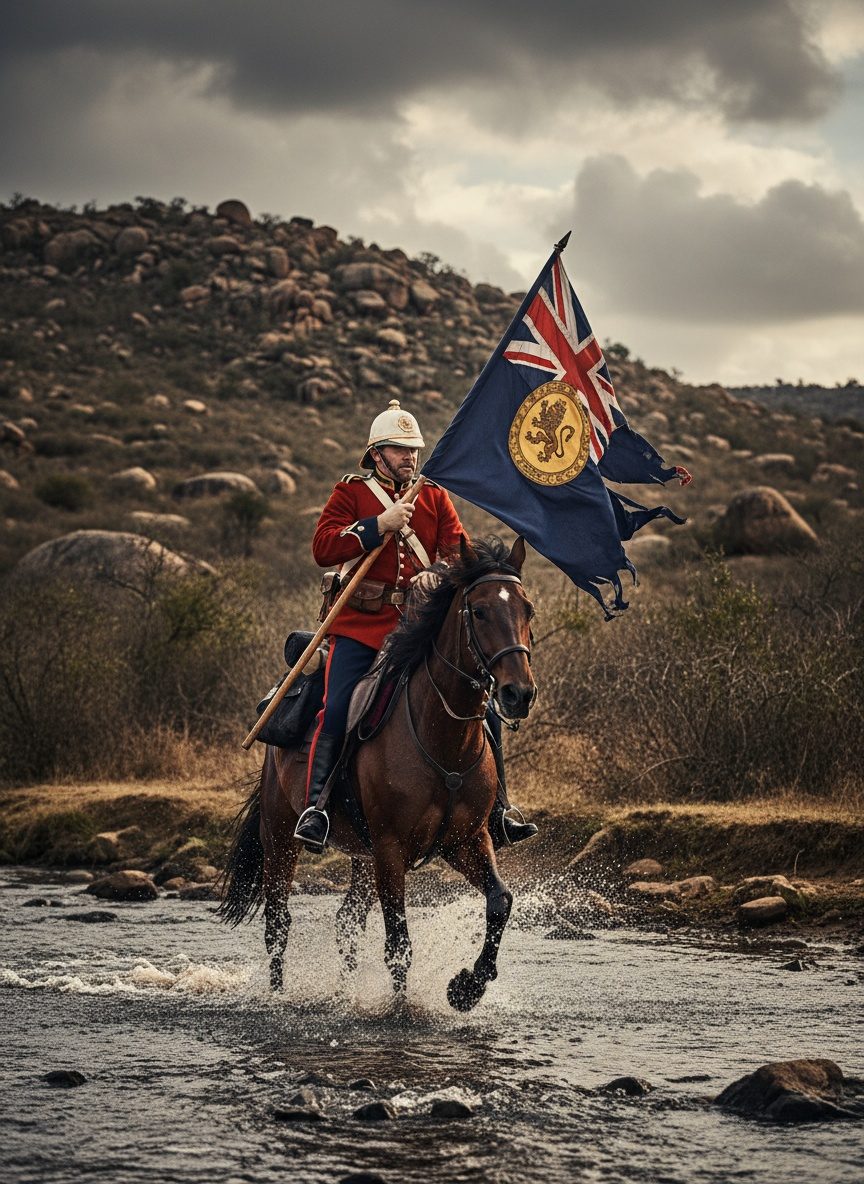
Miraculously managing to mount his horse amidst the melee, Melvill rode with uncanny determination towards the Buffalo River, the broad natural boundary between battlefield and sanctuary. Alongside him rode Lieutenant Nevill Coghill, whose presence was an untold mercy. Yet, the odds they faced were overwhelming — the path was rugged, the Zulu warriors relentless.
As Melvill charged towards the river, he was driven by more than a sense of duty. His mission was a mad dash through hellfire, made even more impossible as the landscape conspired against him. When at last the rushing waters of the Buffalo River came into view, it was a vestige of hope amidst the encroaching despair.
The Last Stand
The river, swollen by recent rains, was a roaring fury. Yet there was no turning back. As he plunged into its depths, Melvill clung to the Colour with unwavering grip. Together with Coghill, they fought the river’s tempest. Exhaustion and the unrelenting pursuit of their Zulu adversaries bore heavily upon them.
In a final act of heroism, wounded and succumbing to the forceful current, Melvill placed the flag into Coghill's hands. As the river claimed him, and then Coghill shortly after, the Colours of the 24th Regiment were destined not to be taken by the Zulu. It was later found on a jutting rock near where the two brave lieutenants fell, saved by their ultimate sacrifice.
The Vindication of Valor
The tale of Melvill and Coghill did not end in obscurity. Recognition of their gallantry transcended the defeat of Isandlwana. Both men were posthumously awarded the Victoria Cross in 1907, the highest military honor for bravery in the face of the enemy — an unprecedented and posthumous vindication.
Their contemporaries, and by extension history itself, grappled with the bitter lessons of Isandlwana. Human valor amidst disastrous military shortsightedness became a poignant narrative within the celebrated ranks of the British Armed Forces. This sacrifice was an agent of introspection within an empire that often operated with arrogant impunity.
Why It Matters Today
In every epoch where duty seems overborne by circumstances, the tale of Lieutenant Melvill stands as an eternal testament to the spirit of sacrifice, emboldened not by the cause of the conflict but by the character within it. This gallant act serves as a call to honor and integrity, echoed in modern reckonings of military engagements and personal trials alike.
The memory of Isandlwana, through stories like Melvill's, continues to illuminate the dark crossroads of history where individual valor and hubris collide. It pushes us to ponder the weights of command, the immeasurable cost of imperial ambitions, and how one person’s resolve can offer a beacon of honor amidst the devastations of war.