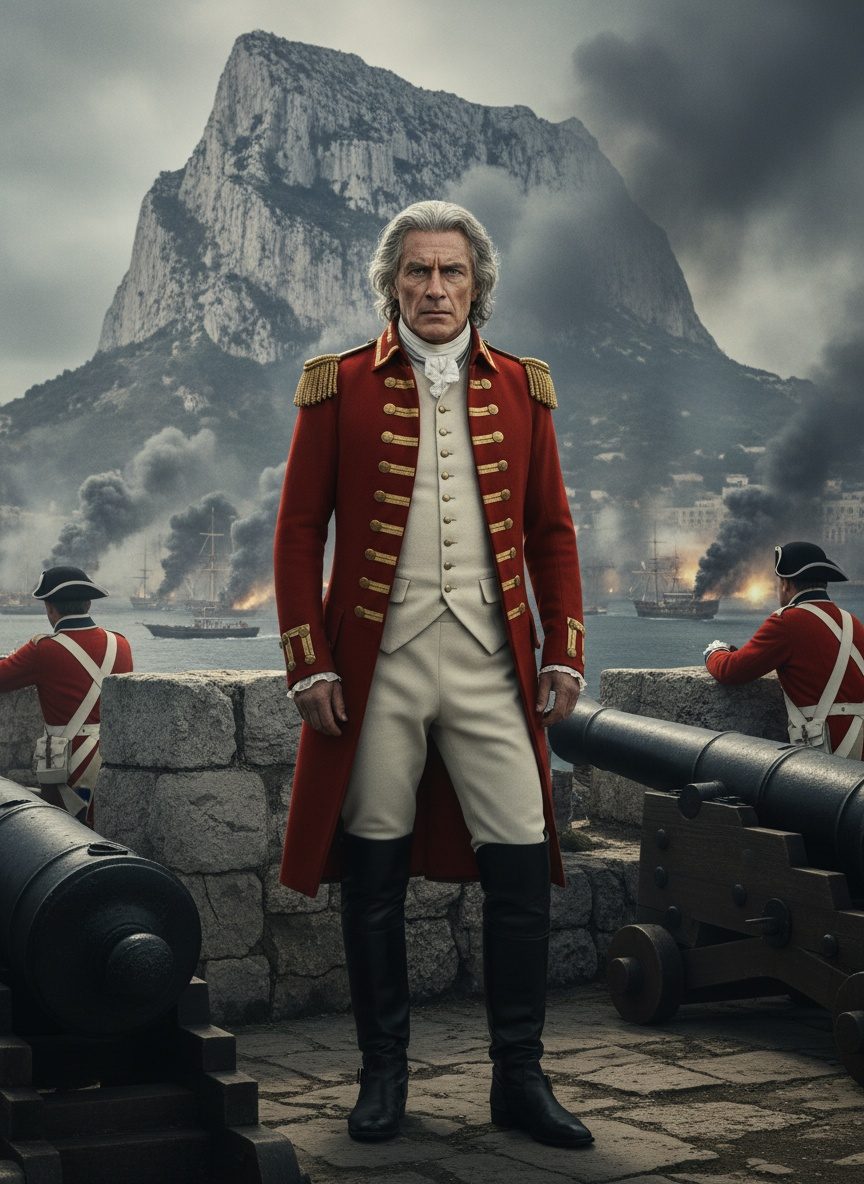
The windswept Rock of Gibraltar looms large against the horizon, a colossal limestone promontory thrusting upwards from the azure waters of the Mediterranean Sea. Sunlight dances over its sheer cliffs, creating stark contrasts of light and shadow that seem to trace the very tension within these storied walls. Below, the waves crash incessantly against the craggy shores, a rhythmic reminder of both isolation and resilience. As the winter of 1779 settled in, this natural fortress found itself at the heart of an improbable tale, where sheer will and ingenuity faced down overwhelming odds.
The Siege Begins: An Unyielding Horizon
In 1779, as tensions flared across Europe, the combined might of Spain and France turned their attention to a prize of strategic importance — Gibraltar. Known as "The Rock," this British stronghold at the entrance to the Mediterranean was coveted for its commanding position. The siege that followed saw sixty thousand French and Spanish troops encircling the fortress, bolstered by a formidable naval presence, transforming the surrounding waters into a sea of enemy sails. For General George Augustus Eliott and his modest garrison of four thousand British soldiers, surrender never seemed an option.
The initial months were a tense stalemate of fire and feint. The blockade was intended to strangle the life out of Gibraltar, cutting off vital supplies and reinforcements. Yet, within the silent corridors of the garrison, Eliott orchestrated a methodical defense, one that would exploit the Rock’s natural advantages and test the endurance of both his men and their enemies.
Defiance Through Scarcity: The Art of Ingenuity
Faced with crippling shortages, General Eliott instituted strict rationing, his meticulous nature seeing to it that every grain of rice was accounted for as if it were gold dust. Gradually, fresh food became a memory, and the men turned to less appetizing options, grinding bones into meal and gnawing on stringy rats. Yet, morale remained improbably high. Eliott's leadership was, in part, a psychological gambit that inspired loyalty and determination. He sent his men into the Bastions and Batteries with plans that involved strategic deception and determined defense. Few, if any, imagined that these soldiers, bogged down with crumbling nerve and broken flesh, would long withstand the might of enemy cannons.
Yet, withstand they did. Eliott’s forces built cunning fortifications within the tunnels of the Rock itself. With barely enough resources to construct large artillery emplacements, they relied on the surprise element. A lone cannon, repositioned frequently, erupted from hidden emplacements, offering the element of mystery that made the massive opposing forces second guess their strategy.
The Unsung Heroes: Those Who Endure
Within the cannon-smoke haze, stories of individual heroism and human tenacity emerged. John Mackintosh, a civilian merchant turned army supplier, organized the clandestine arrivals of critical shipments under the cover of night and through hazardous blockades. Maudlin letters to loved ones were penned by men who might otherwise have faded into obscurity. The women and children within the fortress also played a crucial, if silent, role, assisting as medics and cooking with whatever meager supplies they could scavenge.
As months fell into years, these everyday acts of quiet rebellion amassed into a formidable defense. A less celebrated, yet no less critical, factor was the unwavering British naval strategy to reinforce Gibraltar through the strategic use of blockade-running. Despite the towering odds, brief yet daring engagements ensured that some semblance of supplies reached the garrison – further deluding the Spanish and French into believing that concessions were around the corner.
The Turning Tide: Adapt and Overcome
The second year of the siege saw the French and Spanish launch an attack of grand proportions during the Great Siege of Gibraltar. Towers of gunpowder-laden ships loomed over the bay, an incendiary blockade designed to rain hellfire down upon the Rock. For General Eliott, the choice was stark: stand firm or fall. Ever resourceful, the defenders lashed out with red-hot shot – heated cannonballs that turned the enemy’s own incendiary vessels into blazing infernos. Charred ships lit up the night like fallen comets, transforming the would-be destroyers into spectacles of their own demise.
This pivotal success, alongside the eventual arrival of British reinforcements from the sea, shifted the momentum. The tenacity of Gibraltar’s defenders had outlasted not only Spanish and French resolve but their very supplies, and in early 1783, the siege came to a dramatic close with Gibraltar still firmly in British hands.
Legacy of the Rock: Lessons and Echoes
The siege of Gibraltar was more than an epic military engagement; it was a testament to human endurance under harrowing conditions. General George Augustus Eliott and his soldiers’ three-year stand offers an enduring lesson in resolve and ingenuity. In today’s world of rapid, often superficial changes, the narrative of a diminutive garrison defying a leviathan adversary serves as a reminder of the power inherent in steadfast belief and strategic cunning over sheer might.
The echoes of drone cannons and resolute voices from Gibraltar’s bastions remind us to question what constitutes genuine strength. It is in constraint and cunning, with time chiseling heroes from soldiers and fortresses from mere stone, that true power emerges, casting shadows long into the pages of history. Gibraltar stands, as it always has, a sentinel of endurance against the odds, affirming that sometimes, a lone cannon, strategically wielded, can guard not only a city but inspire a legacy.