He had never built a city before. But somehow, his creation stood above the waters for centuries.
A Village on Stilts
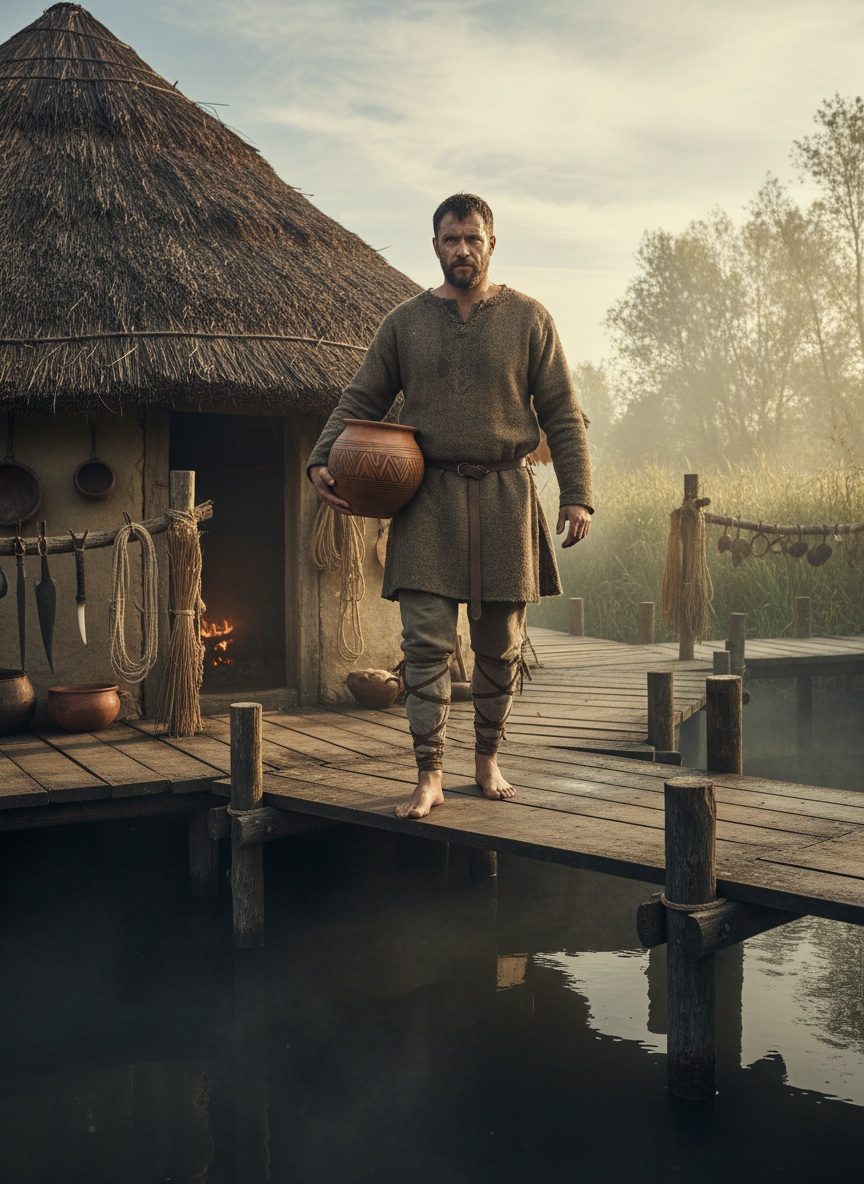
In the heart of what we now call Cambridgeshire, beneath layers of peat and waterlogged earth, lay the astonishingly well-preserved remnants of a Bronze Age settlement known as Must Farm. This wasn't an ordinary archaeological find; it was a portal back in time. The settlement, constructed on the edge of a river in the fens, stood defiant against the elements on a framework of wooden stilts. The inhabitants of Must Farm belonged to a world where survival demanded innovation and collaboration, crafting their homes above the marshy lands to access the rich resources the waters offered.
The construction of these dwellings was an architectural marvel of its time, featuring timber frames and reed thatch roofs. These materials, though not impervious to fire, were selected for their abundance and adaptability. From these elevated homes, the villagers could fish, gather wild plants, and trade with other communities along the network of waterways. Life at Must Farm thrived for some time, shielded by these wooden legs from the ever-encroaching fen waters.
What set Must Farm apart was the startling preservation of daily life, frozen in the moment of a fiery catastrophe. Bowls with meals still inside rested on tables as if the inhabitants had just stepped away. Pottery, textiles, and tools lay where they had last been used. The settlement seemed to whisper stories of a vibrant community, unravaged by time.
A Fiery Descent
The tranquility of Must Farm came to an abrupt end when a fire swept through the village. The conflagration turned the wooden structures into an inferno, but instead of entirely destroying the settlement, it caused many of the buildings to plunge into the water below. It was the unique confluence of fire and water that preserved the village in such miraculous detail.
What could have been mistaken for a simple disaster woven into the tapestry of history became a guardian of the past, with the water-logged conditions of the fenlands acting as a perfect preserver. This created a unique environment—anaerobic and untouched by the erosive forces of time—that allowed organic materials like wood and textiles to remain intact for millennia.
This submerged city acted as a time capsule, offering unprecedented insights into the lives of Bronze Age Britons. The fire, while catastrophic, locked Must Farm in a moment of human activity. Here, researchers could observe not just the architecture and layout but how daily life unfolded around these ruins. The texture of woven textiles, the composition of pottery, and even food remnants, provided a visceral connection to people who lived three thousand years ago. It was as if the storm of history had paused, leaving untouched the whispers of a forgotten civilization.
Lessons from the Fens
When British archaeologists stumbled upon Must Farm, they uncovered more than a mere settlement. They found a narrative frozen at its climax, revealing the ingenuity and resilience of a community long gone. This site rewrote many assumptions about the technological capabilities of Bronze Age societies and their adaptation to challenging environments. Their wooden domiciles, elevated by stilts, illustrated an understanding of both engineering and environmental resourcefulness rarely associated with prehistoric societies.
The value of Must Farm lies in its detail—pieces of bread left uneaten, intricate textiles woven from plant fibers, and mysterious tools hinting at industries now eclipsed by time. Here was evidence of a complex society, engaging in agriculture, textile production, and trade. Their lives were interwoven with the landscape, a harmonic existence in tune with the ebb and flow of water and seasons. Yet, despite their knowledge, they were still vulnerable to nature's whims.
Must Farm challenges us to rethink how we view history. It's not merely about dates and events but people and their stories, suspended in time. The perseverance of this village beneath the Fens serves as a poignant reminder of the transient nature of human endeavor and the power of nature, both as a life-giver and a relentless force. As we peer into the silent rooms and abandoned hearths of Must Farm, we gain more than knowledge. We connect, across the millennium, with lives lived with the same passions, fears, and hopes that persist today.