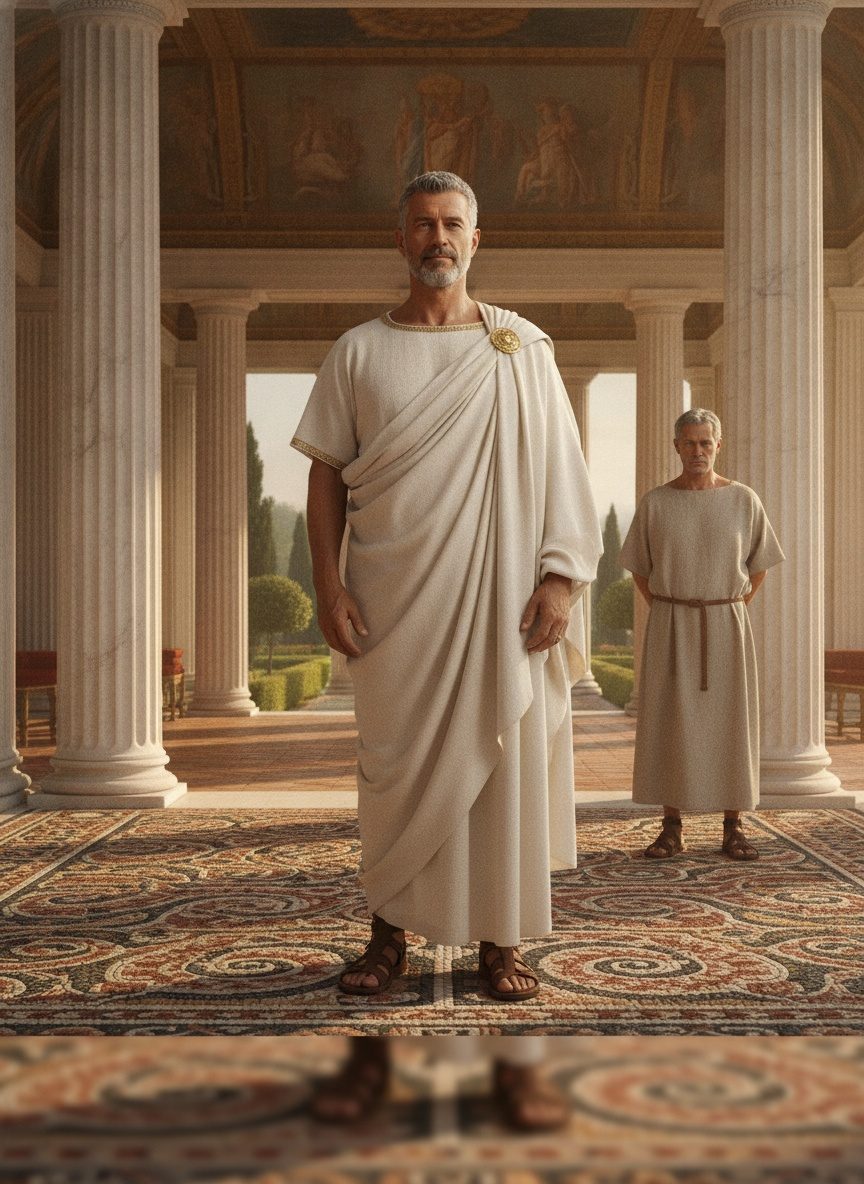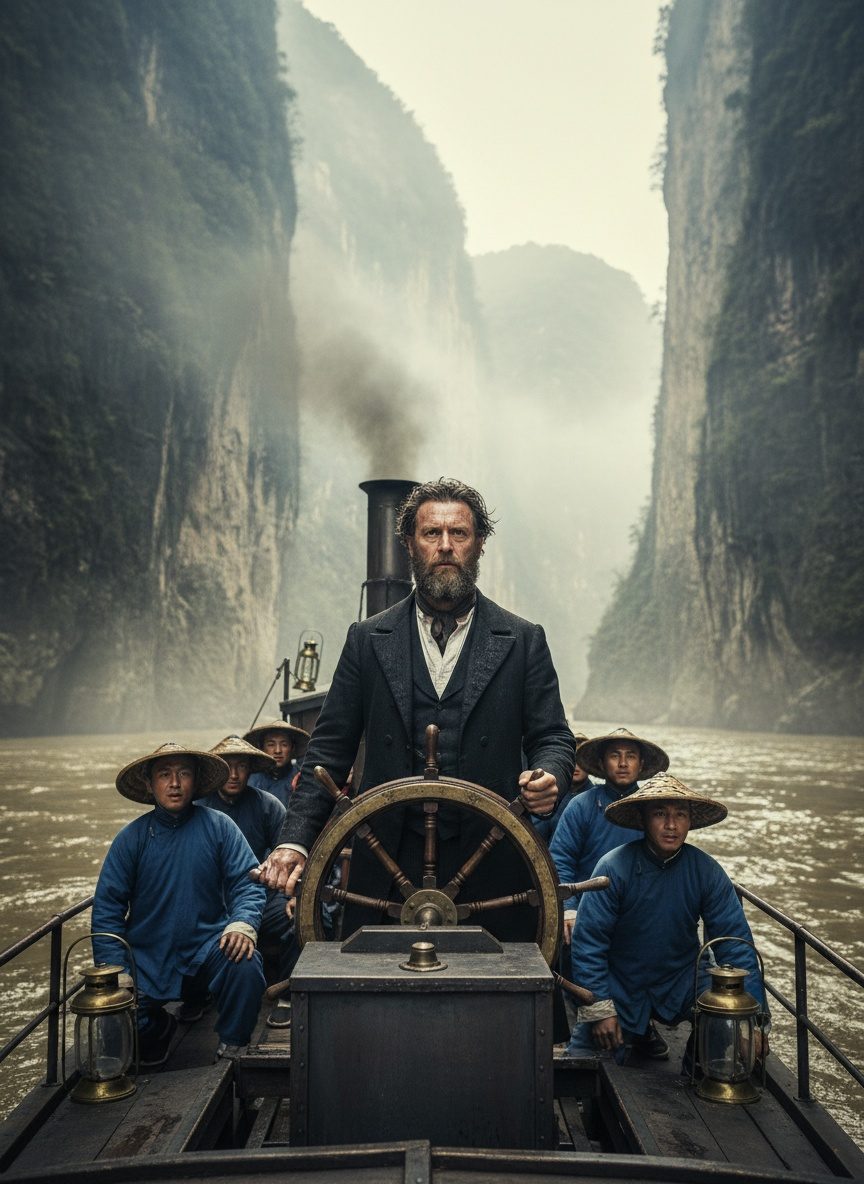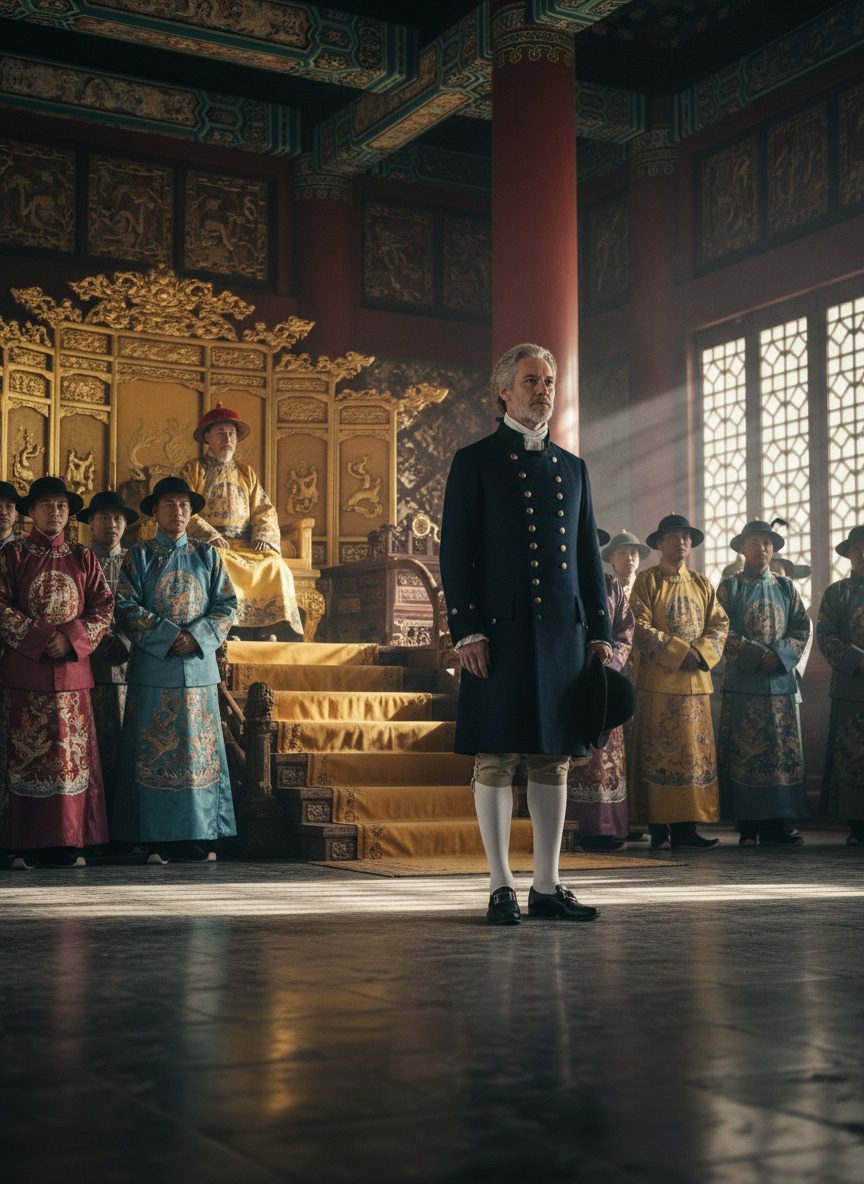
He sailed into the heart of the Qing Dynasty with quiet determination. Lord Macartney had no intention of kneeling.
The Ambitious Voyage
In the late summer of 1793, an extraordinary journey reached its apex as Lord George Macartney, freshly dispatched by King George III, stepped into the awe-inspiring Forbidden City of Beijing. The aim of this voyage was straightforward yet audacious: to open the gates of China to unrestricted trade with Britain, a mission that pitted Western curiosity against Eastern sovereignty. The London merchant-turned-diplomat arrived not as an eager hunter or fortune-seeker, but rather cloaked in the garb of commerce, with a mission unlike any witnessed by the regal halls of China before.
Macartney's retinue was nothing short of a spectacle, featuring a lavish parade of gifts that echoed British ingenuity. Telescopes that could peer into other worlds, clocks that chimed in unison like a celestial orchestra, glittering fabrics, and even an awe-inspiring planetary model known as an orrery. Yet among these ornate treasures, Macartney carried a burden no trinket could overshadow: the expectation of a kneeling kowtow, a ceremonial act of submission alien to his proud British bones.
The Clash of Cultures
Macartney's arrival initiated a cultural spectacle of unparalleled significance. The young diplomat faced the Qianlong Emperor, a ruler whose dominion stretched across vast landscapes as their populace was steeped in time-honored traditions. The commander of the Middle Kingdom had presided over a nation sustained by celestial mandate, nurturing feelings of superiority that viewed foreign visitors as mere tributaries rather than potential equals.
This was a world where protocol reigned supreme. Visits from distant lands traditionally involved demonstrations of submission, an acceptance of China's eminence. Yet here stood Macartney, resolute, refusing to kneel—his carefully composed demeanor both emblematic and defiant, signaling a broader cultural chasm. Instead, he opted for a gesture that still spoke volumes of deference without assuming the guise of subservience: the British nod, a blend of respect and resistance.
The Emperor's Court Awaits
The reverberations of Macartney's standoff traveled through the lavish halls of the emperor's court. The Fairmonts of Britain, witnessing from afar, wondered how this deviation from tradition might alter the intricate dance of diplomacy. Would Macartney see a break in China's stalwart visage, or would his noncompliance chisel away at the relations forged at the empire's mercy?
The Qianlong Emperor displayed no small measure of indulgence toward these foreign emissaries, allowing negotiations to proceed despite the slight to tradition. Yet from the onset, his dismissive outlook loomed large in every interaction. "We possess all things," he reportedly told Macartney. He viewed Britain's plea for trade as frivolous when China's domestic bounty surpassed what these visitors could offer.
The Sufficiency of the Empire
The emperor's words reverberated beyond the immediate diplomatic entanglements to capture a broader truth of the times. China, at the brink of its self-perceived zenith, felt it needed little from beyond its illustrious borders. Qing's indomitable stance was underpinned by a rich cultural heritage and agricultural sustenance that rendered any diplomatic gifts as curiosities rather than necessities.
Lord Macartney's mission was both a bold venture and a doomed endeavor, an encounter that laid bare the conspicuous rift between two mighty civilizations. Britain's ambition to unfurl the dragon's wings and fly beyond its self-imposed isolation seemed futile, tangled in China's unyielding self-sufficiency. For the British back home, this meeting oscillated between curiosity and frustration.
A Tale of Symbolic Resistance
The 1793 expedition remains an enigmatic episode in the annals of history, encapsulating a clash of mighty empires etched in ritual and pride. When Macartney and his entourage departed, they left behind a still-closed door, though one slightly more ajar than before. Britain felt the chill of rebuff, yet this initial encounter planted the seeds for more endeavors and an insistent push against China's economic fortifications.
This diplomatic saga underscores a timeless truth: cultures defined by diverse principles can coexist, yet the road to understanding is paved with the courage of those who dare not kneel easily. In an era where communication and open dialogue are more pivotal than ever, the story of Macartney and the Qianlong Emperor stands not just as a historical anecdote but as a reflection of enduring global dynamics. The world watched then, as it watches now—poised, curious, and ever learning.