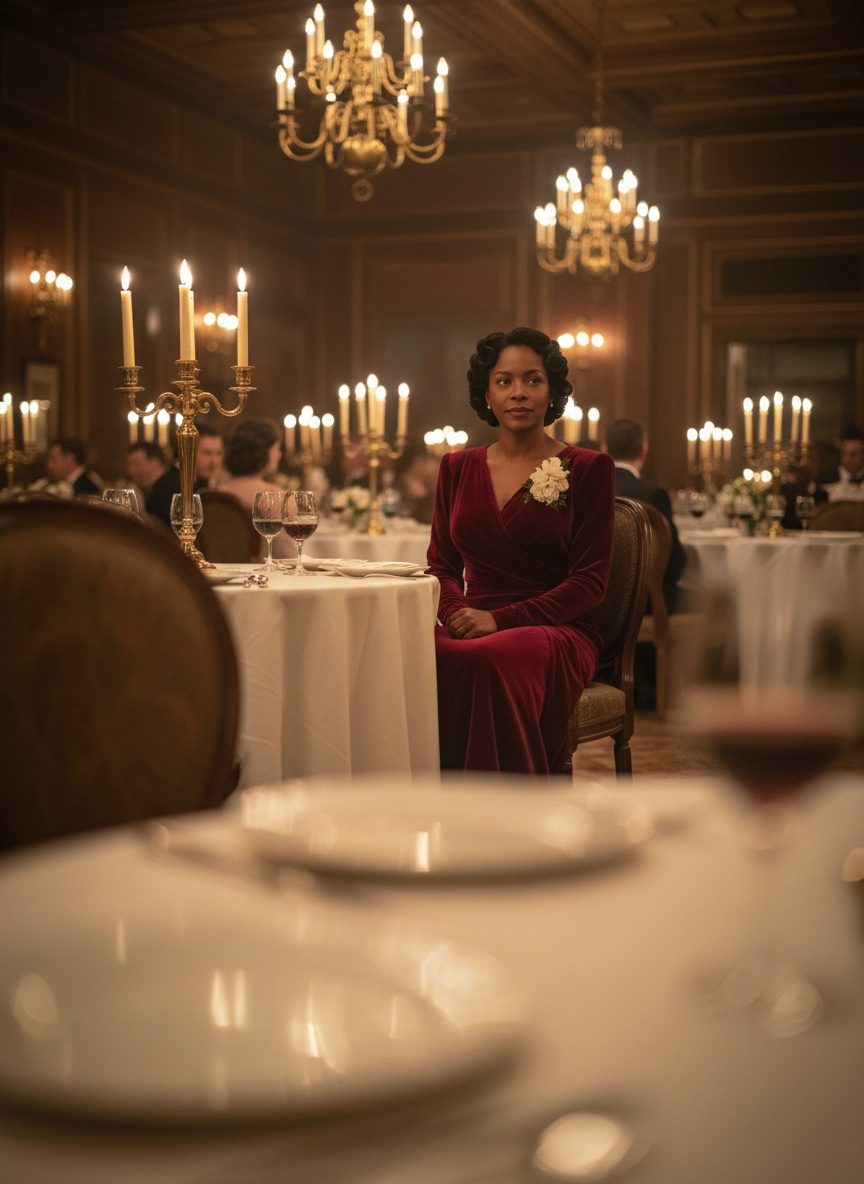
The walls of the Coconut Grove ballroom were alive with the subtle clink of glassware and the murmur of elegant conversation, their whispers dancing under the warm glow of chandeliers. It was Los Angeles on the leap day of 1940, and outside, the city was cloaked in a chill that the vibrant noise within managed to banish. Laughter sparkled like champagne, the air pregnant with anticipation. This was the night of the 12th Annual Academy Awards — an evening that would soon weave itself into the fabric of history, for reasons beyond gold statues — reasons embedded in courage and quiet defiance.
A Night in the Heart of Glamour
Inside the swanky Ambassador Hotel, known for hosting Hollywood's most prestigious events, everything gleamed with the polish of high society. Stars from the silver screen milled about, their excitement mingling with cigarette smoke that hung like a veil over the white-clothed tables. The Coconut Grove, inspired by the lush tropics, with its palm trees and Spanish-style decor, was set for a night that promised more than mere accolades. It stood on the cusp of change, even as the weight of tradition threatened to pull it back.
Hattie McDaniel, a woman with a warmth as rich as her voice, sat ready. Her thoughts likely a maelstrom — extraordinary excitement tangled with an all-too-familiar awareness. She found herself seated apart from her 'Gone with the Wind' colleagues, her table solitary like an island awash in a sea of stars. As the first African American nominated for an Oscar, McDaniel’s presence here was a crack in the racial barriers of Hollywood. Yet the segregation policies of the time meant she wasn't seated with her peers inside the grand space. Here, the chasm between applause and acceptance was palpable.
Moments Before the Unthinkable
As the ceremony dwindled on towards the Best Supporting Actress award, a frosty air seemed to fill the spaces between breaths. The room shifted with anticipation. From her secluded table, Hattie McDaniel waited — for a chance afforded to few. Despite being physically set apart, she emanated an aura of determination that couldn't be stifled by apartheid policies or condescending glances.
Finally, the moment arrived. The presenter’s voice cut through the clamor, announcing an achievement that would echo through decades: “Hattie McDaniel.” Cheers erupted, a chorus that carried McDaniel from her seat to that iconic stage. She walked a path few had trodden, adorned in a turquoise gown — a vibrant rebellion against the muted tones of her segregated seat. Her acceptance was a testament to talent where society often saw only color.
The Speech that Resounded
Onstage, McDaniel raised the Oscar, her hands steady against the tide of history she faced. As she addressed the audience, her voice was unwavering, expressing gratitude not just to those who enabled her success, but to a higher power she believed guided her path. In that speech, she spoke volumes — far beyond the few words allotted by protocol. It was a dialogue with the world, a silent resilience cloaked in grace and gratitude. Her heartfelt words resonated amongst the crowd, leaving an indelible impression across the linoleum floor of fame.
She acknowledged her appreciation not only for the accolade but for being a representative of her race, an icon for those who experienced discrimination as an everyday reality. It wasn’t merely an acceptance; it was a proclamation of presence, a declaration against the obscurity that institutional barriers tried to impose upon her community. While her win was heralded as monumental, her dignified speech voiced the triumph and trials of African Americans striving for recognition.
A Quiet Legacy Amid the Commotion
As McDaniel ended her speech and descended from that stage, applause seemed to linger longer than usual. It was as if those clapping understood, if only through a thin veil of empathy, the weight of what had transpired. Hattie McDaniel had claimed a part of the narrative as her own, in a high-flying world that would have rather seen her remain silent. The echoes of that night rippled forward through time, through awards shows across years and generations, amplifying voices once quelled to a whisper.
Beyond the ballroom, McDaniel’s achievement refracted into the lives of those who watched and listened. It opened dialogues on race and representation even as America still stumbled under the yoke of segregation. Her Oscar was a beacon, drawing into its orbit the complex reality of a nation grappling with change. McDaniel became not just a symbol of talent, but a harbinger of change that Hollywood could not ignore.
The story of Hattie McDaniel that night is one of perseverance against formidable odds, a reminder of the resilience required to begin tearing down the walls of racial inequality. She placed the cornerstone upon which countless others would build, guiding the shimmering light from a distant ballroom into the corridors of change. Her solitary seat was not a place of isolation. It was the vantage point of history in the making, a reminder of Goliath battles shouldered in unexpected places.