The day was like countless others in the sprawling city of Beijing. The skies above the Forbidden City were an impenetrable gray, laden with the weight of secrets untold and lives unfulfilled. The air carried a muted chill, punctuated only by the occasional cry of a distant hawk weaving through its currents. The palace stood in solemn grandeur, its crimson and gold walls a testimony to imperial China’s power and majesty. Behind them, however, lay a rot hidden from public view, one that festered in the heart of the empire. It was into this scene of decaying splendor that a mid-ranking official named Hai Rui dared to enter, challenging silence with courage. The significance of his presence could alter the course of history.
For twelve long years, Emperor Jiajing, draped in the mystique and isolation of his high station, had forsaken his duties. Enveloped in the quest for immortality, the once-vibrant voice of the court had dwindled to whispers in marble corridors. Ministers feared his wrath and hid behind a facade of obedience, all the while turning a blind eye to the suffering that crept across the land. Famine and turmoil gnawed at the very core of Ming China, yet the walls of the palace remained unyielding and indifferent. But Hai Rui was no ordinary official. He was the kind who bent not with the wind but stood firm against the storm.
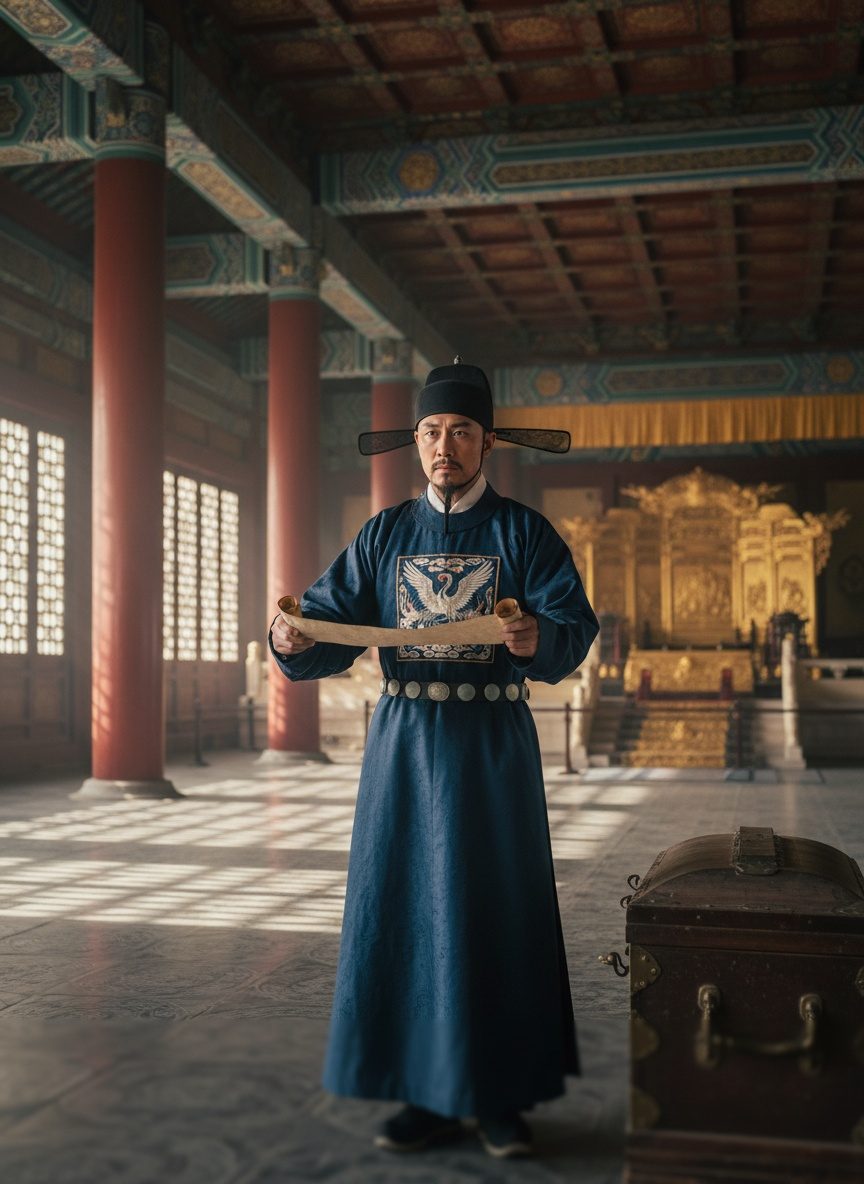
There was a magnetic precision to Hai Rui's breaking of protocol. As he approached the Emperor’s audience chamber, the echoes of his footsteps resonated like a drumroll heralding an unanticipated reckoning. With him, he carried a letter—a missive unlike any that the Son of Heaven had ever received. It was as if the parchment itself trembled with anticipation, aware of the storm it carried in its ink.
No one dared to meet Hai Rui’s eyes as he progressed, a solitary figure against a backdrop of anxious courtiers and bustling attendants. And then, in an act of defiant courage, he stood before Emperor Jiajing. It was customary to kneel, to prostrate oneself before the majesty of the throne. Yet, Hai Rui remained upright, an act of rebellion that spoke louder than words. His refusal to bend was a visual rebuke, a prelude to the contents of the letter now resting in his hands.
As it unfolded, the air seemed to tremble. Hai Rui's words bore the weight of a populace’s unvoiced suffering. He named every failure, every lapse, every cruelty committed in the Emperor's name. The letter detailed how the pursuit of eternal life had left death in its wake, leaving fields barren and people destitute. It was a litany of the empire's failings, thrust directly into the Emperor’s gaze.
The court was suspended in an eternal moment, a collective breath held in anxious expectation. The immediate consequence of such audacity could have been execution, exile, or something even more unfathomably cruel. Yet Hai Rui stood, unwavering—a testament not just to personal integrity but to the desperation of the times. His boldness held a mirror to power, showing its true reflection.
While the expected rage might have burst forth like a storm, the Emperor received the letter in palpable silence. The courtiers, like marionettes untethered, awaited the fallout of this historic confrontation. Hai Rui had not just risked his career; he had put his very life on the line. Such was the gravity of his courage that others, who had been suffocated by fear, found a sliver of hope in the possibility of change.
The act of delivering this letter was not only one of individual agency but a symbolic gesture that resonated far beyond the walls of the palace. It awakened those who were scattered across the fields, the towns, the cities—people who believed their voices were forever lost to the cacophony of courtly pretense. Hai Rui had become the voice of the people, a tether between the suffering commoners and the aloof strata of power.
In the rarefied world of emperors and dynasties, where time flowed thickly amidst the silken folds of history, Hai Rui’s audacity became a beacon. It was courage distilled to its purest form, a message across the ages of the strength inherent in speaking truth to power. In a world enshrouded by veils of protocol and deception, here was a blinding flash of sincerity.
While the immediate repercussions for Hai Rui remained severe, his courage was not in vain. The moment catalyzed ripples of change, instigating introspection within the palace walls. Emperor Jiajing was spurred, ever so slightly, into action, if not entirely into reform. The whispers of Hai Rui's bravery echoed through corridors and spread to corners of the empire that had long felt forgotten.
In the grand tapestry of history, actions matter beyond the reach of their creator. This singular moment of defiance during the reign of the Jiajing Emperor reminds us that history has often tilted not by the hands of armies or sovereigns but through the steadfast courage of individuals who chose to see wrong and dared to make it right. The challenge Hai Rui issued was not merely to an emperor but to the idea that power existed without accountability. His letter, a beacon through time, brings to light the eternal struggle for justice and the power of conscience against the pall of complacency.