1565. The scent of burning incense lingered in the corridors of the Forbidden City.
In the heart of China's imperial labyrinth, officials moved cautiously under the shadow of one of their most formidable rulers, the Jiajing Emperor. His reign was marked by superstition and seclusion, increasingly disconnected from the empire he ruled over. The majestic halls of the Ming Dynasty's seat of power echoed with the murmurs of conformity. It was common knowledge that the only words an official should utter were those perfumed with praise. Yet, in the southern province of Hainan, an unassuming magistrate had resolved to shatter this fragile veneer with the sharpest of truths.
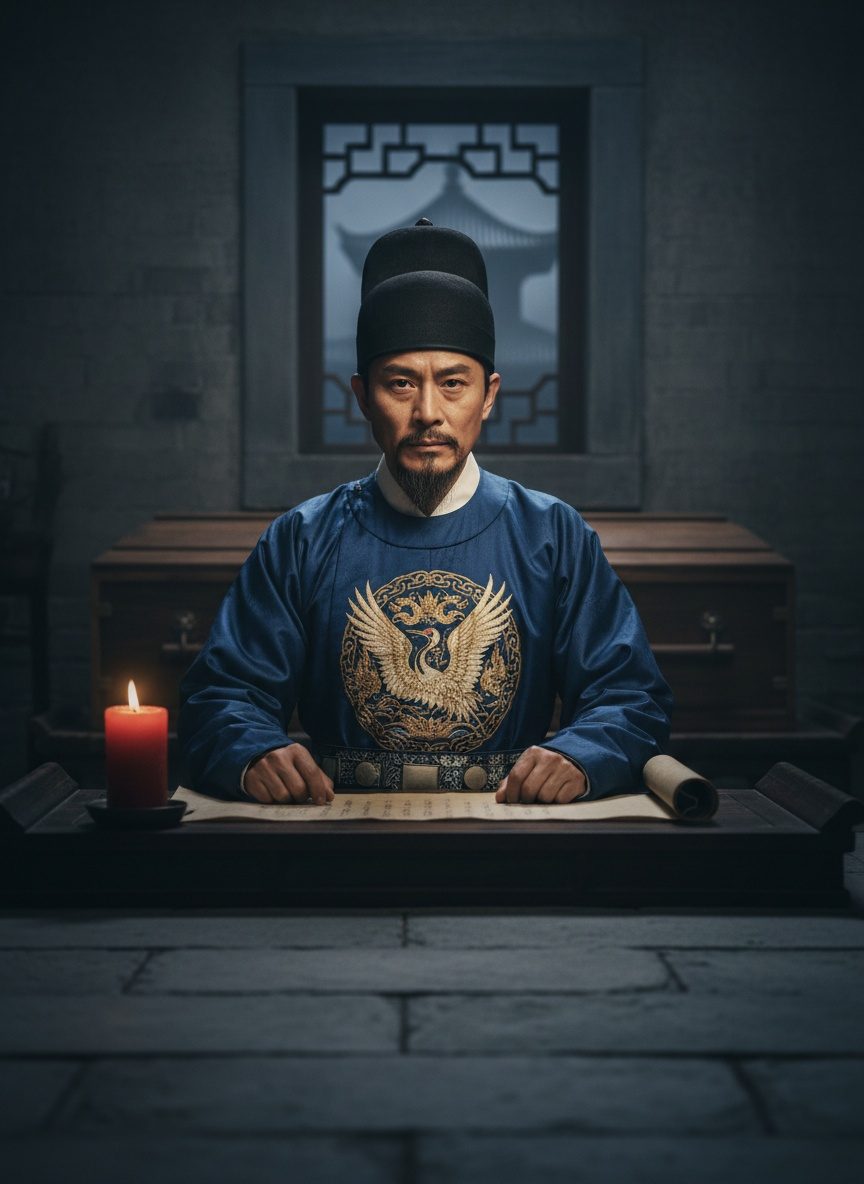
Hai Rui was not a man of power or prestige. His sphere of influence was confined to his duties as a minor official, yet his reputation for unwavering honesty had spread far and wide. His name was synonymous with uprightness, a beacon of integrity in a time when sycophancy was the currency of survival. But no amount of integrity could shield him from the emperor’s wrath once he committed to penning a memorial that dared to criticize the emperor himself.
In preparation for the inevitable fallout, Hai Rui undertook a solemn ritual. He procured a coffin, a stark gesture that conveyed his acceptance of the consequences that were sure to follow his audacious act. The act of purchasing one's own coffin was no less a proclamation of defiance, a testament to the immovable strength of his conviction that truth mattered more than life itself.
The contents of Hai Rui’s memorial were combustive. It was a litany of accusations against the emperor: vanity, neglect, and cruelty. He chronicled the emperor’s self-indulgent practices and the suffering they wrought upon the empire—a bold discourse on leadership's moral obligations, drenched in the deep traditions of Confucian thought. Such words were not just unprecedented; they were incendiary.
In the calculated silence that followed the dispatch of his memorial, Hai Rui awaited his fate with the stoic composure of a man already resigned to death. The halls of power buzzed with anticipation. Courtiers speculated about the magistrate’s fate, certain that the emperor's fury would issue a swift and brutal response.
Yet, what unfolded surprised an entire empire. Instead of the immediate execution that everyone foresaw, the emperor deliberated. Perhaps it was the unparalleled courage of Hai Rui’s message or the truth’s uncomfortable shimmer through his words that stayed the emperor's hand. Regardless, the broader implication was enormous; for the first time, the emperor was forced to consider perspectives beyond his echo chamber of flattery.
In the passage of time that followed, the brave act cultivated an almost legendary status through the annals of Chinese history. Hai Rui was detained, yet his life was spared. The emperor, shaken perhaps more profoundly than he would publicly admit, eventually gave orders for Hai Rui's release. What should have been a death sentence rendered him instead into a symbol—a messenger of truth in the era of darkness.
The standoff between Hai Rui and the Jiajing Emperor revealed several layers of complexity in the imperial court. For all his eccentricities, the emperor exhibited a rare moment of introspection, recognizing the potential chaos that could ensue from unchecked power. The incident would be recounted for generations, not simply as an example of courage in the face of tyranny but as a narrative on the eternal struggle between authority and accountability.
The ripples of Hai Rui's act flowed beyond the rhythmic currents of the Ming court. After the emperor's death, Hai Rui's ideals remained influential. When the empire faced decline in the dawning years of its eventual fall, echoes of his uncompromising dedication to truth served as a reminder of the principles that could have fortified the dynasty’s longevity.
In reflecting upon the significance of this tale, it becomes evident that Hai Rui's confrontation with the emperor is a testament to the enduring power of truth against the formidable might of autocracy. His story is not merely a chapter in annals distant and foreign; it is a timeless reminder of the human spirit’s capacity to champion integrity above all else, reaching across centuries to challenge and inspire.