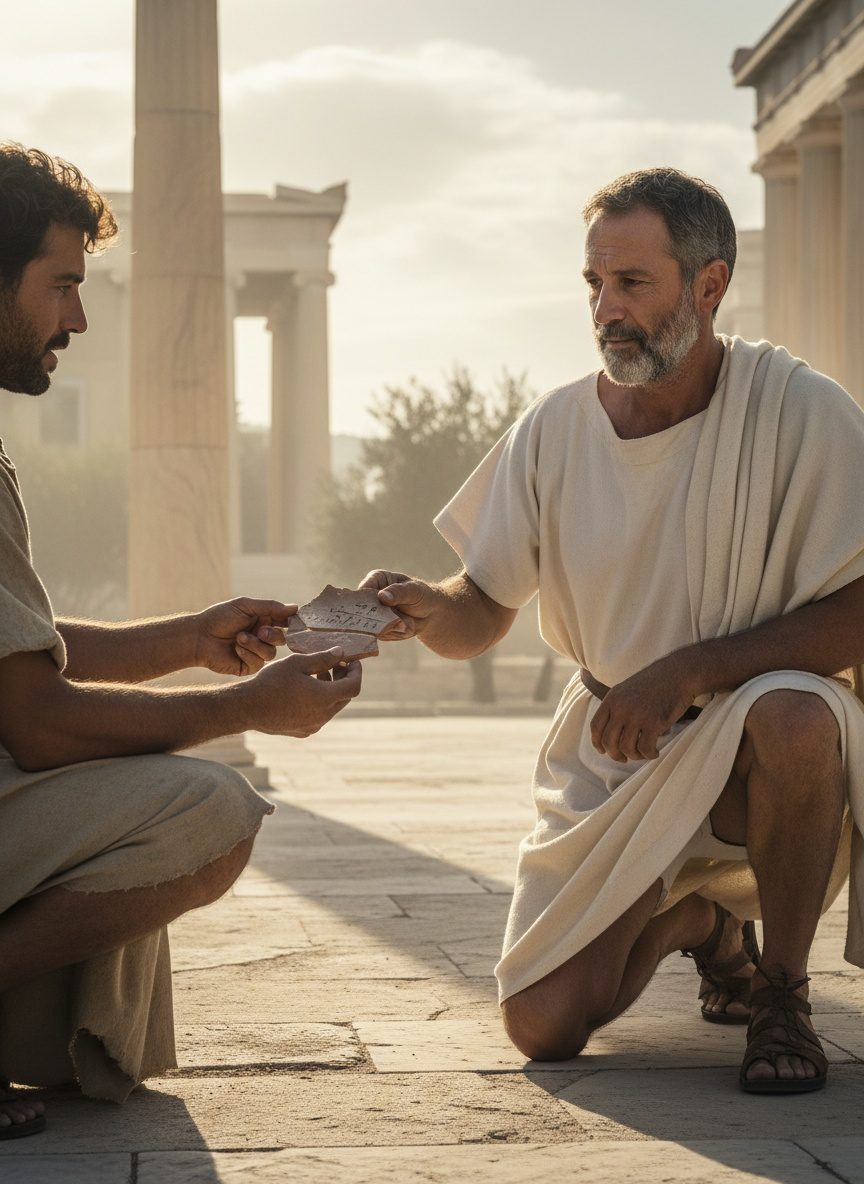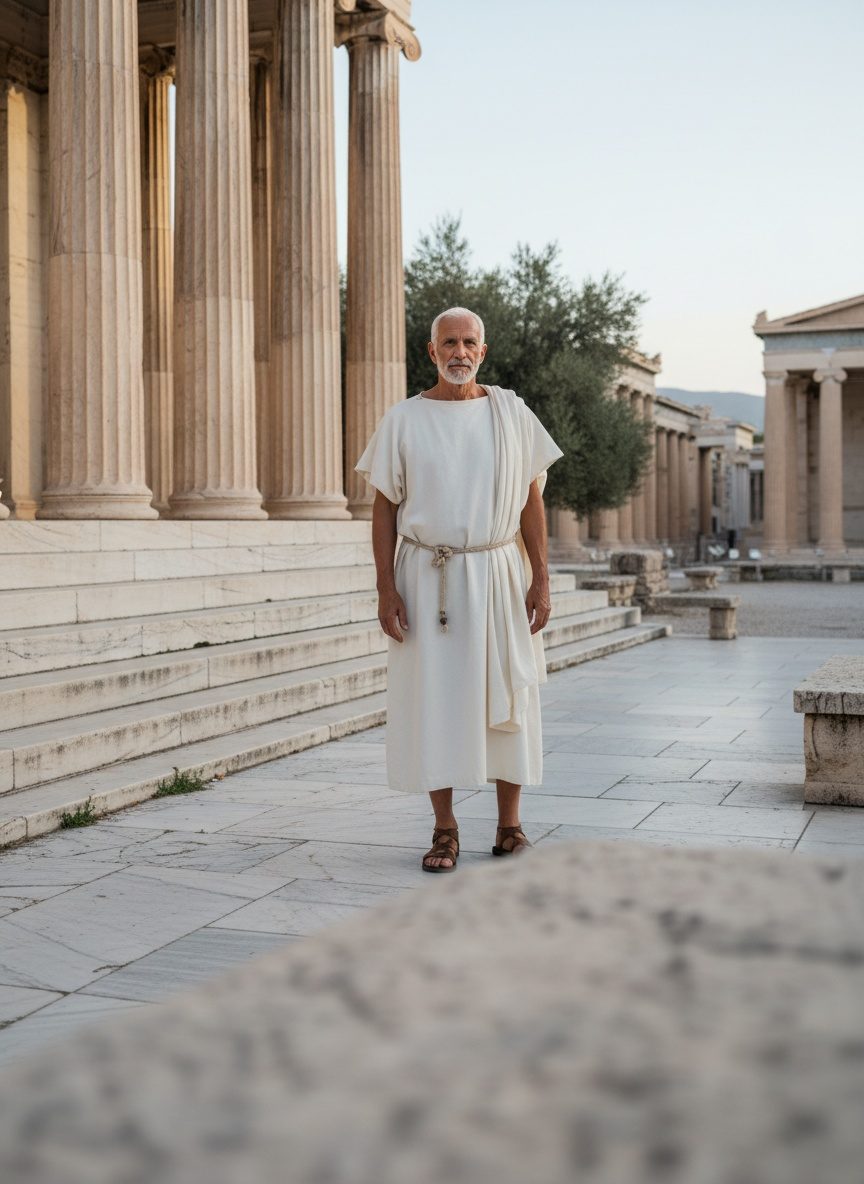
The dust swirled in columns as Phocion emerged into the Agora of Athens, his footsteps echoing against the colonnaded stone. The murmur of the crowd rose to a crescendo as if the entire city held its breath, waiting to see what their most respected general would do. But Phocion, calm and stoic as ever, held his gaze straight ahead. He had decided — the Macedonian gold would go back untouched, a gesture incomprehensible to those swayed by greed.
The Unwavering General
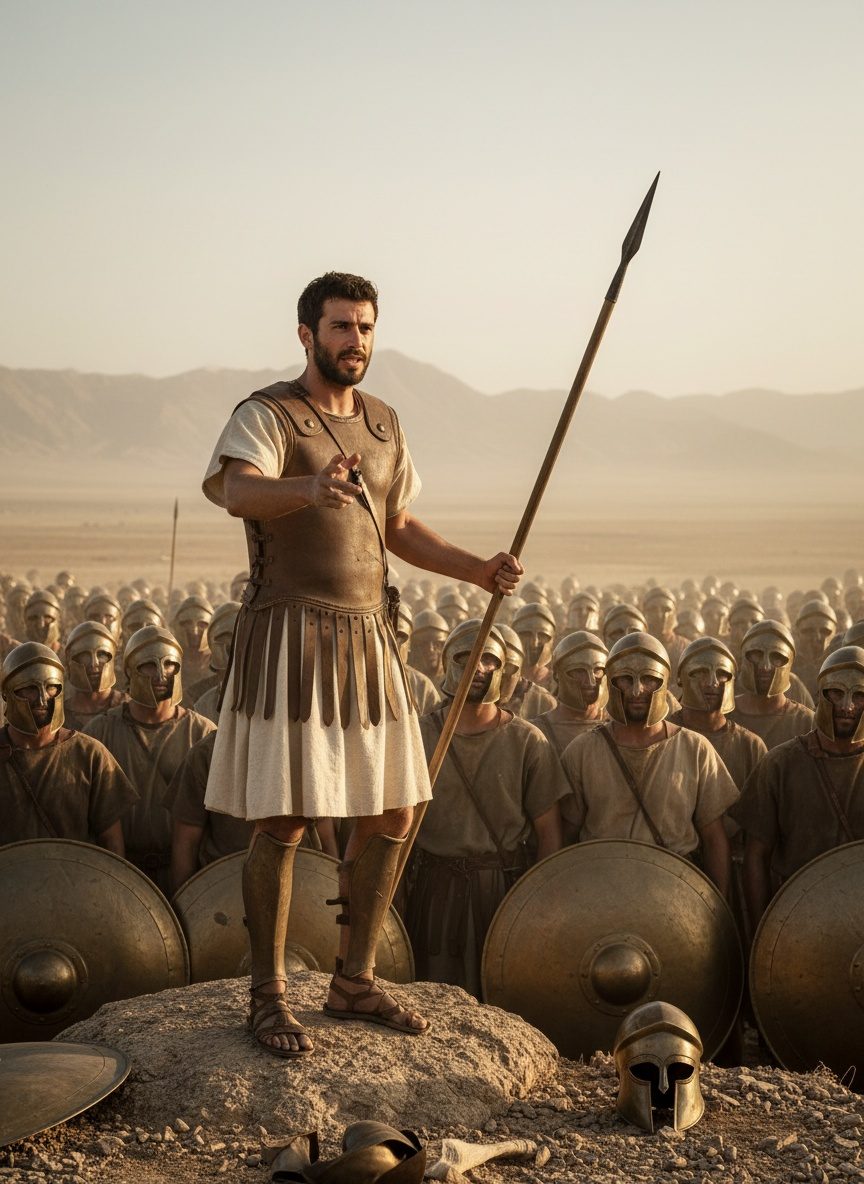
Phocion, known as "the Good," had always been an enigma to Athens. A man of towering integrity and discipline, he was the embodiment of Athenian virtues in a time when such values were waning. Born in the classical era of Athens, Phocion was a pupil of Plato and later studied at the Academy under Xenocrates. Throughout his military career, his steadfastness often secured victories without the need for battle, commanding respect even from his enemies. Yet his greatest victory might have been over temptation — a battleground where many of his peers failed.
When Alexander the Great died in 323 BC, the political landscape of Greece was thrust into chaos. Macedonia, knowing the fragility of Athens' resolve, sought to buy loyalty with gold, and many in positions of power succumbed. Phocion’s refusal was a stark repudiation of the corruption that had seeped into the very fabric of Athenian society. He wasn’t swayed by the glittering offers or threats; his decision was resolute, like the immutable laws of nature itself.
Betrayal in Broad Daylight
Yet, the simplicity of his ethics was not without consequence. Phocion's decision to return the Macedonian gold roused suspicion rather than admiration among the very people he sought to protect. Athenian politics, turbulent and treacherous, turned into a cacophony of voices accusing him of treason. What drove such betrayal? Perhaps it was the envious stirrings of those who regretted their own compliance, or perhaps a deep-seated distrust of a purity they could neither comprehend nor emulate.
In the end, the city he had safeguarded with love and austerity turned against him. Without any tangible evidence, Phocion was charged with treason. The city, craving a scapegoat in times of uncertainty, found an easy target. Heralds read the charges in the bustling agora, the accusations echoing off the marble statues and temple columns. Yet Phocion remained composed, a bastion of dignity against the storm of falsehoods. His defense was as serene as his life — clear, unwavering, and utterly unrepentant.
Death of a Hero
On the day of his execution, Phocion was asked if he had any last words or requests. With a courage reminiscent of Socrates, who had met a similar fate years before, Phocion declined to plead for mercy. He faced his death as he faced his life: with a calm acceptance of his principles and an unshakable belief in the justice of his decisions.
The execution was set in Phocion's familiar Athens, where he had once been hailed as a protector. Now, accused unjustly and condemned, his final act was one of deliberate resolve. He took the hemlock without hesitation, its bitter aroma filling the room as it had for the ancient philosopher. Even in this grim hour, Phocion’s eyes betrayed no fear, only a silent confirmation of his chosen path.
The Irony of Integrity
Time has a way of revealing truth, and history, its silent witness, often reinstates those it has wronged. Phocion’s story speaks to the duality of human nature — the strange alchemy that turns virtue into a crime. Far from being a relic of the past, his narrative is astonishingly relevant, reminding us that integrity often comes at a cost and is frequently met with misunderstanding, even hostility.
In reflecting on Phocion's life, we confront a paradox: a man who embodied the highest ideals was condemned by the very people those ideals were meant to serve. His steadfast refusal to compromise his principles underlines a message transcending millennia: in the end, it is not the gold that defines us, but the choices we make when it glitters temptingly within reach. As we navigate our own ethical dilemmas in a complex world, the story of Phocion urges us to consider where our true loyalties lie — in expedience or conviction.