Hallfred trudged across the stone floor, the echo of his boots resonating through the halls of yew that led to an audience with King Olaf Tryggvason. The fire in the hearth crackled ominously, casting wavering shadows over tapestries depicting Saint Olaf's triumphant battles. Hallfred Vandræðaskáld, the trouble-skald, was famously undaunted by the heavy gloom surrounding him, yet he could still feel the weight of the task before him. A less stalwart man might have faltered under the king’s intimidating gaze, knowing him to be a new and devout Christian. But Hallfred had more to lose than fear could amuse.
Olaf Tryggvason, Norway's formidable king, had once been a seafaring lad, a pagan raider like any other. But fate twisted the paths of men in unknown ways, transforming Olaf from Viking warrior into a zealous convert, bent on bringing Christianity to his Norse realm. His new faith was not to be a quiet seed planted in hearts, but a wildfire to be fanned across the fjords’ rugged expanses. With a single sweeping motion, Olaf decreed that all who breathed Norwegian air must honor the white Christ.
The skalds—the revered poets of the north—had obeyed without question. Like the salts of the myriad seas, these poets were seasoned, knowing when to bend as winds changed course. Yet Hallfred was no common bard. Words unraveled from his lips with a mystical resonance that could stir men’s souls and send armies marching. Charged with the grave task of weaving praises for Christ into the Norse soul, skalds eagerly adjusted their wards. Hallfred, though, remained a bastion of old beliefs. His heart was tethered to Odin’s wisdom and Thor's thunderous might, not the soft, suffused light of the Christian deity.
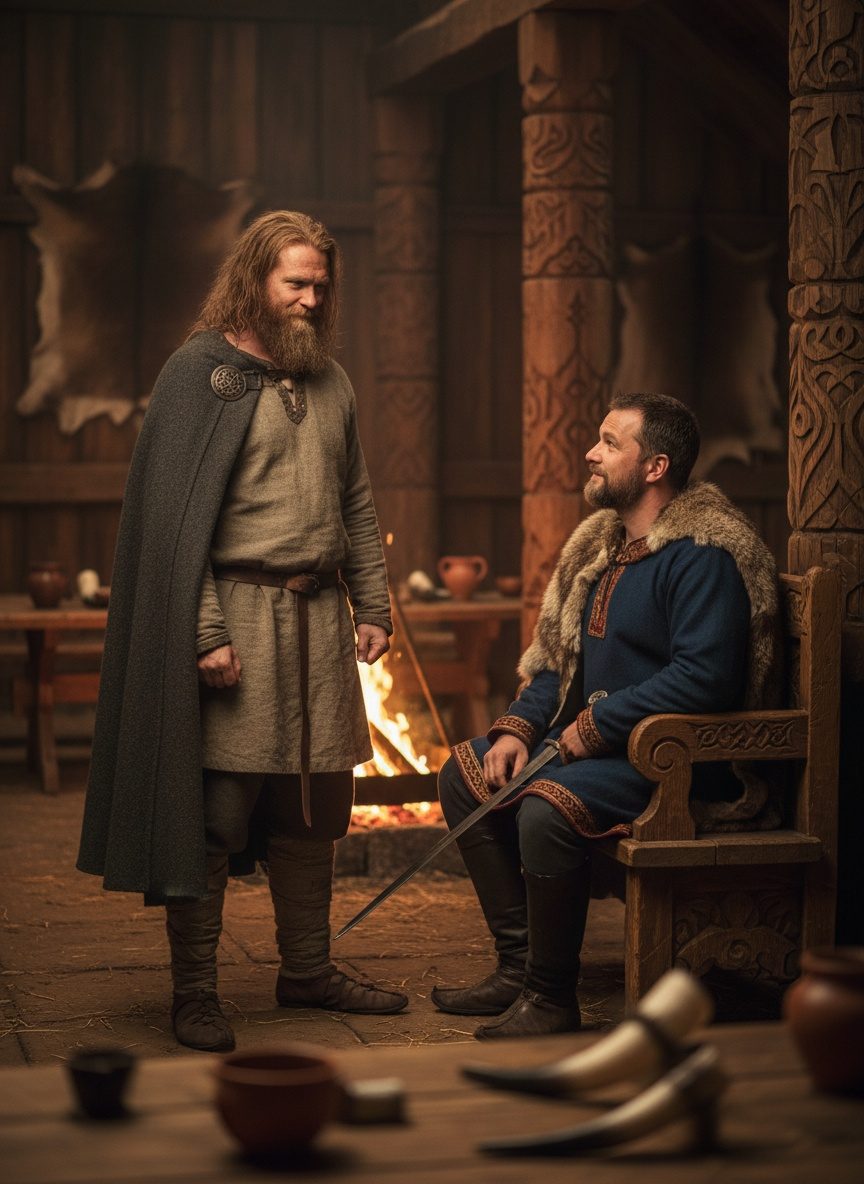
The hall was hushed when Hallfred took his stand. Olaf's sword, a silent testament of authority, rested casually across his lap. The poet knew he was expected to recite a hymn in honor of Christ. Every other skald had acquiesced, seamlessly wrapping the name of Jesus into tapestries of old myths, spinning tales that glorified the king’s god. Yet Hallfred's allegiance was stubborn. Defiantly, he refused. "I will sing no praise for a god not mine," he declared, his voice as sharp as the sword poised to strike.
Olaf's courtiers flinched at the audacity, expecting the swift punishment reserved for those who slighted the king's wishes. Yet the halls did not resound with cries of death that day. Instead, the air rippled with an unexpected sound—laughter, deep and genuine. Hallfred, steeled for felling or worse, blinked in surprise as the king roared mirthfully, a response to bold loyalty that transcended even kingly edicts.
There was some madness in Olaf’s eye, and perhaps wisdom too. He saw the fervor in Hallfred, the unyielding spirit cherished by warrior kings. To force a man's soul into submission was one thing; to win it was another entirely. Olaf, a master of reading men, recognized potential. "Hallfred," he began, "your tongue wields freedom as few swords do. Your loyalty, ill-placed though it be, is rare. Could you offer such to your king, as sure as you do to your old gods?"
Hallfred was silent, measuring the weight of Olaf’s words, examining them like a craftsman assessing precious metal. Here, in this pivotal moment, the king's clemency conjured admiration over compulsion. A choice was offered where none had been expected.
The Viking era was a time when choices often carried the finality of death, a stark reminder of life's transient nature under ever-gray skies. Yet Olaf's clemency suggested a subtle shift—a form of diplomacy through respect that, in its own right, honored the past while making space for the future. Hallfred, the free-spirited skald, could not easily be tamed, but his freedom was neither an affront nor a threat. In truth, it was a testament to the king's own evolving strength—one that was greater than any transient rule of faith.
This story, stitched into the tapestry of history, asks us to reflect on the power of conviction and the delicate balance of change. At the heart of Hallfred’s defiance is a universal tension between tradition and transformation, between the old world crumbling and the new one forming. As history rolls forward like turbulent seas, it is crucial to remember: Embracing the future does not necessitate the erasure of the past. Faith too, in all its forms, must coexist with the multitude of voices that came before, each echoing truths that are as unyielding and eternal as the Norse mountains themselves.