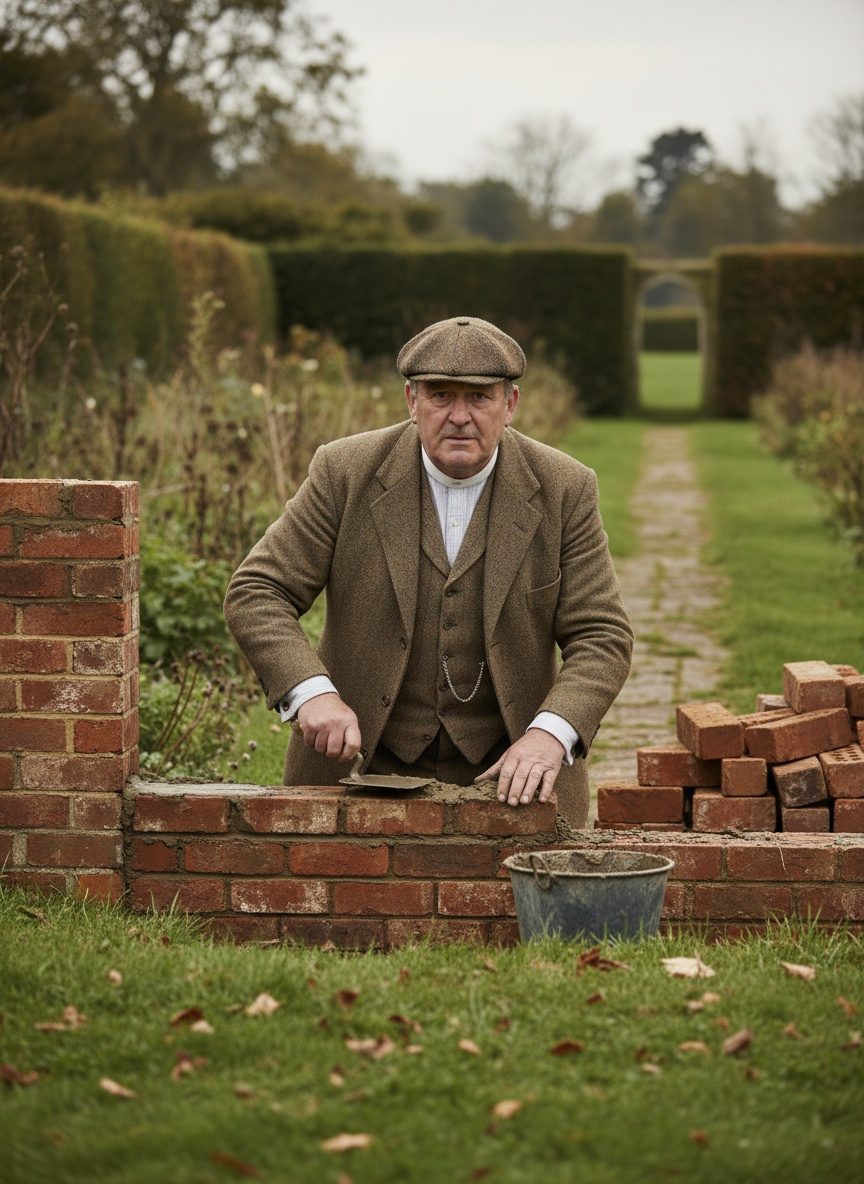
The garden at Chartwell had a damp chill in the early morning, as dew clung to the leaves and glistened like a scattered fleet of diamonds. The mist wrapped around the Kent countryside, barely letting slivers of sun pierce through to warm the earth. Amidst the quiet symphony of birdsong, the familiar scrape of trowel against stone was heard, a solitary sound echoing through the grounds. This was where one of history's most commanding figures found solace — laying bricks against the backdrop of a rapidly changing world. Winston Churchill, the indomitable leader known for steadfast resolve, came to this retreat not for the grandness of power, but for the simple peace of manual labor. In times of profound personal struggle, and more so against his own 'black dog' of depression, he became the architect of his own refuge.
The Retreat at Chartwell
Tucked away in the verdant hills of Kent, Chartwell stood serenely, its gardens sprawling out like a safe embrace. Acquired by Churchill in 1922, the estate was where he sought to carve out a semblance of peace amidst the political storms he faced. Here, with his sleeves rolled up and fingers dusted with mortar, he found a craft that grounded him more than any victory in the House of Commons. The act of building generated a tangible result, something he could see, touch, and shape — a sharp contrast to the nebulous and often frustrating world of politics.
The laborious task of bricklaying offered a meditative reprieve, a direct escape from the relentless pressures of leadership and the shadows of personal despair. Far from the public eye, Churchill built walls, garden structures, and chimneys that were both literal and metaphorical, fortifying the fort of his mental battleground. Chartwell's garden became a canvas for his internal dialogue, transformed brick by brick, forming a mosaic of determination and introspection.
Bricks as Therapy
Churchill was no stranger to the bleak grip of depression, a foe he famously dubbed his 'black dog'. In political and personal life, this affliction was an insidious and persistent presence. But the act of plying the trowel, the rhythmic cerulean of cement and brick, instilled a sense of accomplishment and calm.
He referred to his time at the wall as 'a pastime, restful and yet active.' It was a therapy of sorts — cementing stability in the form of garden walls and fitted facades, each one laying down the tentacles of anxiety preying upon his consciousness. It was a pursuit that provided clarity, where amidst each brick-laid triumph, the weight of his internal darkness was momentarily lifted, and the sterile silence of political turmoil eclipsed by the music of manual craft.
The Invisible Framework
To the outside world, Churchill's trend as a hands-on builder might have seemed like an eccentric hobby, a mere idiosyncrasy of one of Britain's most powerful figures. But this very facade contained an invisible framework that supported the colossal weight of the role he carried off-site. Each wall raised at Chartwell was not merely an exercise in masonry but was emblematic of his internal contest with despondency.
Less known is how Churchill's embrace of building influenced his later political strategies — a philosophical transfer of solidity from construction to policy-making. His attachment to this discipline cultivated patience and endurance, skills that translated from stones to speeches, from mortar to mandates. The physical act of building intertwined deeply with his approach to governance, as he endeavored to construct a Britain resilient enough to withstand the adversities of his time.
Fortifying the Human Spirit
Chartwell stands today not just as a historical relic, but as a testament to the resilience of the human spirit. It is a reminder that even the strongest figures need a sanctuary — a place to retreat, reflect, and rebuild. The walls that Churchill built at Chartwell are not just of mortar and brick, but of tenacity and fortitude, laid by hands that shaped history.
The story of Winston Churchill and his wall-building crafts many lessons; perhaps chiefly, that in moments of despair, the simplest tasks performed with genuine intent can wield the power to heal. In this ordinary act was an extraordinary tenacity, constructing stability in a world that was often anything but. For Churchill, it was not politics but peace found in the alignment of bricks that fortified him — a legacy etched both onto the landscape of England and into the annals of history.