The sun rose slowly over the savannah, casting a golden hue on the endless stretch of land. The sky was a perfect cerulean dome, untouched by clouds, and the early morning air was alive with the chirping of birds taking flight from their nests. Nestled amidst this serene landscape was the village of Niani, a small yet vibrant community that bustled with the activities of daily life. In this seemingly peaceful setting, beneath the whispered conversations and the laughter of children, lay a story of struggle and destiny, waiting to unfold. It was here, in the heart of West Africa in 1235, that a young boy would defy expectations and alter the course of history.
The Silence of a Silent King
Sundiata Keita, the son of the great king Maghan Kon Fatta and his wife Sogolon, was not like other children. From the moment of his birth, whispers of doubt and fate swirled through the courts of Mali. The boy who was to be a king could not walk. His legs seemed as frail as the reeds by the riverbank, unable to support him or carry him into the world of his birthright. As he lay on the earthen floor of his mother's home, every day his silence spoke louder than words, casting a shadow over his future.
In a society where physical prowess was admired, Sundiata's condition was seen as a potent flaw. It was not just a matter of concern for his parents but a matter of humiliation—especially for Sogolon. The court, often buzzing with rumors and gossip, did not spare her. Rivals and enemies of her husband sneered at her, and her son became the subject of disdainful jokes. They called him the "Lion's Cub," but the nickname was more mockery than endearment, signifying a king who might never roar.
Yet, Sogolon loved her son fiercely. She saw within him a strength that others could not. In her private moments, she prayed fervently, speaking to the gods and ancestors to grant Sundiata the strength to stand, to walk, to one day take his place among the rulers of the land. Her faith was unshakable, her hopes unwavering, as she tenderly cared for her son in the face of daily derision.
Rise from the Dust
As the years went by, the ridicule grew harsher. The court’s jeers became sharper daggers aimed at Sogolon's heart. Every attempt to encourage Sundiata to walk had ended in disappointment and frustration, the unyielding stares of disbelief from courtiers almost too much for Sogolon to bear. But the boy himself did not seem defeated. Behind the quiet gaze of his eyes lay a determination as unbending as the iron in their weapons.
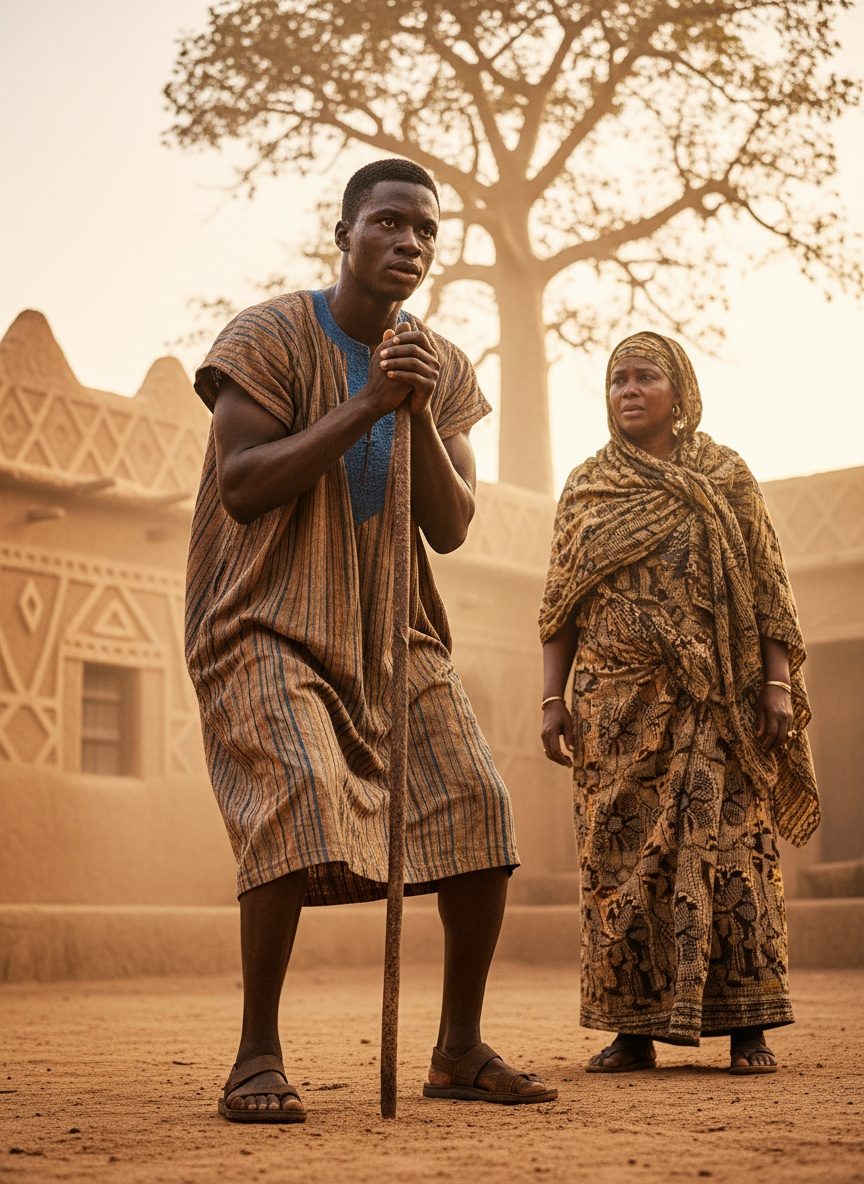
One fateful day, an act of sheer willpower would change everything. Perhaps it was in response to yet another cruel taunt, or perhaps finally, the elder’s words of destiny took root in his heart. Sundiata grasped an iron rod—a sturdy, cold piece of hope—and stood. The effort was monumental; it was as if the earth itself was pushing against him, tethering him to his old life. But step by step, muscle and bone met resolve and fortune. The impossible became possible.
The scene was electric with disbelief turned into awe. Sundiata, the once immobile prince, walked. The laughter in the courtyard turned to gasps, then to an overwhelming silence, broken only by Sogolon's sobs of joy. The child who had been overlooked, underestimated, and chained by physical limitation was rising, transcending not just his own limitations but those imposed by the society around him.
The Birth of an Empire
What began as simple steps grew into strides that would cover the expanse of a continent. As he grew stronger, so did his influence and determination. Sundiata became known as a tactical genius, uniting the disparate tribes and warring factions under his vision. The Mali Empire, under his leadership, grew to become one of the largest and wealthiest realms in the history of West Africa. His reign marked a golden age of culture, commerce, and scholarship, highlighting the rich history of a civilization that long predated European colonization.
Sundiata’s rule brought forth not just unity but inspired a renaissance. The empire became a bustling hub where gold, salt, and other precious commodities drew traders from distant lands. The architectural grandeur of cities like Timbuktu and Gao rose in testament to a flourishing intellect and culture. Sundiata’s understanding of governance, drawn from years of watching and waiting, was both compassionate and strategic, setting the groundwork for the legendary Islamic pilgrimage of his descendant, Mansa Musa.
The once crippled boy, who started his life with the odds stacked firmly against him, built a legacy not just of territory and wealth but of inspiration. His story resonates across time, a reminder that the constraints placed by society can be overcome through resolve, vision, and courage. In Sundiata’s journey from the sands of Niani to the heart of an empire, we find a narrative of triumph that challenges perceptions and inspires generations.